 10 citations
,
July 2022 in “Journal of Medicinal Chemistry”
10 citations
,
July 2022 in “Journal of Medicinal Chemistry” This article discusses the potential for combining PROTACs with other therapeutic modalities in drug discovery and reports no clinical results.
5 citations
,
August 2005 in “Anatomy and Embryology” This study found that concentrated clusters of noradrenergic nerve fibers form a longitudinal linear system in rat skin, particularly innervating arrector pili muscles.
4 citations
,
June 2022 in “Journal of food bioactives” This review discusses long-term health impacts and physiological disruptions experienced by COVID-19 survivors, highlighting the potential of nutritional interventions to manage post-acute sequelae and metabolic complications.
4 citations
,
July 2010 in “International Journal of Cosmetic Science” This study observed that hair fibers in older women become more curved with age, decreasing hair luster due to their disordered alignment and structural differences between the convex and concave sides.
3 citations
,
January 2019 in “Electronic Imaging” This study found that a lightweight Convolutional Neural Network model can accurately and quickly determine natural hair tone from high-resolution images of hair roots, outperforming other popular methods.
October 2025 in “Journal of the Endocrine Society” This case report illustrates a rare instance of mixed germ cell tumor in the pituitary with hyperandrogenism, emphasizing the importance of thorough examination and hormone evaluation in identifying hormonal dysfunctions.
 April 2024 in “Meždunarodnyj vestnik veterinarii”
 In a study conducted on a beef-producing farm, "Deltsid 7.5" was found to be the most effective treatment for psoroptic scab in cattle, eradicating acarian phases and restoring skin and hair by 28 days, outperforming macrocyclic lactone treatments.
 January 2024 in “http://isrctn.com/”
 Teak leaf extract hair tonic was tested for hair growth and safety.
January 2022 in “Figshare” This study found that inhibiting autophagy in mouse preputial glands alters lipid metabolism, delays aging-related duct changes, and reduces pheromone production, indicating autophagy's critical role in gland homeostasis and cell breakdown during secretion.
August 2017 in “ARSHI Veterinary Letters” This case report describes a 10-year-old Shih Tzu diagnosed with hyperadrenocorticism, leading to the management of skin issues which initially improved but was followed by neurological symptoms, prompting euthanasia.
 January 2009 in “Nihon Keshouhin Gijutsushakaishi/Journal of S C C./Nihon Keshouhin Gijutsushakai kaishi”
 This study found that the structural and chemical composition of human curly hair may resemble that of sheep wool, implying a shared characteristic among mammals with wavy hair.
January 2004 in “Trace Elements Science” This study observed that hair levels of chromium, manganese, and copper were lower in diabetics compared to controls, while iron levels were higher.
 610 citations
,
April 2014 in “Nature Reviews Immunology”
610 citations
,
April 2014 in “Nature Reviews Immunology” This review discusses the complex mechanisms regulating skin immunity to balance host defense with inflammation, but reports no new findings.
380 citations
,
February 2023 in “Journal of Clinical Medicine” This review discusses various potential risk factors and possible therapeutic interventions for polycystic ovary syndrome, including the modulation of gut microbiota, but reports no new findings.
 306 citations
,
April 2019 in “International Journal of Molecular Sciences”
306 citations
,
April 2019 in “International Journal of Molecular Sciences” This review discusses the protective roles of skin-resident immune cells in maintaining tissue homeostasis and facilitating wound healing, but reports no new experimental findings.
181 citations
,
January 2019 in “Cell” In this research, authors found that skin-resident ILCs regulate sebaceous gland function and microbial balance, emphasizing an immune-epithelia system that supports host-microbe symbiosis.
117 citations
,
September 2003 in “Molecular & cellular proteomics” This study demonstrated the development of high-density protein microarrays allowing for antibody binding characterization and serum profiling from patients with autoimmune diseases, suggesting potential for diagnostic marker discovery.
 88 citations
,
December 2018 in “Advanced Healthcare Materials”
88 citations
,
December 2018 in “Advanced Healthcare Materials” This review outlines the current state and future prospects of using layer-by-layer self-assembly for cell encapsulation in biomedical applications, such as cell-based biosensors, transplantation, and tissue engineering, while also discussing its limitations and potential advancements.
 87 citations
,
July 2007 in “British Journal Of Nutrition”
87 citations
,
July 2007 in “British Journal Of Nutrition” In this study, oral administration of Lactococcus lactis strain H61 to senescence-accelerated mice was linked to reduced bone density loss, less skin ulcer incidence, and reduced hair loss, along with altered immune responses.
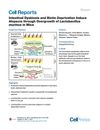 82 citations
,
August 2017 in “Cell Reports”
82 citations
,
August 2017 in “Cell Reports” This study found that antibiotic-induced gut dysbiosis, particularly overgrowth of Lactobacillus murinus, can lead to hair loss in mice by depleting biotin.
 57 citations
,
March 2019 in “Immunity”
57 citations
,
March 2019 in “Immunity” This review discusses the roles of immune responses and cells in skin health and disease, emphasizing recent insights into their mechanisms and potential therapeutic applications, but presents no new experimental results.
48 citations
,
May 2018 in “Expert Opinion on Therapeutic Targets” This review discusses how modern lifestyle factors affecting gut health may contribute to Alopecia Areata in genetically predisposed individuals, reporting no new results but suggesting the need for long-term interventions.
 45 citations
,
April 2019 in “International Immunology”
45 citations
,
April 2019 in “International Immunology” This review discusses the mechanisms behind alopecia areata and primary cicatricial alopecia and reports no new clinical results, aiming to guide the development of targeted treatments.
43 citations
,
July 2023 in “Pharmaceuticals” This review explores the effects of caffeine on cancer, cardiovascular, immunological, inflammatory, and neurological diseases, including its use in sports, and discusses advancements in caffeine delivery through novel nanocarrier-based formulations.
 38 citations
,
June 2018 in “Archives of Toxicology”
38 citations
,
June 2018 in “Archives of Toxicology” This review suggests that skin may largely protect itself from CYP-generated reactive metabolites due to higher conjugating enzyme activities, while highlighting limitations in modeling human skin metabolism experimentally.
37 citations
,
February 2023 in “Gut Microbes” This study found that administering the gut bacterium Thauera sp. strain GDN1 to mice significantly reduced their serum androgen levels, indicating gut bacteria may influence androgen metabolism.
35 citations
,
November 2024 in “Gels” This review discusses hydrogel-forming microneedles for non-invasive drug delivery in dermatology and reports no new clinical results, emphasizing their promise in improving treatment adherence and patient comfort.
35 citations
,
March 2012 in “Journal of dermatological science” This observational study aims to more accurately detect and localize Propionibacterium acnes in acne lesions by combining multiple microbiological visualization techniques, but it does not present new results on their causality to acne.
31 citations
,
February 1983 in “American Journal of Clinical Nutrition” In this study, two patients with long-term total parenteral nutrition and no biotin intake experienced hair regrowth after biotin supplementation, suggesting biotin deficiency can lead to alopecia.
27 citations
,
June 2017 in “Expert opinion on investigational drugs” This review discusses ongoing and past trials for novel acne treatments, focusing on topical agents with potential sebosuppressive, antimicrobial, or anti-inflammatory effects, without reporting new clinical results.