6 citations
,
November 2020 in “Chinese Medical Journal” This study found that among Chinese males with male androgenic alopecia, combination therapy using topical minoxidil and nano-microneedle-assisted fibroblast growth factor significantly improved hair density, diameter, and follicular unit density over 16 weeks, outperforming individual treatments.
 January 2024 in “SAGE Open Medical Case Reports”
 This report describes the case of identical twin males, where one applied topical 5% minoxidil for over a year on the beard and mustache area and the other did not, highlighting the anecdotal use of minoxidil for facial hair enhancement.
 23 citations
,
January 2011 in “International Journal of Immunopathology and Pharmacology”
23 citations
,
January 2011 in “International Journal of Immunopathology and Pharmacology” In this small study, topical minoxidil 2% was associated with an increase in normal hair shaft production in patients with Monilethrix without any reported side effects.
 January 2026 in “Drug Delivery and Translational Research”
 This study investigated the integration of crystal engineering and microneedle technology for androgenetic alopecia treatment, finding that microneedles loaded with newly developed Kopexil multicomponent crystals reduced drug diffusion rates in vitro compared to standard formulations.
 November 2023 in “Current Dermatology Reports”
 This review found that oral minoxidil, particularly in low doses, is effective and safe for treating various types of hair loss, including androgenic alopecia, and may offer advantages over other treatments, such as improved convenience and enhancement of male sexual function.
 1 citations
,
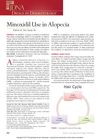
August 2017
1 citations
,
August 2017 This article reviews the mechanism, usage, and alternatives of the medication minoxidil in dermatology and reports no new clinical outcomes.
5 citations
,
May 1994 in “Facial plastic surgery clinics of North America” This article reviews the clinical characterization and potential treatments for androgenetic alopecia, highlighting minoxidil's efficacy in hair regrowth and noting the need for further genetic research; it reports no new clinical results.
13 citations
,
January 1987 in “Dermatology” This study observed that the active metabolite minoxidil sulfate promotes vascular relaxation by enhancing potassium permeability, which may inform understanding of minoxidil's antihypertensive and hair growth effects.
12 citations
,
October 2015 in “PubMed” This study found that topical minoxidil is more effective than placebo in promoting hair growth in androgenetic alopecia, although cosmetically acceptable results occur only in a subset of patients.
8 citations
,
April 1990 in “PubMed” This study suggests that high concentrations of minoxidil may prolong the proliferative capacity of keratinocytes, which may partially explain its positive effect on hair growth.
 April 2024 in “JAMA dermatology”
 In this randomized clinical trial, oral minoxidil was not superior to topical minoxidil in increasing hair density in men with androgenetic alopecia over 24 weeks, though photographic analysis suggested oral minoxidil may work better on the vertex area of the scalp.
 May 2026 in “Zenodo (CERN European Organization for Nuclear Research)”
 In this study, minoxidil was found effective in promoting facial hair growth in certain populations, including transgender men, though it is not widely approved or established for use in the general population for this purpose.
 June 2024 in “The Open dermatology journal”
 In this study, researchers reported that an herbal extract with dihydroquercetin glucoside, epigallocatechin gallate glucoside, zinc, and glycine showed similar effectiveness and safety to minoxidil in treating androgenetic alopecia over 24 weeks, with no significant differences in hair growth outcomes between the groups.
 December 2024 in “Journal of the European Academy of Dermatology and Venereology”
 This study found that both sublingual and oral minoxidil at 5 mg per day increased hair density similarly in men with androgenetic alopecia over 24 weeks, but sublingual administration was associated with fewer palpitations.
 52 citations
,
May 2019 in “Journal of The American Academy of Dermatology”
52 citations
,
May 2019 in “Journal of The American Academy of Dermatology” This study evaluated the effectiveness and safety of low-dose oral minoxidil (2.5-5 mg daily) in men with male androgenetic alopecia, aiming to contribute data to an area with limited previous reports. Results are not provided in the abstract.
11 citations
,
February 2023 in “British Journal of Pharmacology” This study found that ISX9 may activate the Wnt/β-catenin signaling pathway and holds potential as a therapeutic agent for treating alopecia.
11 citations
,
December 2011 in “PubMed” This study confirms that twice-daily application of 5% minoxidil solution, Carexidil®, is effective for androgenetic alopecia in both men and women, showing results after 6 months.
 June 2026 in “International Journal of Innovative Technologies in Social Science”
 This review concluded that low-dose oral minoxidil is an effective and well-tolerated treatment for male androgenetic alopecia, with significant hair density improvements and manageable side effects.
This study found that the herbal extract CS-10-H, like minoxidil, significantly improved hair growth, density, and thickness in a mouse alopecia model.
 74 citations
,
July 1991 in “The Journal of Urology”
74 citations
,
July 1991 in “The Journal of Urology” This study found that topically applied minoxidil was more effective than nitroglycerin and placebo in enhancing penile diameter, rigidity, and arterial flow, with the most pronounced effects in patients with neurogenic impotence.
 19 citations
,
May 2020 in “Journal of The American Academy of Dermatology”
19 citations
,
May 2020 in “Journal of The American Academy of Dermatology” This case series reports the experience of using oral minoxidil at 1.25 mg/day in 32 patients with male androgenetic alopecia, noting both therapeutic effects and potential adverse reactions.

This case report details a 61-year-old man's overdose on oral minoxidil, resulting in systemic side effects like hypotension and edema, which resolved without intervention; similar symptoms were observed in 14 other patients after minoxidil ingestion.
April 2003 in “Journal of Clinical Dermatology” This study found that coapplication of capsaicin and minoxidil led to rapid and steady hair growth in mice, with capsaicin accelerating the start of anagen and minoxidil extending its duration.
 15 citations
,
September 2008 in “Archives of Dermatological Research”
15 citations
,
September 2008 in “Archives of Dermatological Research” In this study, topical 5% roxithromycin was effective in restoring hair growth in about half of individuals with androgenetic alopecia without causing adverse effects.
 September 2025 in “Journal of the American Academy of Dermatology”
 Low-dose oral minoxidil may be a promising alternative to topical minoxidil for hair loss.
March 2025 in “Actas Dermo-Sifiliográficas” In this retrospective study of patients with androgenetic alopecia, oral minoxidil at doses greater than 5 mg daily improved hair density by 10-30% in most cases, but 24.6% experienced adverse effects, prompting a need for further research on its safety and optimal dosage.
306 citations
,
August 2011 in “Journal of cachexia, sarcopenia and muscle” This study found that GTx-024 significantly increased total lean body mass and improved physical function in healthy elderly men and postmenopausal women, suggesting potential use for muscle wasting conditions.
 3 citations
,
September 2019 in “Journal of The American Academy of Dermatology”
3 citations
,
September 2019 in “Journal of The American Academy of Dermatology” In this correspondence, researchers reported that very-low-dose oral minoxidil (0.25 mg/d) showed some effectiveness in stabilizing trichoscopic parameters in male androgenetic alopecia. However, their analysis suggests that higher doses (2.5–5 mg/d) may lead to better clinical responses with similar rates of adverse events.
31 citations
,
January 1993 in “Skin Pharmacology and Physiology” This study suggests that potassium channel openers, such as minoxidil, may stimulate hair growth by retarding the loss of proliferative activity in mouse hair follicles.
January 1987 in “Chronica Dermatologica”