
This study found significant differences in facial heat distribution patterns among different types of alopecia, with androgenic, areata, and telogen types showing a T-type pattern, while seborrheic alopecia showed a diffused pattern.
39 citations
,
April 2009 in “Journal of Plastic Reconstructive & Aesthetic Surgery” This study found that frontalis suspension surgery using autologous sling material effectively provided good to excellent long-term functional and aesthetic outcomes for children with severe congenital ptosis.
4 citations
,
December 1994 in “PubMed” This case study reports that secondary milia linked to bullous erysipelas in a 64-year-old woman's leg resolved nearly completely with topical 0.05% tretinoin cream.
3 citations
,
January 2022 in “JAAD Case Reports” This article reports a unique case of a 60-year-old woman with alopecia areata and myasthenia gravis, suggesting a rare paraneoplastic syndrome connection primarily limited to prior reports involving hematologic cancers.
This review provides an overview of the etiology, presentation, and diagnosis of steatocystomas, including subtypes and complications, while detailing their history, epidemiology, and management strategies.
3 citations
,
January 2017 in “Journal of clinical and diagnostic research” This case series reported incidents of iatrogenic Cushing's Syndrome linked to high doses of intralesional corticosteroid injections and mesotherapy regimens, highlighting the need for cautious prescription practices and further research on mesotherapy safety.
14 citations
,
January 1998 in “Dermatology” This study found evidence that polythelia pilosa, previously excluded from classification, should be reintroduced as it marks true aberrant mammary structures in men and hirsute women.
3 citations
,
April 2021 in “Journal of Clinical Medicine” This pilot study found that bacterial cultures in axillary lymph nodes, skin lesions, and fistulae matched in one hidradenitis suppurativa patient, but the small sample size limits definitive conclusions.
July 2025 in “The Egyptian Journal of Hospital Medicine” This study found that intralesional methotrexate and triamcinolone acetonide have similar efficacy for localized alopecia areata in adults, but differ in safety profiles, with methotrexate associated with hyperpigmentation and triamcinolone with atrophy.
 January 2026 in “Zenodo (CERN European Organization for Nuclear Research)”
 In this case study, a 41-year-old woman with a solitary thyroid nodule was found to have a benign colloid goiter after biopsy, and she successfully underwent right hemithyroidectomy with good postoperative recovery and management of symptoms using various supportive medications.
 August 2015 in “Europe PMC (PubMed Central)”
 This article discusses the role of anthropometry in torso aesthetics and plastic surgery, focusing on Carlo Rochet's sculptural work, and reports no new clinical findings.
 4 citations
,
January 2022 in “Drug design, development and therapy”
4 citations
,
January 2022 in “Drug design, development and therapy” This study demonstrated that intramuscular corticosteroids were effective for severe alopecia areata, with significant hair regrowth in 80.2% of patients, though a high relapse rate was noted post-treatment. Nail involvement and disease duration over six months negatively impacted outcomes.
January 2014 in “International Journal of Dermatology and Venereology” This case report describes a 42-year-old male with alopecia areata and a scalp neurofibroma, emphasizing the tumor's histopathological features and the patient's decision against surgical treatment.
5 citations
,
January 1983 in “PubMed” This study determined that in axillary hair of mature males and females, free androgen steroids are primarily produced by sebaceous glands, while C19-steroid sulphates are products of sweat glands.
1 citations
,
May 2016 in “Journal of the American Academy of Dermatology” This case study describes a 43-year-old Hispanic man with cicatricial alopecia of the scalp, and suggests tufted folliculitis as the most likely diagnosis.
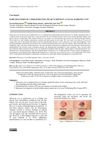 March 2022 in “Folia Medica Indonesiana”
 This case report described a facial hairline tumor initially diagnosed as a sebaceous cyst but ultimately confirmed as a rare Proliferating Pilar Tumor with focal malignancies upon histopathological examination.
 May 2004 in “Annals of Plastic Surgery”
 This study found that serious complications were more likely after using muscle-only free flaps for skull coverage compared to composite flaps.
January 2015 in “프로그램북(구 초록집)” This case report describes an unusual instance of eruptive syringomas in a 25-year-old man, persisting for about 10 years, which is atypical given the patient's sex and the condition's usual presentation.
17 citations
,
January 2013 in “Case Reports in Medicine” This review discusses steroid cell tumors of the ovary, their hormone production, symptoms, and evaluation, emphasizing surgery as the key treatment approach; it reports no new clinical results.
 June 2024 in “Dermatology and therapy”
 This study reviewed recent advancements in using botulinum toxin for treating androgenetic alopecia and emphasized the need for further research to determine the most effective injection sites and depths, as current strategies show inconsistent results.
17 citations
,
May 2022 in “Cells and Development” April 2019 in “The journal of investigative dermatology/Journal of investigative dermatology” In this study, researchers observed a strong association between keloid scars and atopic dermatitis, suggesting a link between keloids and signs of atopy in a diverse patient population.
 3 citations
,
November 2018 in “PubMed”
3 citations
,
November 2018 in “PubMed” This study evaluated shaved style scalp medical tattoo (SMT) in individuals with advanced hair loss, reporting high patient and surgeon satisfaction scores.
1 citations
,
June 1959 in “A M A Archives of Dermatology” In this study, treatment of alopecia areata, totalis, and universalis with methyl prednisolone and ACTH injections resulted in complete regrowth in 62% of male and 58% of female patients.
7 citations
,
January 2012 in “International Journal of Trichology” This report describes three patients with distinct conditions who exhibited rectangular-patterned occipital alopecia areata associated with their respective medical cases.
 April 2020 in “Journal of the Endocrine Society”
 This case report describes a 58-year-old woman whose virilization symptoms were linked to a steroid tumor of the ovary, emphasizing the importance of prompt diagnosis and treatment to improve her quality of life.
5 citations
,
January 2024 in “Aesthetic Surgery Journal Open Forum” This review notes that while ATX-101 showed a favorable safety profile for reducing submental fat in clinical trials, serious adverse events related to procedures have been reported in real-world use, prompting recommendations for improved management and prevention strategies.
January 2022 in “Indian journal of paediatric dermatology” This case report details an unusual instance of multiple eruptive milia in an otherwise healthy 3-month-old baby, characterized by widespread distribution and believed to be idiopathic due to the absence of associated genodermatoses.
 November 2020 in “Journal of The American Academy of Dermatology”
 This study examined dermoscopic features in African-American women with different types of alopecia and found that a perifollicular pink blush, potentially indicating inflammation, was common, particularly resolved with anti-inflammatory treatment, suggesting dermoscopy could aid in management.
 March 2025 in “Pakistan Journal of Health Sciences”
 In this study, patients with Alopecia Areata showed significant clinical improvement after intralesional steroid treatment, as trichoscopic features like black dots and exclamation mark hairs decreased, while short vellus and circle hairs increased, highlighting Trichoscopy's utility in monitoring treatment response.