18 citations
,
October 2022 in “Biomedicines” This review presents clinical and preclinical evidence supporting innovative regenerative approaches to treat vitiligo, as existing treatments lack a specific cure and predictable long-term repigmentation outcomes.

This chapter reviews surgical management techniques for leukotrichia in vitiligo and presents no new clinical findings; it highlights various grafting and epilation methods.
5 citations
,
February 2012 in “Australasian Journal of Dermatology” This case report documents two instances of red-haired men with patch-type alopecia areata, where hair regrowth occurred in black rather than red, an unusual phenomenon potentially linked to pigmentation and receptor pathways.
1 citations
,
April 2015 in “Neurology” This study found that hyperpigmented skin changes resembling Schamberg’s purpura occur in areas affected by CRPS and can also appear on mirror-image locations of unaffected limbs, potentially improving with the condition's treatment.
 June 2024 in “International Journal of Dermatology”
 This study found that unsatisfactory scalp micropigmentation outcomes can be effectively corrected with interventions such as tattoo removal, repeated SMP, or hair transplant surgery, leading to high patient and physician satisfaction.
 19 citations
,
May 1992 in “International Journal of Dermatology”
19 citations
,
May 1992 in “International Journal of Dermatology” This article discusses less commonly used and experimental treatments for vitiligo, focusing on therapies other than psoralen, but does not report new clinical results.
February 2025 in “Jurnal Kedokteran Brawijaya” This study evaluated the efficacy of various skin graft types for burn injury healing, finding that xenografts had the highest repigmentation rate (87.50%), while device-facilitated autologous skin cell transplantation showed outstanding efficacy in reepithelialization, highlighting its potential in clinical practice.
November 2022 in “Journal of Investigative Dermatology” This study suggests that vellus to terminal hair follicle reconversion can occur in male pattern androgenetic alopecia using an in vivo model with minoxidil and platelet-rich plasma treatment.
 3 citations
,
October 2010 in “Dermatologic Surgery”
3 citations
,
October 2010 in “Dermatologic Surgery” The new surgical technique for vitiligo is effective, safe, and cost-efficient.
November 2022 in “Skin Appendage Disorders” This study found that a 6-month treatment with 2% palmitoyl tetrapeptide 20 showed no significant improvement in reducing hair graying in patients, despite theoretical potential.
December 2018 in “European Journal of Pediatric Dermatology/PD. European journal of pediatric dermatology” This article discusses the potential involvement of hair follicle melanocytes in follicular vitiligo, noting a pattern of depigmentation centered on follicles and supported by inflammatory infiltrates, without reporting new clinical results.
 June 2025 in “BMJ Case Reports”
 In this case report, researchers observed hair repigmentation in a man with metastatic renal cell carcinoma during treatment with axitinib, marking the first documented instance of this effect with axitinib without the use of hair dyes or other medications.
 10 citations
,
November 2010 in “Pigment Cell & Melanoma Research”
10 citations
,
November 2010 in “Pigment Cell & Melanoma Research” This study found that epidermal melanocytes can regenerate hair follicles, whereas non-cutaneous or dermal melanocytes cannot, suggesting two distinct melanocyte lineages with potential implications for melanocyte-related diseases.
 May 2022 in “Dermatologic therapy”
 Combining PRP with follicular transplantation improves vitiligo treatment better than follicular transplantation alone.
 9 citations
,
November 2017 in “Journal of Glaucoma”
9 citations
,
November 2017 in “Journal of Glaucoma” This case report documents a patient experiencing paradoxical depigmentation of the periocular skin after one year of using latanoprost, a finding not previously associated with this medication.
44 citations
,
April 1979 in “Journal of Ultrastructure Research”  February 2024 in “Journal of Cosmetic Dermatology”
 White hair patch repigmented and hair regrew in a balding patient after treatment with exosomes and laser.
 January 2025 in “American Journal of Stem Cells”
 This review discusses the role of melanocyte stem cells in skin pigmentation and potential regenerative therapies, but reports no new clinical results.
January 2022 in “Skin appendage disorders” In this study, the researchers found that trichoscopy can effectively visualize scalp micropigmentation, identified by homogenous, grey to black circular dots similar to closely cut hair, potentially reducing the need for invasive procedures.
April 2019 in “Institutional Repositories DataBase (IRDB)” This study demonstrated that human iPSC-derived melanocytes, when transplanted into mice, can reconstitute pigmented hair follicles and integrate into normal tissue, suggesting their potential as a cellular therapy for depigmentation.
10 citations
,
November 2009 in “Pigment cell & melanoma research” This study by Pérez-Oliva et al. explored how Mahogunin Ring Finger-1 (MGRN1) affects melanocortin-1 receptor (MC1R) signaling, suggesting that MGRN1 competitively inhibits Gαs binding to MC1R, influencing pigment production.
31 citations
,
February 1999 in “Dermatologic surgery” This report describes a case where solar-induced postinflammatory hyperpigmentation following laser hair removal was treated with a combination of topical treatments and serial TCA peels, resulting in only slight improvement.
1 citations
,
August 2024 in “Heliyon” This study reports that hair follicle neural crest stem cells in mice can be differentiated into melanocytes, potentially aiding repigmentation in vitiligo-affected areas.
4 citations
,
December 2022 in “Skin Research and Technology” This study found that a combination of dermatoscopy and reflectance confocal microscopy assists in accurately diagnosing pigmented prurigo, which is often misdiagnosed due to its varied clinical manifestations.
 June 2026 in “Clinical Cosmetic and Investigational Dermatology”
 In this study, researchers detailed various surgical techniques for treating vitiligo, including tissue grafting and cell transplantation. They highlighted recent advancements and emphasized the need for future studies to explore therapeutic mechanisms and identify biomarkers to enhance surgical efficacy.
 2 citations
,
May 2020 in “Journal of visualized experiments”
2 citations
,
May 2020 in “Journal of visualized experiments” This study describes a protocol for inducing endogenous reactive oxygen species in mouse skin, which stimulates tissue regeneration and promotes burn healing and hair follicle growth.
 14 citations
,
November 2009 in “Clinical and experimental dermatology”
14 citations
,
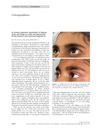
November 2009 in “Clinical and experimental dermatology” This article presents a case report of a child with coexisting alopecia areata and vitiligo showing improvement with topical prostaglandin E2 treatment, without reporting new clinical results.
June 2025 in “Australasian Journal of Dermatology” This study introduced and evaluated a new dermoscopic feature, pigmented rings with central clearing, for improving the diagnosis of melasma and differentiating it from similar conditions.
 October 2023 in “bioRxiv (Cold Spring Harbor Laboratory)”
 This study found that neonatal Regulatory T cells are crucial for maintaining PPARγ signaling in hair follicles, which supports melanocyte stem cell function and skin pigmentation during early postnatal development.
October 2019 in “European Journal of Dermatology” This review discusses the diagnosis and treatment of pityriasis rubra pilaris and reports no new clinical results.