5 citations
,
June 2012 in “Journal of Investigative Dermatology” Harris et al. describe a new mouse model for vitiligo, where interfollicular melanocytes are retained and melanocyte-targeting immune responses are simulated, aiding the development of immunomodulatory therapies.
4 citations
,
April 2024 in “Animals” This study reported allergic dermatitis in Brazilian donkeys linked to Culicoides insect bites, characterized by severe itching and skin lesions. The potential treatment with copaiba oil and multivitamin emulsion was explored, revealing its promise for managing this condition.
 4 citations
,
February 2023 in “Journal of steroid biochemistry and molecular biology/The Journal of steroid biochemistry and molecular biology”
4 citations
,
February 2023 in “Journal of steroid biochemistry and molecular biology/The Journal of steroid biochemistry and molecular biology” In this study, only Vdr-knockout rats showed both abnormal skin formation and alopecia, which may provide insights into vitamin D receptor function and its role in the hair growth cycle.
4 citations
,
January 2006 in “International Journal of Cosmetic Science” This study found that scanning electron microscopy with argon sputter etching visualizes hair lipids at the cell membrane complex as distinctive convex structures, shedding light on their role and localization in human hair.
3 citations
,
September 2024 in “Experimental Dermatology” This study found elevated levels of IL-18 and free IL-18 in hidradenitis suppurativa patients compared to healthy controls, suggesting these cytokines may serve as novel biomarkers for disease activity, with correlations indicating their involvement in disease severity.
 1 citations
,
March 2026 in “American Journal of Clinical Dermatology”
1 citations
,
March 2026 in “American Journal of Clinical Dermatology” In this Italian retrospective study, ritlecitinib 50 mg/day showed effectiveness and good tolerability for treating severe alopecia areata over 24 weeks, achieving significant hair regrowth particularly in adolescents, as well as improvements in eyebrows, eyelashes, nails, and quality of life, with mostly mild adverse effects.
 1 citations
,
April 2022 in “JAAD case reports”
1 citations
,
April 2022 in “JAAD case reports” This case report describes a unique instance of IgG/IgA pemphigus in a Chinese woman, highlighting its distinct clinical and immunopathologic characteristics, including successful management with dapsone and prednisolone.
 May 2026 in “ACTA SCIENTIAE VETERINARIAE”
 This study reports a case of hepatogenic photosensitization in a 22-day-old lactating Tabapuã calf, induced by toxins ingested via breast milk from a mother fed Brachiaria decumbens pasture; treatment including pasture removal and medicinal intervention led to symptom remission.
 April 2026 in “Journal of Inflammation Research”
 This narrative review highlights the shared immunopathogenesis of alopecia areata and atopic dermatitis and discusses approved and investigational therapies that target common pathways, suggesting a future for personalized treatment strategies.
 September 2025 in “Journal of the European Academy of Dermatology and Venereology”
 This real-world study found that baricitinib 4 mg daily was effective in promoting hair regrowth and improving psychological well-being in Italian adults with severe alopecia areata over 48 weeks, with 63.2% of patients achieving significant hair recovery and 9.4% experiencing adverse events.
 September 2024 in “Journal of the European Academy of Dermatology and Venereology”
 This study found that baricitinib significantly reduced hair loss in patients with severe alopecia areata, decreasing the mean SALT score from 96.6 to 48 over 24 weeks, with no patients dropping out and only mild adverse events in 12.7% of participants.
December 2023 in “Bulletin of Pharmaceutical Sciences Assiut” In this study, GC/MS analysis revealed variability in the quality of Syrian herbal formulations for BPH, with variations in tocopherol content, presence of parabens, and shortages of certain phytosterols.
November 2023 in “Biomolecules” In this study involving genetically modified rats, researchers observed that specific mutations in the vitamin D receptor affect calcium levels and bone formation, emphasizing the receptor's role in maintaining healthy bone density and its importance in regulating hair cycle and skin health.
August 2023 in “Diagnostics” This study observed that using ultra-high-frequency ultrasound with 70 MHz probes effectively assessed the distribution of hyaluronic acid fillers and improvements in nasolabial fold wrinkles, with significant changes in dermal thickness and wrinkle scores maintained 24 weeks after treatment.
 October 2022 in “Revista Eletrônica Acervo Médico”
 This narrative review discusses adverse effects associated with 5-ARI treatments for male-pattern baldness and benign prostate hyperplasia, including sexual health, neurological, endocrine, metabolic, and cardiovascular impacts, and emphasizes careful prescription assessment.
February 2022 in “Cosmetic Dermatology” Healthy skin prevents water loss and protects against threats.
 January 2021 in “Medical Research Archives”
 This study observed that 25-hydroxyvitamin D3 restored rickets symptoms in genetically modified rats, suggesting its direct action through vitamin D receptor pathways.
April 2020 in “Journal of the Endocrine Society” In this case study, the use of somatostatin analogues was effective in localizing and confirming a neuroendocrine lung tumor as the source of ectopic ACTH syndrome, leading to marked clinical improvement in a patient unable to undergo surgery.
 April 2018 in “bioRxiv (Cold Spring Harbor Laboratory)”
 This study identified a specific genetic variant in the CCHCR1 gene that may contribute to alopecia areata through impaired keratinization, suggesting an alternative mechanism beyond autoimmune causes.
209 citations
,
October 2018 in “Cell Reports” This study found that Lgr5 and Lgr6 stem cells both activated wound-healing genes, but only Lgr5 stem cells changed their identity to contribute to new skin formation during wound repair.
46 citations
,
October 2018 in “Neuroscience Bulletin” May 2026 in “Genetics and Molecular Research” This study reported significant differences in adverse drug reactions among five chemotherapeutic regimens for oropharyngeal cancer, highlighting nausea/vomiting, alopecia, mucositis, myelosuppression, constitutional symptoms, and dermatological toxicities across different treatments.
December 2025 in “Portuguese National Funding Agency for Science, Research and Technology (RCAAP Project by FCT)” In this review, researchers examined nine studies on botulinum toxin type A's effects on biomarkers in chronic head and neck conditions, finding significant, though low to moderate certainty, changes in markers like CGRP and serotonin associated with inflammation and mood disorders.
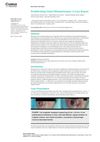
In this case report, researchers detailed a giant proliferating pilomatrixoma in a 36-year-old woman, emphasizing the importance of complete excision to prevent recurrence or potential malignant transformation, distinguishing it from malignancies like angiosarcoma or melanoma.
 June 2024 in “BioSCIENCE”
 This study reviewed the use of microinfusion of microparticles (MMP®) with methotrexate for treating alopecia frontal fibrosante and found it reduced symptoms associated with the condition and improved specific scalp measurements, showing that the technique is safe and well-tolerated.
 November 2022 in “Journal of Advances in Pharmacy Practices”
 This study found that a 5% concentration of terentang stem bark extract was the most effective in promoting hair growth in male rabbits.
 April 2021 in “International journal of advanced research”
 This study found that Covid-19 may trigger autoimmune pathways leading to alopecia areata and telogen effluvium, highlighting a connection that warrants further investigation.
82 citations
,
May 2020 in “International Journal of Molecular Sciences” This narrative review discusses the role of injectable biomaterials in dental tissue regeneration, highlighting their suitability for treating small, hard-to-access oral defects compared to pre-formed scaffolds, and explores the potential use of nanofibers in dental applications.
39 citations
,
March 2008 in “British Journal of Dermatology” This study documented the onset of lichen planopilaris during treatment with etanercept.
24 citations
,
March 2024 in “Small Science” This review discusses the potential applications and advantages of encapsulating single cells for use in therapeutics and diagnostics, while also evaluating various methods for effectively creating and sorting single-cell units despite challenges in production and cost.