 5 citations
,
November 2024 in “Naunyn-Schmiedeberg s Archives of Pharmacology”
5 citations
,
November 2024 in “Naunyn-Schmiedeberg s Archives of Pharmacology” This review highlighted the role of microRNAs (miRNAs) in gouty arthritis, emphasizing their potential influence on disease progression through immune and inflammatory regulation, and their prospective use in diagnosis, prognosis, and therapy.
5 citations
,
May 2022 in “Bionatura” This study found that asthma and high testosterone levels were linked to more severe COVID-19 and higher mortality, while progesterone appeared to offer protective effects in pre-menopausal women.
 4 citations
,
January 2014 in “Indian dermatology online journal”
4 citations
,
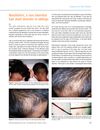
January 2014 in “Indian dermatology online journal” This article discusses the genetic hair disorder monilethrix, characterized by beaded, fragile hair due to defective keratin genes, and reports no effective treatment currently available; variability in severity was noted among affected siblings.
3 citations
,
June 2025 in “Archives of Dermatological Research” In a retrospective study, TNFα inhibitor-induced alopecia was observed in pediatric patients, primarily adolescents with inflammatory bowel diseases, with hair regrowth occurring in those who discontinued the therapy; this suggests that stopping these medications can improve drug-induced alopecia in children.
2 citations
,
August 2024 in “Indian Dermatology Online Journal” Premature graying of hair is mainly caused by genetics, stress, and environment, with potential treatments being explored.
 2 citations
,
July 2023 in “Frontiers in Endocrinology”
2 citations
,
July 2023 in “Frontiers in Endocrinology” This review identified and evaluated polycystic ovary syndrome models of care, finding that only three fully aligned with international guidelines and generally received positive feedback on satisfaction; just one showed an impact on patients' BMI.
2 citations
,
September 2021 This study aimed to explore the demographic factors linked to stress-induced hair loss among medical students, although it reports no new results on this relationship.
2 citations
,
January 2018 in “International Journal of Trichology” This case report describes trichothiodystrophy in two sisters with only hair fragility, illustrating the condition's variable presentation and the importance of regular monitoring for potential associated impairments.
1 citations
,
April 2018 in “Infectious diseases in clinical practice” This case study describes an 85-year-old man's intermittent fever being ultimately diagnosed as Babesia infection after considering his travel history and diagnosing splenic infarcts, highlighting the importance of thorough patient history for accurate diagnosis.
 March 2026 in “Dermatology Online Journal”
 In this study, androgenetic alopecia was linked to a higher likelihood of hyperlipidemia in both men and women and obesity in women, highlighting it as a potential marker for cardiometabolic risk.
January 2026 in “Minia Journal of Medical Research” In this study, testosterone-induced alopecia in male rats led to significant thinning and follicular degeneration, but treatment with adipose-derived stromal vascular fraction cells markedly improved these histological changes, suggesting a potential role in hair follicle regeneration.
 May 2025 in “International Journal of Reproduction Contraception Obstetrics and Gynecology”
 In this case report, the researchers described a postmenopausal woman with androgenic symptoms who was found to have a benign Leydig cell tumor of the left ovary, indicated by elevated testosterone levels and MRI findings, which was successfully treated with surgery.
 May 2025 in “Egyptian Journal of Dermatology and Venerology”
 This study found that specific SNPs in the CYP19A1 gene were associated with Female Pattern Hair Loss in Egyptian women, with altered CYP19A1 gene expression and higher frequencies of related genotypes observed in patients compared to controls.
 April 2025 in “Clinical Dermatology Review”
 In this study, researchers reported that dermatoscopy effectively differentiates between various types of alopecia and scalp disorders, offering a fast, minimally invasive diagnostic method that improves the standard of care and reduces the necessity for scalp biopsies.
 March 2025 in “Yemeni Journal For Medical Sciences”
 This study found that 89.3% of female college students in Aden, Yemen, had hypovitaminosis D, with sunscreen use and lack of vitamin D supplements significantly associated with this condition.
January 2025 in “Japanese Journal of Gastroenterology and Hepatology” This study found that non-alcoholic fatty liver disease was prevalent among women with polycystic ovarian syndrome and was linked to higher BMI, waist/hip ratio, testosterone levels, and deranged lipid profile.

In this case report, a two-year-old girl with acrodermatitis enteropathica was misdiagnosed for over a year before low serum zinc levels led to the correct diagnosis, and her skin lesions resolved completely after two weeks of zinc sulfate treatment.
 April 2024 in “International Journal of Chemical and Biochemical Sciences”
 This study found that 83% of community participants use cosmetic nutritional supplements, with awareness of their appropriate use suggested to be increasing, as 73% took them after lab tests and 58% followed medical prescriptions.
 January 2024 in “Skin appendage disorders”
 This article reviews existing research on the treatment of alopecia areata using growth factors and microneedling, reporting that these methods show promise in promoting hair growth without major adverse effects, but emphasizes the need for additional large-scale studies to confirm their efficacy and safety.
 December 2023 in “Journal of family medicine and primary care”
 This study focused on understanding the psychosocial impact of androgenetic alopecia in Saudi Arabia to potentially improve treatment strategies for hair loss by incorporating stress-coping methods and new therapeutic approaches.
 December 2023 in “Journal of family medicine and primary care”
 This study in Saudi Arabia found that 59.70% of participants experienced hair shedding during or after COVID-19, with significant risk factors including being female, having a history of telogen effluvium, and receiving COVID-19 antiviral treatment.

This article reports a rare case of a postmenopausal woman with coexisting lichen planus pigmentosus and classic lichen planopilaris, alongside a review of related literature.
 June 2023 in “jurnal veteriner”
 In this study, Typhonium flagelliforme leaf-ethanolic extract combined with natural interferon was observed to stabilize body weight, inhibit tumor growth, and reduce mitosis, angiogenesis, and certain protein expressions in carcinogen-induced tumors in female mice, suggesting potential antitumor effects.
This report details a case of severe alopecia areata developing one month after COVID-19 infection in a 20-year-old woman, suggesting a possible connection between COVID-19 and the condition's onset.
 January 2023 in “Archives of Disease in Childhood Education & Practice”
 This article describes the causes of hirsutism, introduces a novel assessment tool, and suggests strategies for investigation and management, but provides no new experimental results.
 January 2023 in “Scholars journal of applied medical sciences”
 This study found that polycystic ovary syndrome and idiopathic hirsutism are the main causes of hirsutism in the women studied at a gynecology clinic, accounting for about 94% of cases.
 July 2022 in “Journal of Veterinary Medical Research”
 This research outlines the significant morbidity and economic impact of dermatophytosis, a contagious fungal disease affecting skin, hair, and nails, with heightened severity in immune-compromised individuals and poor environmental conditions.
 February 2021 in “IP Indian journal of clinical and experimental dermatology”
 This report presents a rare case of trichoadenoma occurring in the vulva, adding to the limited instances documented in medical literature.
October 2019 in “Postgraduate Medical Journal” This case report describes a patient with pellagrous dermatitis related to chronic alcoholism, whose symptoms resolved within two weeks following treatment with nicotinamide, vitamin B12, and thiamine.
This study introduces a novel pro-drug formulation of all-trans retinoic acid that reduces skin inflammation and achieves sustained drug release over several days compared to traditional methods.