June 2023 in “British Journal of Dermatology” In this case series, researchers observed a rare presentation of lichen planopilaris confined to the face in six patients, with dermoscopic and histopathological profiles indicating scarring alopecia and pigment changes, and suggested that shaving and mustard oil use might trigger the condition.
3 citations
,
July 2022 in “Indian Journal of Dermatology” This report describes a case of acute localised exanthematous pustulosis in a 19-year-old boy after using amoxicillin-clavulanic acid, with new dermoscopic features identified.
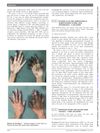
In this case report, a 19-year-old woman with systemic lupus erythematosus experienced significant improvement in neuropsychiatric symptoms, including psychosis and seizures, following treatment with high-dose corticosteroids, immunosuppressants, and antidepressants.
 September 2017 in “The journal of investigative dermatology/Journal of investigative dermatology”
 This study reports that the loss of Langerhans cells in lichen planopilaris scars may be linked to the downregulation of ITG αvβ6, which is not seen in other scar formation diseases.
 May 2025 in “Frontiers in Genetics”
 This study reported discovering a novel missense variant in a case of autosomal recessive woolly hair in a 31-year-old Chinese woman, which significantly reduced secretion of the encoded protein, likely leading to disease by impairing its hydrolytic function.
 6 citations
,
November 2016 in “Journal of Plastic Reconstructive and Aesthetic Surgery”
6 citations
,
November 2016 in “Journal of Plastic Reconstructive and Aesthetic Surgery” This survey found support among BAAPS members for using procedure-specific consent forms to improve clarity and consistency in patient information for aesthetic procedures.
1 citations
,
January 2024 in “Clinical Cosmetic and Investigational Dermatology” This case report discusses a 58-year-old female diagnosed with oral lichen sclerosus, an extremely rare form of the disorder, which improved following treatment with topical and intralesional corticosteroids, highlighting the importance of recognizing this rare condition in the oral mucosa.
 July 2018 in “Elsevier eBooks”
 This study highlights lichen planopilaris as a form of scarring hair loss with symptoms like shedding and itching, and notes successful treatment options such as topical and oral antiinflammatory medications to preserve hair follicles by early intervention.
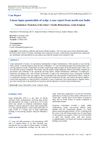 April 2021 in “International Journal of Research in Dermatology”
 This case report describes a 7-year-old child with linear lupus panniculitis of the scalp, treated successfully with a combination of hydroxychloroquine, topical and intralesional steroids, and a topical calcineurin inhibitor.
 1 citations
,
January 2020 in “Skin appendage disorders”
1 citations
,
January 2020 in “Skin appendage disorders” This case study documents the co-existence of trichorhinophalangeal syndrome and loose anagen syndrome in a patient, highlighting a previously unreported association between the two conditions.
1 citations
,
November 2023 in “Indian Journal of Dermatology” This case report documents the first known instance of congenital lipedematous alopecia in a male, specifically a 6-year-old Asian boy, characterized by scalp thickening and sparse hair growth without inflammation, and highlights the need for further research to understand its pathogenesis and treatment.
This study reported an incidence of lichen planus of 0.16% among patients, with the classical type being most common, and found associations with various immune-mediated diseases and rare cases of malignant transformation.
 September 2020 in “Journal of Cutaneous Pathology”
 In this case study, a 69-year-old woman with pityriasis rubra pilaris developed a scarring alopecia with lichen-planopilaris-like features, which responded well to early treatment.
38 citations
,
January 2017 in “PPAR Research” This review discusses the role of PPAR-γ in the pathogenesis of primary cicatricial alopecia, including its involvement in lichen planopilaris and treatment trials using PPAR-agonists, and reports no new clinical results.
 December 2005 in “Journal of the American Academy of Physician Assistants”
 The woman was diagnosed with lichen planopilaris and can be treated with corticosteroids.
July 2025 in “Case Reports in Dermatology” This case report highlights that early signs like pili torti may precede lichen planopilaris in some patients, emphasizing the importance of timely intervention to prevent permanent hair loss.
 28 citations
,
July 2015 in “American Journal of Clinical Dermatology”
28 citations
,
July 2015 in “American Journal of Clinical Dermatology” This study found a higher prevalence of metabolic syndrome in patients with lichen planus, especially those with mucosal involvement, which is associated with increased cardiovascular and diabetes risk.
July 2025 in “Journal of Clinical Medicine” In this review, platelet concentrates were found to show comparable efficacy to steroids and immunosuppressive drugs in treating oral lichen planus, with some studies reporting more benefits and others noting more severe adverse reactions with platelet treatments.
1 citations
,
December 2016 in “Rossijskij žurnal kožnyh i veneričeskih boleznej” This study reported that 80% of patients with non-scarring alopecia showed a clinical cure after treatment with unactivated platelet leukocyte autoplasma.
 July 2022 in “JEADV Clinical Practice”
 This review discusses the classification of lichen planopilaris and its subtypes under the proposed term "lichenoid alopecias," suggesting they exist along a clinical and histological spectrum.
158 citations
,
June 2014 in “Journal of Lipid Research” This review summarizes recent discoveries of GPCRs for lysophosphatidylserine and lysophosphatidylinositol, detailing their roles as lipid mediators, but reports no new experimental results.
 June 2024 in “International Journal of Dermatology”
 This article in the International Journal of Dermatology reports on a case series where the drug upadacitinib was used to treat patients with recalcitrant lichen planopilaris, but no abstract or detailed results are provided to assess its efficacy or safety fully.
 1 citations
,
June 2017 in “Skin”
1 citations
,
June 2017 in “Skin” This study is the first to report that apremilast may be effective in treating refractory lichen planopilaris and frontal fibrosing alopecia, though some patients experienced adverse effects leading to discontinuation.
August 2025 in “Annals of African Medicine” 45 citations
,
August 2018 in “Journal of Lipid Research” This study observed that partial autotaxin deficiency in mice protects against diet-induced obesity and systemic insulin resistance, suggesting the ATX-LPA pathway negatively affects skeletal muscle insulin signaling and mitochondrial function during obesity.
March 2026 in “Anais Brasileiros de Dermatologia” Lichen planopilaris and frontal fibrosing alopecia are likely distinct diseases with different tissue involvement.
January 2025 in “JAAD Case Reports” In this study, researchers noted that while Poly-L-lactic acid dermal fillers boost collagen synthesis to add volume and reduce wrinkles, there is no established link between these fillers and hair loss according to existing literature.
 1 citations
,
April 2016 in “Actas Dermo-Sifiliográficas”
1 citations
,
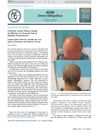
April 2016 in “Actas Dermo-Sifiliográficas” Wearing a wig caused a woman's skin condition to worsen due to pressure from the wig's fasteners.
 January 2009 in “Elsevier eBooks”
 Low level laser therapy may help with hair loss.
 12 citations
,
March 2019 in “Lasers in Surgery and Medicine”
12 citations
,
March 2019 in “Lasers in Surgery and Medicine” This study found that low-level laser therapy increased the expression of proteins in dermal papilla tissues, suggesting it promotes hair growth in male androgenetic alopecia patients.