13 citations
,
June 2011 in “International Journal of Dermatology” This study found that a new lecithinized coal tar formulation did not stain different types of mammalian hair, suggesting it may be promising for treating scalp psoriasis without the drawback of staining.
 1 citations
,
April 2017 in “Journal of Investigative Dermatology”
1 citations
,
April 2017 in “Journal of Investigative Dermatology” This proof-of-concept study reported that a new, ultra-fast, one-step immunohistochemistry method improved the interpretation of Mohs surgery slides, particularly for poorly differentiated tumors.
 January 2023 in “Indian dermatology online journal”
 In this case report, an 8-year-old boy's crusted scalp lesions and alopecia initially mimicking kerion were ultimately diagnosed as Pre-B acute lymphocytic leukemia after histopathological evaluation revealed leukemia cutis.
 3 citations
,
July 2019 in “Supportive Care in Cancer”
3 citations
,
July 2019 in “Supportive Care in Cancer” The lotion CG428 did not show effectiveness in treating permanent hair loss in breast cancer survivors.
 9 citations
,
February 2004 in “Clinical and Experimental Ophthalmology”
9 citations
,
February 2004 in “Clinical and Experimental Ophthalmology” This report documents the second known case of Castleman's disease in the lacrimal gland, diagnosed in an 84-year-old woman through histological examination after excising a left upper lid mass.
 July 2023 in “Nasza Dermatologia Online”
 More research is needed on CCCA in children, especially Black and Asian adolescents.
1 citations
,
April 2022 in “Clinical Cosmetic and Investigational Dermatology” In this study, a case of lichen amyloidosis on the scalp significantly improved with a 2-month topical treatment using clobetasol propionate/all-trans retinoic acid ointment.
 April 2016 in “Journal of Investigative Dermatology”
 This study suggests that lithocholic acid may enhance hair regeneration in alopecia by activating vitamin D receptors in human dermal papilla cells.
 May 2024 in “Animal genetics”
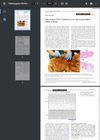
 The researchers investigated a Maine Coon cat with suspected classical Ehlers-Danlos Syndrome and discovered a heterozygous deletion in the COL5A1 gene, underscoring the value of whole-genome sequencing for precise veterinary diagnostics.
503 citations
,
May 2009 in “Cell stem cell” This study suggests that Lrig1-positive cells form a previously unknown reservoir of interfollicular epidermal stem cells in adult mouse skin, influencing epidermal proliferation and hair follicle development.
 2 citations
,
June 2020 in “Dermatology and therapy”
2 citations
,
June 2020 in “Dermatology and therapy” In this case report, narrowband-UVB phototherapy successfully treated a rare instance of Graham Little-Piccardi-Lassueur syndrome, a variant of lichen planopilaris, as investigated through non-invasive imaging techniques.
 13 citations
,
March 2011 in “British Journal of Dermatology”
13 citations
,
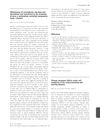
March 2011 in “British Journal of Dermatology” This report describes a case of primary cutaneous follicle centre cell lymphoma presenting as hair thinning on the scalp, which is not a recognized feature of the condition.
20 citations
,
February 1968 in “Journal of Histochemistry & Cytochemistry” This study reports that citrulline, uniquely found in the inner root sheath of hair follicles, can be specifically detected with the carbamido diacetyl reaction, resulting in a bright orange color.
July 2024 in “Journal of Investigative Dermatology” 2 citations
,
November 2023 in “Skin Research and Technology” This study found that RCM combined with dermoscopy can differentiate disease states between alopecia areata, tinea capitis, nevus sebaceous, and linear scleroderma of the scalp by identifying distinct dermal and follicular patterns.
15 citations
,
June 2023 in “Journal of Microbiology and Biotechnology” In this study, researchers found that an ethyl acetate extract of the green microalga Scenedesmus deserticola significantly increased the viability of human dermal fibroblasts by over 20% compared to a control and identified a potent anti-UV compound, loliolide, through further fractionation.
 11 citations
,
September 1999 in “Journal of the European Academy of Dermatology and Venereology”
11 citations
,
September 1999 in “Journal of the European Academy of Dermatology and Venereology” This review examines various immunomodulatory therapies for cutaneous lymphoma and notes that they are most effective in the disease's early stages.
 3 citations
,
May 1999 in “Dermatologic Surgery”
3 citations
,
May 1999 in “Dermatologic Surgery” Dr. Connelly agrees that linear basal cell carcinomas might be more aggressive but highlights the study's lack of clear criteria to identify them.
60 citations
,
July 2014 in “Autophagy” This study found that autophagy is impaired in Birt-Hogg-Dubé syndrome-associated renal tumors and identified that the FLCN protein interacts with key autophagy components regulated by ULK1.
24 citations
,
September 2019 in “Experimental cell research” This study found that BMP2 increased PTEN expression and induced autophagy, promoting hair follicle stem cell differentiation in both in vitro models and a mouse wound model.
24 citations
,
July 2015 in “International Journal of Molecular Sciences” In this study, fluoxetine was found to decrease proliferation and adipogenic differentiation of human adipose-derived stem cells, suggesting it may reduce fat accumulation by increasing autophagy-related gene expression.
15 citations
,
January 2023 in “Antioxidants” This review discusses oxidative stress in alopecia areata pathogenesis and potential treatment strategies, reporting no new clinical results but suggesting biomarkers for oxidative stress and discussing JAK inhibitors as promising options.
10 citations
,
October 2018 in “Journal of molecular and cellular cardiology/Journal of Molecular and Cellular Cardiology” This study identified NM_026333 as a potential anti-aging gene that, when induced, may alleviate proton-induced aging symptoms in CF6-overexpressing and high salt-fed mice.
8 citations
,
February 2021 in “Biomolecules & therapeutics” This study found that myristoleic acid promotes dermal papilla cell proliferation and anagen signaling through autophagy, cell cycle progression, and activation of the Wnt/β-catenin and ERK pathways.
8 citations
,
November 2024 in “Phytomedicine” Isoquercitrin helps hair grow by activating certain cell processes.
 7 citations
,
March 2022 in “Molecules”
7 citations
,
March 2022 in “Molecules” This study found that 5-bromo-3,4-dihydroxybenzaldehyde (BDB) promoted hair growth in rat vibrissa follicles by activating Wnt/β-catenin and autophagy pathways and inhibiting the TGF-β pathway in dermal papilla cells.
6 citations
,
September 2021 in “Autophagy” In this study on mouse preputial glands, suppressing ATG7-dependent autophagy delayed age-related changes, affected lipid metabolism, and reduced pheromone production, highlighting autophagy's roles in glandular homeostasis and cell breakdown.
5 citations
,
July 2024 in “Journal of Microbiology and Biotechnology” This study investigated autophagy activator ICP5249 and found it promotes hair growth by enhancing cell proliferation and autophagy-related markers in human dermal papilla cells and hair follicles, with AMPKα playing a regulatory role, suggesting its potential as a hair growth ingredient.
 5 citations
,
November 2022 in “Journal of Ginseng Research/Journal of ginseng research”
5 citations
,
November 2022 in “Journal of Ginseng Research/Journal of ginseng research” This study investigated the role of autophagy in human dermal papilla cells and found that inhibiting autophagy accelerates the catagen phase by reducing Wnt/β-catenin signaling. Furthermore, adding ginsenoside Re appears to restore autophagy, suggesting potential benefits for mitigating hair loss linked to autophagy inhibition.
4 citations
,
June 2024 in “The Kaohsiung Journal of Medical Sciences” This study found that in mouse embryonic fibroblast cells lacking autophagy function, overexpression of Atg5 increased cell proliferation, while restoring autophagy reversed this effect, highlighting Atg5's dual role in tumorigenesis depending on autophagy conditions.