1 citations
,
March 2025 in “Skin Appendage Disorders” This literature review on JAK inhibitors reports that ocular side effects are rare but could be significant, with an inability to establish a causal link. Clinicians are advised to monitor such adverse events and report them to drug safety agencies.
15 citations
,
June 2020 in “The journal of investigative dermatology/Journal of investigative dermatology” This study identifies KLK14 as a significant factor contributing to hair defects and skin inflammation in a mouse model of Netherton syndrome.
 30 citations
,
April 2017 in “European Journal of Cell Biology”
30 citations
,
April 2017 in “European Journal of Cell Biology” This study observed that CIP/KIP proteins play a significant role in regulating cell cycle arrest and differentiation in human hair follicles, supporting hair growth and formation in the anagen phase.
2 citations
,
January 1990 in “PubMed” This case study highlights a 20-year-old male with perforating folliculitis, proposing its classification within primary perforating dermatoses, and discusses failed keratolytic treatments and potential underlying causes.
 February 2024 in “Journal of Dermatological Science”
 This study examined the formation of acquired curved hair and found that the fusion of hair matrix cells during follicle regeneration contributes to asymmetric follicle shapes and curved hair, potentially linked to changes in type IV collagen and protein expression levels.
4 citations
,
May 2024 in “Experimental Dermatology” This study reviews the role of the KIT ligand and receptor pathway in managing melanocyte and mast cell-related skin diseases, examining how its regulation can lead to potential therapies for conditions like vitiligo, melanoma, and mastocytosis. Results are not reported.
38 citations
,
January 2014 in “Journal of Dermatological Science” This study found that Krtap11-1 may play an important role in keratin-bundle assembly in the hair cortex, influencing the physical properties of hair.
January 2003 in “Swinburne Research Bank (Swinburne University of Technology)” August 2021 in “Indian dermatology online journal” This study reported an unusual case of nail matrix involvement and trachyonychia in a child with juvenile pityriasis rubra pilaris, showing significant improvement with topical therapy and oral biotin.
June 2023 in “Journal of Paediatrics and Child Health” This case report describes a child with tinea capitis who experienced complete lesion remission and hair regrowth after early diagnosis and treatment with antifungal medications, highlighting the importance of timely management to prevent complications like scarring and permanent hair loss.
7 citations
,
October 2019 in “Frontiers in bioengineering and biotechnology” This study found that pretreatment with KP-Cryst fusion proteins effectively protected Asian and Caucasian virgin hair from thermal damage by maintaining higher water content and preventing structural changes during heat application.
9 citations
,
September 2019 in “PLoS ONE” This study demonstrated that keratin K124 is specific to equine hoof lamellar tissue and established monoclonal antibodies that can specifically recognize K124 without cross-reacting with other tissues.
 15 citations
,
July 2004 in “Journal of morphology”
15 citations
,
July 2004 in “Journal of morphology” This study analyzes the fine structure and protein distribution in monotreme hairs, finding similarities with other mammals and detailing unique immunocytochemical features in their inner root sheaths.
26 citations
,
March 1995 in “Differentiation” This study isolated and sequenced the complete gene rKAP4L1, which encodes a cysteine-rich hair keratin-associated protein in rabbit hair follicles.
2 citations
,
September 2023 in “JAAD Case Reports” This article discusses the chronic inflammatory skin diseases acne keloidalis nuchae and dissecting cellulitis of the scalp, focusing on their shared etiology and differing progression, and reports no new clinical findings.
October 1990 in “Spectrum Research Repository (Concordia University)”  February 2018 in “BMJ case reports”
 This case report describes an 18-year-old woman with a pruritic rash featuring extensive confluent scaly erythema, hyperkeratotic follicular plugging, and waxy keratoderma on palms and soles.
48 citations
,
January 2002 in “Journal of Structural Biology” This study reports that trichocyte intermediate filaments from rat vibrissae and human hair follicles may contain a hollow region at their core, suggesting unique structural properties.
8 citations
,
April 2014 in “Clinical and Experimental Dermatology” This study suggests that eruptive vellus hair cysts often have atypical pathological changes and likely originate from the infrainfundibulum and sebaceous duct based on keratin expression analysis.
1 citations
,
December 2020 in “Case reports in dermatological medicine” This case report discusses a 67-year-old male with pre-existing pemphigus vulgaris who showed nearly 90% resolution of his skin lesions after two weeks of acyclovir treatment, accompanied by continued use of systemic steroids.
 November 2025 in “Zenodo (CERN European Organization for Nuclear Research)”
 In this observational study, researchers found that 55% of participants with hair loss known as Khalitya had serum calcium deficiency, which aligns with both Ayurvedic and modern perspectives linking poor nutrition to hair disorder, highlighting the importance of dietary regulation and stress management.
4 citations
,
August 2008 in “Plastic & Reconstructive Surgery” This study reports that the composite galeal frontalis pericranial flap can be successfully used for reconstruction in anterior cranial base surgery, effectively sealing cerebrospinal fluid leaks, while minimizing complications like numbness and skin necrosis.
8 citations
,
March 2004 in “Mammalian genome” KAP genes are crucial for hair development and show both shared and unique traits in humans, chimpanzees, and baboons.
 1 citations
,
October 2012 in “The Journal of Dermatology”
1 citations
,
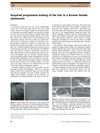
October 2012 in “The Journal of Dermatology” This letter to the editor describes a case of acquired progressive kinking of the hair in a Korean female adolescent, but no new research findings are reported.
1 citations
,
April 2011 in “Clinical Kidney Journal” This case report describes a 70-year-old kidney transplant recipient who developed a keratoacanthoma near an arteriovenous fistula after returning to hemodialysis and stopping immunosuppression.
November 2021 in “Clinical, cosmetic and investigational dermatology” This case report details an 80-year-old woman with circle hair potentially linked to acquired ichthyosis from multiple myeloma, where a prescribed topical treatment led to clinical improvement.
 16 citations
,
October 2014 in “Oral surgery, oral medicine, oral pathology and oral radiology”
16 citations
,
October 2014 in “Oral surgery, oral medicine, oral pathology and oral radiology” This study found that keratoacanthoma of the lip likely arises from outer root sheath cells, based on the presence of specific keratin markers and periodic acid-Schiff staining patterns.
 April 2017 in “Journal of Investigative Dermatology”
 The researchers reported that iPSCs derived from Sendai virus reprogrammed blood cells can mature into functional keratinocytes for up to 60 days, potentially offering new approaches for DEB treatment.
28 citations
,
February 2014 in “Journal of Cutaneous Pathology” In this study, researchers observed that keratoacanthoma exhibits dynamic follicular differentiation throughout its stages, with changes in specific keratin expressions, and regressed lesions showing epidermal rather than follicular characteristics.
35 citations
,
January 2008 in “American Journal of Clinical Dermatology” This case report further supports the association of keratosis follicularis spinulosa decalvans with acne keloidalis nuchae and tufted hair folliculitis.