 4 citations
,
January 2017 in “Annals of Dermatology”
4 citations
,
January 2017 in “Annals of Dermatology” Tianeptine may help prevent hair loss by promoting hair growth and reducing cell death.
 27 citations
,
May 2007 in “Archives of dermatological research”
27 citations
,
May 2007 in “Archives of dermatological research” In this study, alopecia areata patients treated with diphencyprone showed a significant increase in CD8 lymphocytes around hair bulbs, which may be associated with hair regrowth.
 18 citations
,
September 2016 in “International Journal of Molecular Sciences”
18 citations
,
September 2016 in “International Journal of Molecular Sciences” This study reports that PDRN, commonly used for wound healing, may also have anti-melanogenesis and potential skin whitening effects in both experimental models and clinical settings.
This study found that ethanol extract of fragrant pandanus leaves inhibited the growth of the dandruff-causing fungus Pityrosporum ovale, with higher concentrations showing greater inhibitory effects.
12 citations
,
January 1987 in “Carcinogenesis” This study found that a single application of TCDD on the skin of hairless mice altered epidermal differentiation, changing keratin expression patterns similarly to a known tumor promoter.
1 citations
,
December 2020 in “Media Keperawatan Politeknik Kesehatan Makassar” This study describes nursing care for a patient with Type 2 Diabetes, finding that nutritional management and insulin administration improved nutritional status and controlled blood glucose levels.
 June 2023 in “Journal of cosmetic dermatology”
 This study concluded that both DPCP alone and combined with PRP are effective and safe for treating severe alopecia areata, with no significant difference between the two treatment methods.
 March 2026 in “Egyptian Journal of Forensic Sciences”
 This review critically examines Forensic DNA Phenotyping, highlighting high accuracy in predicting certain traits but also legal and ethical challenges, particularly around regulatory fragmentation and issues of genetic privacy.
 September 2023 in “Mağallaẗ baġdād li-l-ʿulūm”
 This study found diverse and distinct microbial communities in dry and wet habitats of Duku plants, with varying relative abundances linked to plant health and soil nutrient interactions.
5 citations
,
June 2008 in “British Journal of Dermatology”  December 2022 in “Acta Ophthalmologica”
 In this study, dutasteride treatment in retinitis pigmentosa mice increased photoreceptor survival and reduced glial activation, suggesting it may offer a neuroprotective effect.
 4 citations
,
January 2001 in “Archives of Biochemistry and Biophysics”
4 citations
,
January 2001 in “Archives of Biochemistry and Biophysics” This study found that TPA induces apoptosis in pig renal epithelial cells by affecting cell cycle proteins, and activated ras can prevent this process.
 January 2026 in “International Journal of Research and Innovation in Applied Science”
 This case report details a rare instance of malignant proliferating trichilemmal tumour in a 60-year-old male, emphasizing the significance of histochemical and immunohistochemical markers for accurate diagnosis and differentiation from squamous cell carcinoma.
July 2024 in “International Journal of Molecular Sciences” This study explored the effects of DPP, a 15-PGDH inhibitor, on human follicle dermal papilla cells damaged by dihydrotestosterone and observed that DPP enhanced wound healing, reduced reactive oxygen species, and increased hair growth in ex vivo human hair follicle cultures.
 January 1999 in “American Journal of Medical Genetics Part A”
 This case report describes a rare occurrence of ectodermal dysplasia features in a 14-year-old with MBTPS1 gene variants, expanding the known spectrum of related disorders.
 1 citations
,
December 2019 in “JURNAL BIOSAINS”
1 citations
,
December 2019 in “JURNAL BIOSAINS” This study evaluated krokot extract as a hair tonic and found it to be microbiologically safe, effective at extending and increasing hair weight, non-irritating, and generally well-received in terms of aroma and color when tested on rabbits.
48 citations
,
June 2000 in “Japanese Journal of Cancer Research” This study found that dimethylarsinic acid significantly accelerates skin tumor development in hair follicle-targeted K6/ODC transgenic mice.
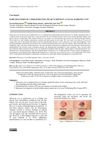 March 2022 in “Folia Medica Indonesiana”
 This case report described a facial hairline tumor initially diagnosed as a sebaceous cyst but ultimately confirmed as a rare Proliferating Pilar Tumor with focal malignancies upon histopathological examination.
10 citations
,
January 2012 in “Case reports in medicine” This report describes two cases where patients developed vitiligo as a side effect of diphencyprone treatment for alopecia areata, highlighting the need to inform patients about this potential adverse effect.
 19 citations
,
December 2015 in “Journal of Investigative Dermatology”
19 citations
,
December 2015 in “Journal of Investigative Dermatology” This study found that keratin 17 expression is initially down-regulated and later strongly up-regulated by ionizing radiation in a rat model, with p53 repressing early transcription.
13 citations
,
July 1994 in “PubMed” This study found that TPA treatment induced expression of keratins K6 and K16 in mouse epidermis, with K6 expressed across all cell layers and K16 only in post-mitotic cells.
March 2022 in “Institutional Repositories DataBase (IRDB)” This system overview describes the UTokyo Repository's role in storing and providing online access to digital resources from the University of Tokyo, reporting no new empirical findings or research results.
 30 citations
,
February 2017 in “Histochemistry and Cell Biology”
30 citations
,
February 2017 in “Histochemistry and Cell Biology” This study found that applying TPA to mice accelerated hair follicle regeneration by activating Akt and Wnt/ß-catenin signaling pathways, involving hair follicle stem cell proliferation.
5 citations
,
January 2021 in “Indian Journal of Pharmacology” This case study reports generalized keratosis pilaris as a rare cutaneous side effect of nilotinib in a 40-year-old woman with chronic myeloid leukemia, highlighting the need for awareness among physicians.
 11 citations
,
May 2016 in “Naunyn-Schmiedeberg's Archives of Pharmacology”
11 citations
,
May 2016 in “Naunyn-Schmiedeberg's Archives of Pharmacology” This study found that 15-dPGJ2 promotes apoptosis in human follicular keratinocytes, suggesting its potential role in developing hair loss prevention treatments through DP2 antagonism.
January 2026 in “Journal of Hair Restoration and Regenerative Medicine” This review discusses methods to better identify unsafe donor areas in patients with diffuse unpatterned alopecia, emphasizing non-surgical management when specific diagnostic criteria are met, but reports no new clinical results.
 9 citations
,
January 2019 in “American Journal of Dermatopathology”
9 citations
,
January 2019 in “American Journal of Dermatopathology” This study found that both androgenetic alopecia and alopecia areata showed significantly increased DKK-1 expression, potentially implicating it in the pathogenesis and as a treatment target for these conditions.
January 2024 in “Wiadomości Lekarskie” This pilot clinical study introduces DEC cells as a novel therapy for Duchenne muscular dystrophy, confirming safety and efficacy in seven patients up to 24 months post-treatment.
 August 2025 in “Intisari Sains Medis”
 This study found that in healthy individuals, TGF-β1 levels in platelet-rich plasma are significantly higher when extracted using the buffy coat method compared to the pure method, with additional gender differences observed only in the buffy coat PRP.
22 citations
,
March 1999 in “International Journal of Clinical Practice” This review discusses the use of topical immunotherapy for severe alopecia areata and resistant viral warts, highlighting diphencyprone's advantages and the need for careful handling to avoid staff sensitisation; it reports no new clinical results.