13 citations
,
November 2018 in “Animal Genetics” This study suggests that a newly identified KRT 71 gene variant may be responsible for curly hair in Curly Coated Retrievers and potentially contributes to follicular dysplasia.
 205 citations
,
March 2012 in “Science Translational Medicine”
205 citations
,
March 2012 in “Science Translational Medicine” PGD2 stops hair growth and is higher in bald men with AGA.
20 citations
,
March 2021 in “Drug design, development and therapy” This review summarizes the pharmacology, mechanisms, and clinical efficacy of topical immunotherapy for alopecia areata but reports no new clinical results.
 1 citations
,
January 2012 in “Juntendō Igaku/Juntendo igaku”
1 citations
,
January 2012 in “Juntendō Igaku/Juntendo igaku” This study found that a simplified classification based on clinical and morphological features may aid in the diagnosis and initial management of inherited keratinizing disorders, although genetic analysis is essential for definitive diagnosis.
June 2026 in “Journal of Cosmetic Dermatology” PDRN may help with female hair loss, but more research is needed.
 December 2025 in “Cureus”
 This article discusses topical keratolytic therapy for keratosis pilaris, highlighting potential benefits while noting limitations in the current evidence base, and reports no clinical results.
July 2024 in “Journal of Investigative Dermatology” This study found that systemic treatment with DS77754007, a KLK5 inhibitor, improved skin symptoms in a mouse model of Netherton Syndrome more effectively than certain antibody treatments, suggesting KLK5 inhibition as a promising therapeutic approach for this condition.
January 2025 in “Kuwait Journal of Science” In this study, researchers sequenced the KRT71 gene in 102 dromedary camels to find genetic polymorphisms linked to hair shape, identifying 17 variants but none that fully explained hair shape variations, suggesting other genes may also play a role.
33 citations
,
June 2007 in “Gene Expression Patterns” This study found that CTIP2 is highly expressed in mouse skin during embryogenesis and adulthood, suggesting it may play a role in skin development and homeostasis.
36 citations
,
January 2016 in “The journal of investigative dermatology/Journal of investigative dermatology” This article reviews the connection between PI3K-AKT-mTOR pathway mutations and heritable skin diseases characterized by tissue overgrowth, but it reports no new clinical results.
June 2023 in “Clinical Cosmetic and Investigational Dermatology” This report describes a 60-year-old female with pretibial pruritic papular dermatitis who showed significant improvement of skin lesions after one month of treatment with oral pentoxifylline. The authors highlight the unique clinical and histological features of PPPD and propose pentoxifylline as a potential therapy.
April 2026 in “Clinical and Experimental Dermatology” This study found that treating moderate-to-severe prurigo nodularis with dupilumab significantly improved itch severity, skin condition, and quality of life over 104 weeks, with a favorable safety profile, even in elderly and comorbid patients.
4 citations
,
August 2024 in “Journal of Cosmetic Dermatology” This study reports that injecting a non-cross-linked hyaluronic acid compound into keratosis pilaris-affected skin led to significant improvements in roughness, redness, and overall skin condition, while maintaining a favorable safety profile, making it a promising alternative treatment option.
This study reported that a topical hair tonic containing a 7.5% talok leaf and 2% pare leaf extract combination promoted hair growth in female Wistar rats similarly to minoxidil, showing a 64.71% increase in hair growth with no significant difference from minoxidil in statistical analysis.
 6 citations
,
July 2013 in “Archives of Plastic Surgery”
6 citations
,
July 2013 in “Archives of Plastic Surgery” This article explains that proliferating trichilemmal tumors, originating in the hair follicle, can exhibit low-grade malignant potential, and recommends wide excision to minimize recurrence risk, but reports no new clinical findings.
 1 citations
,
October 2012 in “The Journal of Dermatology”
1 citations
,
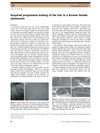
October 2012 in “The Journal of Dermatology” This letter to the editor describes a case of acquired progressive kinking of the hair in a Korean female adolescent, but no new research findings are reported.
 October 2022 in “Benha Journal of Applied Sciences”
 This article discusses the role of Dickkopf-1 as a Wnt antagonist affecting hair follicle signaling but does not report new findings on cicatricial or non-cicatricial alopecia.
 October 2024 in “Cermin Dunia Kedokteran”
 This article discusses the surveillance and spread of hand, foot, and mouth disease in China, Singapore, and Indonesia, and reports no new results, emphasizing the need for improved prevention and management strategies.
 13 citations
,
June 2007 in “Journal of Dermatological Science”
13 citations
,
June 2007 in “Journal of Dermatological Science” This study identified several genes regulated by dihydrotestosterone in an SV40T-transformed human dermal papilla cell line, which may play a role in androgen-mediated hair growth regulation.
 November 2022 in “Journal of Investigative Dermatology”
 This study found that the cytoplasmic dynein component Dynlt3 is essential for effective melanosome transport and transfer in mouse melanocytes, linking melanosome positioning and acidity to the Wnt/β-catenin signaling pathway.
November 1997 in “Open Archive (Karolinska Institutet)” This research observed that mutations in the PTCH gene are common in both sporadic and hereditary basal cell cancers, suggesting a critical role of the PTCH signaling pathway in skin tumor development.
 February 2020 in “Definitions”
 This abstract reviews the role of the human KRT 16 wild-type allele in skin and hair development and its association with certain genetic skin disorders, without presenting new findings.
1 citations
,
August 2024 in “Journal of Pharmacy & Pharmaceutical Sciences” This study found that forming inclusion complexes of DPCP with HPβCD using the 3D ground mixture method enhances its anti-inflammatory activity at lower doses compared to complexes with β-CD.
 60 citations
,
January 2004 in “The journal of investigative dermatology/Journal of investigative dermatology”
60 citations
,
January 2004 in “The journal of investigative dermatology/Journal of investigative dermatology” This study found that inhibiting PKC-β activity with bisindolylmaleimide reduces pigmentation in the skin and hair of guinea pigs and mice by preventing tyrosinase activation.
 February 2022 in “World Journal Of Advanced Research and Reviews”
 This study found that Peperomia pellucida plant extract may benefit hair growth, male libido, male fertility, and renal cell recovery.
25 citations
,
February 2021 in “Diabetes” This study found that Dock5 plays a crucial role in keratinocyte function and wound healing, with its expression reduced in diabetic models but improving healing when restored.
2 citations
,
October 2016 in “OPAL (Open@LaTrobe) (La Trobe University)” This study reports that the Swedish newborn screening program for phenylketonuria, galactosaemia, and biotinidase deficiency is effective, with high sensitivity and specificity, and lower false positive rates compared to other countries, while genetic variants impact detection and incidence patterns in Sweden.
6 citations
,
October 2024 in “Journal of Family Medicine and Primary Care” This systematic review details monitoring and safety guidelines for primary care physicians regarding Janus kinase and tyrosine kinase 2 inhibitors used in treating inflammatory skin conditions, emphasizing their efficacy and the importance of updated knowledge due to associated box warnings and increasing use.
September 2023 in “International journal of molecular sciences” In this study involving ICR mice, researchers found that Korean red pine bark extract improved cognitive functions impaired by TMT through mechanisms like antioxidant system protection, cholinergic and synaptic support, mitochondrial regulation, and reduction of neuro-inflammation and apoptosis.
 January 2024 in “Journal of camel practice and research/Journal of Camel Practice and Research”
 This study analyzed the KRTAP7 gene in four Indian camel breeds and found that the gene sequences were identical across breeds, with no observed SNPs in coding or non-coding regions.