 October 2025 in “International Journal of Cell and Biomedical Science”
 In this study, the application of human umbilical cord mesenchymal stem cell secretome significantly increased hair follicle count in fluconazole-induced alopecia in rats, although changes in epidermal thickness were not significant, suggesting a novel approach for hair restoration.
 August 2025 in “Cermin Dunia Kedokteran”
 This study highlights that hypoalbuminemia, often found in critically ill or elderly hospitalized patients, may increase morbidity, mortality, and hospitalization duration, suggesting specific conditions where oral or parenteral albumin supplementation should be considered.
 January 2024 in “Frontiers in immunology”
 This review highlights the crucial role of histone modification in the pathogenesis and treatment of chronic inflammatory skin diseases, and explores therapeutic strategies targeting these epigenetic changes to improve management of conditions such as psoriasis and atopic dermatitis.
 December 2023 in “International journal of multidisciplinary research and analysis”
 This study suggests that administering SH-MSCs gel might decrease IL-6 expression and increase TGF-β expression in alopecia-like rats, indicating potential for alopecia therapy.
 December 2023 in “International journal of multidisciplinary research and analysis”
 In this study, topical administration of secretome hypoxia mesenchymal stem cells gel increased IL-10 and decreased TNF-α gene expression in a fluconazole-induced alopecia-like model in rats, with the 40 μL dose having the most significant effect.
 December 2023 in “Communications biology”
 This study found that inhibiting the HEDGEHOG-GLI1 pathway could reduce keloid size and gene expression, suggesting it as a potential therapeutic target for keloid pathogenesis.
 November 2023 in “Linköping University medical dissertations”
 This research presents a comprehensive workflow for producing EMA-compliant autologous keratinocyte-based therapies for wound healing and explores miRNA-mediated regulations in human keratinocytes and adipose-derived mesenchymal stem cells.
 September 2023 in “Cureus”
 This study at B.J. Medical College and Civil Hospital highlighted an extensive range of nail disorders, with onychomycosis being the most common, and emphasized the importance of nails in diagnosing both dermatological and systemic conditions.
 August 2023 in “bioRxiv (Cold Spring Harbor Laboratory)”
 This study found that maintaining a low level of Wnt/β-catenin activity is crucial for mammary gland development, as excessive activity inhibits branching and promotes characteristics of hair follicles instead, highlighting its role in skin appendage identity decisions.
 November 2022 in “bioRxiv (Cold Spring Harbor Laboratory)”
 This study found that conditional deletion of Mof in mice resulted in severe defects in skin development, including compromised epidermal differentiation and hair growth, leading to perinatal lethality.
 June 2020 in “bioRxiv (Cold Spring Harbor Laboratory)”
 This study found that the HoxC gene cluster is crucial for the development of hair and nails in mice, with key regulation by two mammalian-specific enhancers.

This Ph.D. project aims to evaluate the self-assembling potential of hair keratin extracts and study the cellular response to both crude and purified keratins, highlighting their potential applications from biomedical to water remediation.
 January 2018 in “Stem cell biology and regenerative medicine”
 This review discusses the interplay between signaling/transcription factor-mediated and epigenetic mechanisms in skin development and regeneration, highlighting the need for further exploration of epigenome reorganization in these processes.
 April 2016 in “Journal of Investigative Dermatology”
 This symposium reviewed various topics in stem cell research related to skin biology, including mechanisms of skin regeneration, tumorigenesis, and pathways influencing melanoma stem cell behavior, but it reported no new clinical results.
 January 2012 in “Durham e-Theses (Durham University)”
 This study found that knock-down of keratin 15 in various cell lines affected cell spreading, morphology, migration, differentiation, and proliferation, suggesting its role in maintaining the stem cell nature of keratinocytes.
 July 2026 in “Frontiers in Immunology”
 This review summarizes recent findings on the role of lactylation, a novel post-translational modification, in skin diseases, suggesting its potential as a therapeutic target by linking metabolism, epigenetic regulation, and inflammatory processes.
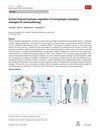
This review highlights that surface mechanical regulation can program macrophage behavior through specific mechanical cues on material surfaces, potentially advancing immunotherapies and regenerative medicine by enabling precise control over macrophage functions.
 April 2026 in “Journal of Pharmaceutical Innovation”
 In this study, the researchers developed and optimized a curcumin nanocrystal gel to enhance skin permeability, reporting improved dissolution properties and antiproliferative effects on cell lines, suggesting it as a promising topical delivery system.
 February 2026 in “Libri Oncologici Croatian Journal of Oncology”
 The review found that imiquimod is a promising non-invasive treatment for HPV-related neoplasias, particularly effective for vulvar lesions, but notes that more research is needed to optimize its use.

In this study, human dermal papilla cells exposed to wasabi leaf extract showed changes in cytokine-related gene expression, which the authors suggest could help clarify the biological effects of wasabi.
 October 2024 in “Frontiers in Oncology”
 This review examines the potential of K18 as a diagnostic and prognostic marker in epithelial-derived tumors, highlighting its specific expression in tumor tissues and interaction with proteins involved in tumor progression, without reporting new clinical findings.
 September 2024 in “International Journal of Pharmaceutical Quality Assurance”
 This review outlines the potential of nanoemulsion-based hydrogels (nanoemulgels) for enhanced topical and transdermal drug delivery in treating skin disorders, highlighting their ability to improve therapeutic efficacy, control drug release, and boost patient compliance.
 June 2024 in “International Journal of Pharmaceutical Research and Applications”
 In this overview, researchers highlighted the potential for using traditional knowledge from Ayurveda and other systems to identify plant compounds for herbal cosmetics, emphasizing a hair serum that hydrates the scalp and promotes hair growth as an area of interest. Results were not reported.
 May 2024 in “bioRxiv (Cold Spring Harbor Laboratory)”
 This study found that hair with lower levels of keratin associated proteins reduced the foreign body response in mouse subcutaneous implant tests compared to hair with higher keratin levels.
 April 2024 in “Cell death and differentiation”
 This study discusses how different modes of regulated cell death in keratinocytes affect skin stem cell niches, and their role in skin inflammation, injury repair, and cancer, based on findings from human dermatological conditions and experimental mouse models.
 February 2024 in “Frontiers in plant science”
 This study found that Plant Elicitor Peptides enhance root hair growth through a mechanism independent of their known receptors, with PROPEP2 playing a key role in this process by influencing gene expression related to root hair formation.
 January 2024 in “Theranostics”
 This study found that HDAC6 plays a crucial role in regulating primordial follicle activation, with its overexpression delaying activation and preserving fertility by reducing NGF levels.
 December 2023 in “Frontiers in endocrinology”
 This review explores the role of hyperandrogenism, including adrenal-derived 11-oxygenated androgen, in the development of polycystic ovarian syndrome and discusses potential therapeutic strategies targeting androgen excess, without reporting new clinical results.
 October 2023 in “bioRxiv (Cold Spring Harbor Laboratory)”
 In this study, researchers found that while blocking either glycolysis or glutaminolysis in cancer cells did not prevent tumor growth due to metabolic flexibility, simultaneous inhibition of both pathways hindered carcinoma development, indicating multiple interventions may be necessary for effective metabolic manipulation in cancer treatment.
 October 2023 in “Frontiers in endocrinology”
 This review investigates molecular mechanisms behind PCOS pathogenesis and discusses potential therapies, but reports no new clinical results.