 6 citations
,
May 1997 in “Journal of Dermatological Science”
6 citations
,
May 1997 in “Journal of Dermatological Science” This study found that a gene from hamster flank organs is indirectly regulated by androgens, despite lacking direct androgen responsive elements, indicating involvement of androgen-dependent transcription factors.
12 citations
,
January 2000 in “Biochemical and Biophysical Research Communications” This study characterized the intron-exon organization of human keratin 15 and keratin 19 genes to aid future mutation detection analyses related to potential genetic disorders of keratinization.
38 citations
,
February 1988 in “Molecular and Cellular Biology” This study found that among the two highly homologous K16 genes on chromosome 17, only one produced a functional protein due to stronger promoter activity.
 January 2018 in “bioRxiv (Cold Spring Harbor Laboratory)”
 This study identified a new cis-regulatory element in the mouse Hr gene that influences its expression in skin and brain cells, highlighting a complex molecular network involved in hair follicle formation.
 27 citations
,
June 2005 in “The journal of investigative dermatology/Journal of investigative dermatology”
27 citations
,
June 2005 in “The journal of investigative dermatology/Journal of investigative dermatology” This study identified numerous size polymorphisms in the human ultrahigh sulfur KAP4 genes due to intragenic sequence variations, suggesting these polymorphisms may have arisen through deletions and duplications during evolution.
51 citations
,
December 2006 in “Mammalian Genome”  November 2025 in “Cancer Management and Research”
 This study highlighted Keratin 17's critical role in cancer therapy resistance across several malignancies, involving various signaling pathways, and identified it as a significant biomarker and potential therapeutic target, particularly in reversing resistance.
19 citations
,
February 2013 in “Archives of Dermatological Research”  March 2024 in “BMC cancer”
 This study reports that high expression of proteins ST14 and TMEFF1 in ovarian cancer correlates with higher tumor malignancy and worse prognosis, and reveals an interaction where ST14 regulates TMEFF1 to promote cancer cell proliferation, migration, and invasion.
46 citations
,
November 1998 in “Experimental Cell Research” This study found that K15 is variably expressed in sheep and mouse hair follicles, with specific patterns suggesting a role in the early stages of keratinocyte differentiation.
 105 citations
,
February 1996 in “Journal of biological chemistry/The Journal of biological chemistry”
105 citations
,
February 1996 in “Journal of biological chemistry/The Journal of biological chemistry” In this study, sequences upstream of the TGM3 gene were found to regulate epithelial-specific gene expression in keratinocytes, suggesting potential applications in gene therapy.
 5 citations
,
August 2013 in “InTech eBooks”
5 citations
,
August 2013 in “InTech eBooks” This article reviews the role of KLF4, a transcription factor, in various cellular processes and its dual function as a tumor suppressor or oncogene depending on the context, but presents no new experimental results.
2 citations
,
August 2023 in “Development Genes and Evolution” 35 citations
,
October 2002 in “Biochemical and Biophysical Research Communications” This study reports that K7 expression patterns observed in mice are similar to those in humans, revealing previously unreported expression in the gastrointestinal tract, tongue, and various "hard" epithelial tissues.
 10 citations
,
February 2008 in “Photochemistry and photobiology”
10 citations
,
February 2008 in “Photochemistry and photobiology” This study suggests that the vitamin D receptor and hairless gene may directly regulate each other via a transcriptional mechanism, potentially explaining phenotypic similarities between atrichia and VDRRIIa rickets.
 June 2024 in “British Journal of Dermatology”
 This article presents a family case study of dermatopathia pigmentosa reticularis linked to a specific KRT14 gene variant, detailing symptoms and stressing the importance of molecular diagnosis for management.
26 citations
,
March 1995 in “Differentiation” This study isolated and sequenced the complete gene rKAP4L1, which encodes a cysteine-rich hair keratin-associated protein in rabbit hair follicles.
May 2005 in “Molecular Carcinogenesis” This study found that mrp/plf-mRNA expression in murine skin increases in response to different tumor promoters, suggesting its potential as a short-term biomarker for chemical carcinogenesis.
2 citations
,
May 2024 in “BMC Genomics” This study analyzed the genetics of the patchiness phenotype in New Zealand rabbits and found that the gene KRT82, with identified SNPs in its promoter, may serve as a potential biomarker for breeding these rabbits.
6 citations
,
January 2006 in “Journal of dermatological science” Runx1 helps control the KAP5 gene in human hair follicles.
 5 citations
,
January 2021 in “iScience”
5 citations
,
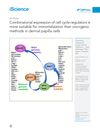
January 2021 in “iScience” Using a combination of specific cell cycle regulators is better for safely keeping hair root cells alive indefinitely compared to cancer-related methods.
94 citations
,
October 1994 in “The Journal of Cell Biology” This study demonstrates that overexpression of K16 in transgenic mice disrupts normal keratinization, leading to hyperkeratosis, acanthosis, and alterations in the skin's epithelial cells.
18 citations
,
November 2005 in “Archives of Dermatological Research” September 1999 in “Molecular Carcinogenesis” This study reported that overexpressing ornithine decarboxylase in C57Bl/6 mice increased their sensitivity to tumor promotion by TPA, a change reversible by doxycycline treatment.
 3 citations
,
September 2022 in “The journal of investigative dermatology/Journal of investigative dermatology”
3 citations
,
September 2022 in “The journal of investigative dermatology/Journal of investigative dermatology” This study found that enhanced wound healing in oral mucosa involves a SOX2-regulated transcriptional network which includes increased expression of keratin K75, and interaction of K75 with the LINC complex may play a crucial role in promoting rapid wound repair.
49 citations
,
January 2010 in “Plant and Cell Physiology” This study found that a phosphorus starvation-insensitive mutant of Arabidopsis thaliana shows altered root growth and auxin responses under low phosphate conditions compared to wild-type plants, suggesting a role for LPR1 in regulating these traits.
318 citations
,
October 1998 in “The Journal of Cell Biology” This study found that ectopic expression of the lymphoid-enhancer factor can induce K17 protein in the skin, suggesting a link between skin development and wound repair processes in mice.
This study found that activation of delta-opioid receptors in keratinocytes may delay the expression of the PER2 gene, suggesting a possible link to cancer development through circadian rhythm disruption.
 April 2023 in “Cancer research”
 This study suggests that KRTAP2-3 may serve as a novel biomarker to identify cells in the polyaneuploid cancer cell state, which is linked to therapy resistance and poor prognosis in prostate cancer.
100 citations
,
December 2002 in “Journal of biological chemistry/The Journal of biological chemistry” This study identified a domain on human chromosome 21q22.1 containing various high glycine-tyrosine and high sulfur keratin-associated protein genes, revealing their diverse expression in hair-forming cells.