 22 citations
,
August 1999 in “Experimental Dermatology”
22 citations
,
August 1999 in “Experimental Dermatology” This study found that subcutaneous injections of guanethidine or 6-hydroxydopamine induced premature hair growth in mice, suggesting a role for sympathetic nerves in hair growth control.
 25 citations
,
June 2021 in “Developmental Cell”
25 citations
,
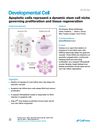
June 2021 in “Developmental Cell” In this study, researchers found that deleting Caspase-9 in hair follicle stem cells delayed apoptosis, leading to accelerated wound repair and new hair follicle regeneration by maintaining apoptotic cells as signaling centers.
 January 2018 in “Springer eBooks”
 Terbinafine is the most effective medicine for fungal nail infections, especially for diabetics and those with weak immune systems.
 2 citations
,
November 2017 in “Journal of Cosmetic Dermatology”
2 citations
,
November 2017 in “Journal of Cosmetic Dermatology” In this study, subcutaneous platelet-rich plasma injections improved hair density and histological markers of hair growth in hairless rats without causing local toxicity.
 August 2017 in “Journal of Investigative Dermatology”
 Activin increases skin tumor formation, skin Tregs help hair growth, lymph-node removal doesn't improve melanoma survival, cells can revert to stem cells in wound healing, and skin bacteria produce peptides that may treat infections.
 4 citations
,
May 2025 in “npj Parkinson s Disease”
4 citations
,
May 2025 in “npj Parkinson s Disease” This study identified peripheral myeloid cells as the earliest dysregulated immune cells in PINK1 KO mice with Parkinson’s-like symptoms following intestinal infections, suggesting that PINK1 regulates gut immune functions linked to early Parkinson’s disease mechanisms.
 27 citations
,
June 2005 in “The journal of investigative dermatology/Journal of investigative dermatology”
27 citations
,
June 2005 in “The journal of investigative dermatology/Journal of investigative dermatology” This study identified numerous size polymorphisms in the human ultrahigh sulfur KAP4 genes due to intragenic sequence variations, suggesting these polymorphisms may have arisen through deletions and duplications during evolution.
 13 citations
,
July 2012 in “Pigment Cell & Melanoma Research”
13 citations
,
July 2012 in “Pigment Cell & Melanoma Research” In this study, researchers identified a new dominant mutation in Hairless mice, called Pied, resulting from a deletion in the Adam10 gene, which causes freckle-like skin pigmentation by inhibiting melanocyte expansion.
 125 citations
,
August 2020 in “Frontiers in Immunology”
125 citations
,
August 2020 in “Frontiers in Immunology” This review discusses sex-based differences in immune responses, focusing on genetic, hormonal, and microbiome factors influencing infections like COVID-19, and reports no clinical results.
 103 citations
,
January 2011 in “Blood”
103 citations
,
January 2011 in “Blood” This study found that thymus transplantation in infants with FOXN1 deficiency led to T-cell reconstitution and functional immunity, resolving serious infections and cytopenias.
 May 2020 in “bioRxiv (Cold Spring Harbor Laboratory)”
 This study found that hair-type tissues in hedgehogs show higher enrichment of immune-related genes compared to spine-type tissues, suggesting that spines evolved to protect against injuries and infections.
 44 citations
,
September 2019 in “The EMBO Journal”
44 citations
,
September 2019 in “The EMBO Journal” This study found that lymphatic vessels in mice are important for hair follicle development and organization, as their depletion blocks hair growth.
 39 citations
,
October 2014 in “Schweizerische medizinische Wochenschrift”
39 citations
,
October 2014 in “Schweizerische medizinische Wochenschrift” This study found that while cyclophosphamide remains effective for severe autoimmune conditions, it is associated with gastrointestinal side effects, infections, some cases of irreversible amenorrhoea, and a higher risk of malignancies, emphasizing the need for long-term monitoring.
 3 citations
,
December 2019 in “Journal of Cosmetic and Laser Therapy”
3 citations
,
December 2019 in “Journal of Cosmetic and Laser Therapy” This study found that plasma rich in growth factors showed promising results for increasing hair number and thickness in androgenic alopecia patients, with better outcomes after multiple injections.
 April 2018 in “Journal of Investigative Dermatology”
 This study found that in obese mice, local antimicrobial activity is reduced due to a loss of adipogenic stem cells and an increase in mature adipocytes, leading to higher susceptibility to skin infections.
November 2025 in “Journal of Investigative Dermatology” AMP-303 injections can increase hair growth in androgenetic alopecia with minimal side effects.
 July 2024 in “Journal of Investigative Dermatology”
 In this animal study, researchers found that the simultaneous deletion of ERBB2 and ERBB3 in mice results in impaired skin differentiation, inflammation, and sebaceous gland alteration, leading to skin lesions, while highlighting potential side effects in cancer therapies targeting these receptors.
 April 2017 in “The journal of investigative dermatology/Journal of investigative dermatology”
 This study identified intramembrane proteolysis as a key feature of Astrotactin2 maturation, providing insights into its role in planar cell polarity hair patterning.
24 citations
,
June 2015 in “Journal of Investigative Dermatology” This study observed that epidermal-specific deletion of aPKCλ in mice disrupts hair follicle stem cell quiescence, leading to altered hair follicle cycling and skin anomalies.
 November 2024 in “Journal of Cosmetic Dermatology”
 This case report highlights a rare instance of filler-induced alopecia in a young woman following hyaluronic acid filler injections, showing successful hair regrowth and scar resolution through multidisciplinary treatment including hyaluronidase and other therapies, emphasizing early recognition and intervention.
 January 2024 in “Journal of Cosmetics, Dermatological Sciences and Applications”
 This study found that electronically-operated pneumatic injections for administering a peptide-hyaluronic acid combination were well tolerated and led to significant improvement in hair density and thickness for men with androgenic alopecia over six months, though the exact mechanism remains uncertain.
6 citations
,
May 2021 in “Aesthetic Surgery Journal” This study found that intradermal injections of platelet-rich plasma were equally safe and effective for treating androgenetic alopecia, with higher platelet numbers possibly enhancing hair density and follicle diameter.
 April 2017 in “Journal of Investigative Dermatology”
 This study found that long-term hair follicle stem cells originate from embryonic progenitor cells in a niche with reduced Wnt/β-catenin signaling, which is essential for their specification.
January 2022 in “Aesthetic surgery journal” In this study, intradermal injections of extracellular vesicles over six months were reported to be safe and effective in improving hair growth among patients with pattern hair loss, with favorable response linked to specific patient factors and treatment volumes.
1 citations
,
November 2022 in “International journal of molecular sciences” This study found that local injections of fetal tissue mesenchymal stromal cells in mice significantly improved healing and hair follicle density after high-dose radiation-induced skin damage.
This study found that UV radiation-induced fibroblast depletion in the skin is primarily due to a deregulated inflammatory response, with T cells aiding fibroblast survival under stress.
109 citations
,
April 1998 in “Journal of Investigative Dermatology” This study found that recombinant human HGF/SF injections altered hair follicle growth cycles and mildly promoted hair elongation in mice, depending on their hair cycle stage.
55 citations
,
April 2022 in “Frontiers in Immunology” This review examines the role of cholesterol metabolism in coronavirus infections, discussing its potential as a target for antiviral strategies and a marker for monitoring infection status, but presents no new results.
2 citations
,
January 2023 in “Frontiers in Oncology” In this rat study, subcutaneous injections of hydrogen peroxide and cumene hydroperoxide appeared to completely prevent chemotherapy-induced hair loss by inducing cell cycle arrest, suggesting a novel approach to help cancer patients maintain their quality of life during treatment.
September 2025 in “Development” In this study, deleting the transcriptional pause factor Nelfb in mouse preadipocyte lineages led to defective dermal fat formation and lethal outcomes, while interventions targeting Pparg could rescue adipocyte differentiation and promote dermal white adipose tissue formation, underscoring Nelfb's critical role in adipogenesis.