 October 2022 in “International journal of medical science and clinical research studies”
 In this study, the combination of Poly-D,L-Lactic Acid and Platelet-Rich Plasma was reported to be effective for improving wrinkle severity and skin brightness in a 45-year-old woman.
October 2022 in “Zenodo (CERN European Organization for Nuclear Research)” This study reported that combining Poly-D,L-Lactic Acid with Platelet-Rich Plasma for facial rejuvenation reduced wrinkle severity and improved skin tone and hyperpigmentation in a 45-year-old female patient.
 January 2018 in “Journal of cosmetology & trichology”
 This study describes the use of automatic Biofibre® hair implants as a surgical technique for hair restoration, offering immediate aesthetic results for men and women with hair loss or thinning, provided certain conditions for success are met.
 September 2017 in “The journal of investigative dermatology/Journal of investigative dermatology”
 This study found that orally administering the CCR5 inhibitor Maraviroc improved hair loss in 4 out of 5 mice with alopecia areata and also reduced the development of the condition, evidenced by decreased CCR5+ T-cell infiltration in treated mice.
March 2008 in “European Urology Supplements” Finasteride and dutasteride can affect sexual function in BPH patients.
 June 2022 in “Journal of Dermatology Research”
 This study found that 448-kHz Capacitive-Resistive Electrothermal Therapy led to a significant increase in hair density in women with Female Pattern Hair Loss, likely due to stimulated proliferation of dermal papilla cells.
January 2022 in “Wiadomości lekarskie (Warsaw Poland)” This study found that Methylsulfonylmethane significantly reduced hair loss and enhanced hair growth and follicle number in male mice, attributed to its antioxidant and anti-inflammatory properties.
 14 citations
,
November 2009 in “Clinical and experimental dermatology”
14 citations
,
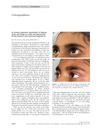
November 2009 in “Clinical and experimental dermatology” This article presents a case report of a child with coexisting alopecia areata and vitiligo showing improvement with topical prostaglandin E2 treatment, without reporting new clinical results.
 6 citations
,
October 2016 in “Contraception”
6 citations
,
October 2016 in “Contraception” This study found that most UK women prescribed cyproterone acetate/ethinylestradiol before and after 2013 had conditions aligning with approved indications and prior acne treatment.
5 citations
,
April 2019 in “Journal of Investigative Dermatology” This study found that oral JAK3 and TYK2/JAK1 inhibitors improved clinical outcomes in alopecia areata patients by reducing immune responses and enhancing hair keratin expression, with stronger effects in those with shorter disease duration.
 5 citations
,
October 2018 in “Dermatologic therapy”
5 citations
,
October 2018 in “Dermatologic therapy” This case report describes the first recorded instance of congenital triangular alopecia in the mid-frontal scalp region, challenging the assumption that it is restricted to the frontotemporal area.
 4 citations
,
January 2016 in “JAMA Dermatology”
4 citations
,
January 2016 in “JAMA Dermatology” This article discusses potential benefits of increasing active range of motion in the care of venous leg ulcers but reports no new clinical results.
4 citations
,
May 2013 in “JAMA Facial Plastic Surgery” In this study, most patients who underwent endoscopic brow-lift reported being satisfied with the procedure, noting improvements in appearance and confidence, with minimal and short-lived side effects.
 2 citations
,
March 2016 in “The Journal of Dermatology”
2 citations
,
March 2016 in “The Journal of Dermatology” The researchers reported that the facial Psoriasis Log-based Area and Severity Index (fPLASI) more reliably and sensitively captured clinical improvement in facial psoriasis than the existing facial Psoriasis Area and Severity Index (fPASI).
April 2026 in “Dermatological Reviews” In this study, both radiofrequency microneedling and ultrasound treatments with a plant-based secretory factor hair serum enhanced hair and scalp health in subjects with androgenetic alopecia, with ultrasound showing more pronounced improvements in hair appearance, density, and color.
December 2024 in “Biochemical and Biophysical Research Communications” LMWP-PDGFA shows promise for improving hair health and treating hair loss with fewer side effects.
 February 2024 in “The Journal of Dermatology”
 In this study, dutasteride 0.5 mg was found to provide long-term efficacy and safety in treating androgenetic alopecia in Korean men, with 89.9% showing improvement and 93.9% experiencing prevention of disease progression over at least 5 years.
 December 2023 in “PubMed”
 This study found that both single- and double-spin PRP preparation methods significantly increased thrombocyte counts and improved hair parameters in males with androgenetic alopecia, with the single-spin method showing a more significant increase in thrombocyte count.
 November 2023 in “Journal of Cosmetic Dermatology”
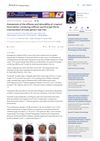
 This study found that a 12-week topical treatment with a caffeine and Procapil 3% formulation effectively reduced hair loss by 26.9% and improved hair growth in men with androgenetic alopecia, without any reported adverse effects.
 September 2023 in “Journal of The American Academy of Dermatology”
 In this study, researchers observed that after 5 years of treatment, 89.9% of Korean men with androgenetic alopecia experienced improvement and 93.9% had prevention of disease progression with dutasteride 0.5mg, though sexual-related symptoms were common early but subsided over time.
 September 2021 in “Han'gug mi'saengmul saengmyeong gong haghoeji/Han-guk misaengmul saengmyeong gonghak hoeji”
 This study found that an ethanolic extract from the microalga Tetrathelmis tetrathele exhibited anti-inflammatory effects, promoted the proliferation of certain skin and hair cells, and inhibited 5α-reductase activity, suggesting its potential as a therapeutic agent for preventing alopecia and enhancing scalp health.

The project developed and tested a method using plasma rich platelets to treat hair loss.
18 citations
,
November 2017 in “International Journal of Cosmetic Science” This study found that Bio Skin Oil® reduced the appearance of non-keloid scars and striae, with significant improvements observed by both investigators and participants.
14 citations
,
May 2023 in “Dermatologic Surgery” VYC-12L effectively improves skin smoothness, reduces fine lines, and boosts hydration.
9 citations
,
May 2014 in “Clinical Cosmetic and Investigational Dermatology” This study suggests that combining GliSODin(®) Skin Nutrients with tazarotene cream significantly benefits facial fine wrinkles, photodamage, moisture, and elasticity compared to tazarotene alone.
4 citations
,
August 2025 in “Journal of Cosmetic Dermatology” This study found that while hormone replacement therapy can improve skin aging in menopausal women, inconsistent findings and a lack of robust clinical trials mean it isn't recommended purely for skin benefits.
 November 2025 in “International Journal of Research in Medical Sciences”
 In this randomized, placebo-controlled study, Titagen® was found to improve skin, hair, and nail health in adults consuming 5g daily, and reduce pain and improve quality of life for osteoarthritis patients taking 10g daily, without related adverse events.
 October 2025 in “Dermatology and Therapy”
 This study observed that adults with thinning hair who ingested a patented botanical-based supplement experienced significant increases in hair shaft diameter and reductions in hair breakage over 180 days, suggesting improved hair strength and length across various demographic groups.
October 2014 in “Archives of Disease in Childhood” This case study reported that growth hormone therapy dramatically improved rickets symptoms and growth in three children with vitamin-D dependent rickets type 2 who had not responded to standard treatments.
November 2021 in “Arquivos Médicos dos Hospitais e da Faculdade de Ciências Médicas da Santa Casa de São Paulo” This review of current research suggests that combining microneedling with minoxidil, and possibly platelet-rich plasma or mesotherapy, may achieve better hair growth results for androgenetic alopecia than conventional methods.