 June 2019 in “Journal of evolution of medical and dental sciences”
 This study found that yellow dots seen under dermatoscopy are a sensitive and specific indicator of treatment response in alopecia areata, showing significant reduction as early as four weeks.

This study concluded that adding a topical agent to intense pulsed light therapy significantly improved hair reduction and patient satisfaction in Pakistani women with idiopathic facial hirsutism compared to light therapy alone, without increasing adverse effects.
 16 citations
,
January 2005 in “Pediatric Dermatology”
16 citations
,
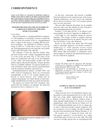
January 2005 in “Pediatric Dermatology” This brief report describes a case of Fox-Fordyce disease in a prepubertal girl but reports no new clinical findings.
 March 2012 in “Korean Journal of Microscopy”
 This study found that nanoparticles can penetrate the skin, but artifacts produced during specimen preparation complicate accurate observation, and proposed a method for reducing errors in imaging quantum dots as tracers.
6 citations
,
May 2022 in “Pharmaceutics” This study demonstrates that MPM-FLIM multimodal imaging can effectively assess the delivery and dissolution of zinc pyrithione particles in human skin follicles using different application techniques.
4 citations
,
October 2019 in “Skin Appendage Disorders” This case report describes the first known instance of hair and eyebrow hyperpigmentation in a patient after seven months of gefitinib treatment for non-small cell lung cancer.
21 citations
,
April 2000 in “Journal of Cutaneous Pathology” This case report describes a 22-year-old woman with a nevoid plaque termed localized follicular hamartoma, characterized by skin-colored papules and specific cellular and structural features.
2 citations
,
July 2011 in “International Journal of Dermatology” This case report describes three instances of eosinophilic pustular folliculitis lacking visible pustules, which histopathology confirmed involve eosinophilic infiltration around hair follicles.
 November 2023 in “Research Square (Research Square)”
 In this study, researchers used NIR-II fluorescence imaging to track the survival and migration of EPI-NCSCs in rat models, finding that these stem cells aided in repairing facial nerve defects when applied via acellular nerve allografts.

This study utilized polarized light microscopy to examine hair shafts in ten children with rare genetic disorders, such as Netherton syndrome and ectodermal dysplasia, providing valuable diagnostic insights into hair thickness, composition, and structural irregularities associated with these conditions.
 3 citations
,
July 2024 in “Annals of Biomedical Engineering”
3 citations
,
July 2024 in “Annals of Biomedical Engineering” This study found that multiphoton microscopy imaging allows for detailed observation and quantitative analysis of collagen alterations in the progression of endometrial cancer, potentially offering a faster, more accurate method for early diagnosis compared to current protocols.
25 citations
,
March 2002 in “Scanning” This study highlights confocal microscopy as a promising, minimally invasive tool for assessing hair morphology and internal structures, making it valuable for cosmetic hair assessments.
January 2009 in “Xumu shouyi xuebao” In this study, researchers successfully established a stable transgenic sheep fibroblast cell line containing an artificially synthesized spider dragline silk protein gene.
 2 citations
,
January 2011
2 citations
,
January 2011 This study developed and validated a UV spectrophotometric method for accurately measuring finasteride and tamsulosin in solutions and tablets, demonstrating good sensitivity and precision.
58 citations
,
July 2005 in “Molecular and Cellular Biology” This study showed that a 2-kilobase upstream region of the mouse keratin 17 gene enables targeted GFP expression in major epithelial appendages of transgenic mice, indicating sonic hedgehog's involvement in its regulation.
15 citations
,
August 2011 in “Lasers in medical science” This study reported that a single treatment with a short-pulsed 755-nm alexandrite laser effectively treated trichostasis spinulosa in patients with skin types II to V, providing rapid results with minimal pain and no recurrence during a 3-month follow-up.
June 1996 in “Journal of Dermatological Science” 8 citations
,
January 2023 in “Skin Research and Technology” This study found that treatment with fractional 1064 nm picosecond Nd:YAG laser effectively reduced post-acne erythema in adult Chinese patients without causing scarring or pigmentation issues, though some experienced temporary erythema, oedema, pruritus, and acne eruptions.
92 citations
,
May 2004 in “Journal of Investigative Dermatology”  67 citations
,
January 2012 in “Biological and Pharmaceutical Bulletin”
67 citations
,
January 2012 in “Biological and Pharmaceutical Bulletin” This study found that nanoparticles did not permeate intact rat skin but could penetrate skin that had been artificially punctured, primarily through grooves or hair follicles.
April 2024 in “Al-Azhar International Medical Journal /Al-Azhar International Medical Journal” In this study, vitiligo patients treated with a combination of fractional CO2 laser or microneedling followed by topical 5-Fluorouracil experienced more effective and safe outcomes compared to using either method alone.
November 2020 in “Journal of the American Academy of Dermatology” Intense pulsed light with radiofrequency showed mixed results in improving quality of life for hidradenitis suppurativa patients, with no clinical improvements.
 June 2020 in “The journal of investigative dermatology/Journal of investigative dermatology”
 This study found that low-level pulsed wave red light stimulated collagen and ATP production in human fibroblasts with significantly shorter treatment time than continuous wave light, suggesting enhanced consumer compliance for skin treatments.
4 citations
,
January 2006 in “International Journal of Cosmetic Science” This study found that scanning electron microscopy with argon sputter etching visualizes hair lipids at the cell membrane complex as distinctive convex structures, shedding light on their role and localization in human hair.
4 citations
,
September 2021 in “Sensors” In this study, LED therapy for eyebrow loss in older females with frontal fibrosing alopecia significantly increased eyebrow hair count after 10 treatments and maintained improvement at 6 months, indicating it could be a promising and well-tolerated treatment option.
June 2025 in “Australasian Journal of Dermatology” This study introduced and evaluated a new dermoscopic feature, pigmented rings with central clearing, for improving the diagnosis of melasma and differentiating it from similar conditions.
 3 citations
,
January 2011
3 citations
,
January 2011 This study developed a precise and reliable UV spectrophotometric method for determining finasteride concentration in bulk and tablets, demonstrating strong linearity and accuracy.
18 citations
,
May 2022 in “Stem Cell Research & Therapy” This study found that irradiating human adipose-derived stem cells with green OLEDs enhanced their wound healing capability and increased cell proliferation, migration, and adhesion in preclinical models.
 4 citations
,
October 2009 in “Skin research and technology”
4 citations
,
October 2009 in “Skin research and technology” This study found that tristimulus colorimetry is a sensitive and quantitative method for projecting hair growth rates in depilated mice, and it observed that 890 nm LED irradiation promotes hair regrowth.
 November 2023 in “Deleted Journal”
 In this study, the researchers found no superiority of combining 308-nm excimer laser with intralesional corticosteroid over corticosteroid alone for treating frontal fibrosing alopecia, and reported side effects such as erythema and postinflammatory hyperpigmentation in both treatment groups.