 January 2026 in “Journal of Hard Tissue Biology”
 This study found that red LED photobiomodulation significantly enhanced both the metabolic activity and proliferation of human placenta-derived pericytes, alongside increased expression of angiogenic markers, suggesting a potential non-invasive approach to aid tissue repair and vascular regeneration.
1 citations
,
August 1999 in “ACS symposium series” In this study, fluorescence microscopy revealed that a cationic cellulose ether derivative adsorbed onto hair fibers desorbed significantly when treated with sodium dodecylsulfate.
June 2026 in “Journal of Cutaneous Pathology” This study found that polarized light microscopy is more effective than diffractive microscopy in distinguishing scarring from non-scarring alopecia, providing a highly specific adjunct diagnostic tool for alopecia biopsy specimens.
 2 citations
,
November 2007 in “Journal of Investigative Dermatology”
2 citations
,
November 2007 in “Journal of Investigative Dermatology” This study found that bulge keratinocytes in mice develop resistance to glucocorticoid treatment more slowly than interfollicular keratinocytes and do not significantly aid in repairing glucocorticoid-induced skin atrophy within five days.
 February 2009 in “Journal of The American Academy of Dermatology”
 This study suggests that fractional infrared technology may effectively improve cervical skin laxity by enhancing dermal thickness without adverse effects in a small pilot group.
March 2013 in “Pigment Cell & Melanoma Research” This study revealed that different coat patterns in cats and cheetahs are related to variations in the aminopeptidase Q gene and endothelin-3 expression, which affects pigment production.
This study observed increased proliferation and certain gene expressions in dermal papilla cells exposed to an 808 nm laser diode array at doses above 0.5 J/cm².
May 2025 in “Journal of Photochemistry and Photobiology B Biology” In this study, researchers observed that blue LED irradiation enhanced cosmetic permeation, increased diameter, and improved resistance of hair fiber in Caucasian and Asian ethnic groups, whereas African hair showed less change.
193 citations
,
June 1990 in “Journal of Investigative Dermatology” ![Synthesis of 5,6,6-[2H3]Finasteride and Quantitative Determination of Finasteride in Human Plasma at Picogram Level by an Isotope-Dilution Mass Spectrometric Method](/images/assets/0026b639-99a8-455a-a986-c39aa65abfa9/small/2087.jpg) 20 citations
,
December 1995 in “Journal of Chromatography B: Biomedical Sciences and Applications”
20 citations
,
December 1995 in “Journal of Chromatography B: Biomedical Sciences and Applications” Accurate method measures finasteride levels in human plasma using gas chromatography-mass spectrometry.
January 2011 in “Xibei nongye xuebao” This study found that the K14 promoter exhibited higher activity in skin cell lines compared to other cell lines, while both K14 and K5 promoters were active in all tested cell lines.
 January 2026 in “Forum Dermatologicum”
 This review concluded that LED-based photobiomodulation is generally safe and effective for certain dermatologic conditions, though consumer devices often show less efficacy compared to professional systems.
21 citations
,
December 2006 in “Archives of dermatology” This abstract contains no research findings and pertains only to website navigation and policies.
 10 citations
,
June 2018 in “Aaps Pharmscitech”
10 citations
,
June 2018 in “Aaps Pharmscitech” The flutamide-loaded hydrogel is a promising, skin-friendly treatment for acne and hair loss, potentially requiring less frequent application.
 April 2016 in “Journal of Investigative Dermatology”
 This study found that administering botulinum toxin A via Flex-PADs to mouse footpads inhibited sweating similarly to traditional injections, suggesting a promising patient-friendly delivery method for hyperhidrosis treatment.
 29 citations
,
February 1996 in “Journal of Chromatography B: Biomedical Sciences and Applications”
29 citations
,
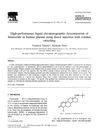
February 1996 in “Journal of Chromatography B: Biomedical Sciences and Applications” This study developed a fully automated HPLC method for accurately quantifying finasteride in human plasma, achieving a detection limit of 1 ng/ml with validated application in pharmacokinetic studies.
 3 citations
,
January 2019 in “Skin research and technology”
3 citations
,
January 2019 in “Skin research and technology” This study found no significant differences in cleaning agent residue removal from hair follicles among different wiping methods, suggesting the agent remains despite removal attempts.
 39 citations
,
June 2017 in “Scientific Reports”
39 citations
,
June 2017 in “Scientific Reports” Different lab conditions and light treatment methods change how human skin cells respond to light therapy.
 12 citations
,
January 2005 in “Pediatric Dermatology”
12 citations
,
January 2005 in “Pediatric Dermatology” Fox Fordyce disease might be more common in prepubertal girls than thought and can be managed with treatment.
2 citations
,
September 2020 in “bioRxiv (Cold Spring Harbor Laboratory)” This study demonstrated that ablation of individual somatostatin-expressing interneurons increased activity in nearby neurons of the mouse motor cortex during motor learning.
September 2025 in “OPAL (Open@LaTrobe) (La Trobe University)” In this study, researchers developed a multifunctional hydrogel (FVP@CCN) that demonstrated over 90% wound closure in 7 days in diabetic wound models, thanks to its antibacterial, antioxidant, anti-inflammatory, and angiogenesis-promoting properties.
26 citations
,
December 2012 in “Bioanalysis” The researchers reported that glucuronides stored as dried blood spots under ambient conditions exhibited stability equivalent to liquid samples stored at -80°C.
 November 2023 in “Berkala Ilmu Kesehatan Kulit dan Kelamin/Berkala ilmu kesehatan kulit dan kelamin (Periodical of dermatology and venerology)”
 This study suggests that using a dermoscope, a handheld microscope, can effectively help distinguish between Pityrosporum folliculitis and Acne vulgaris by revealing unique lesion characteristics that are not visible to the naked eye, offering a practical diagnostic alternative when KOH examinations are unavailable.
January 1991 in “Acta Dermato Venereologica” This article describes a new method for staining hair fibers that visualizes keratin filaments without the need for OsO4 fixation or sulfur bond breakage, but it provides no new experimental results beyond the method itself.
 14 citations
,
March 2012 in “Lasers in Surgery and Medicine”
14 citations
,
March 2012 in “Lasers in Surgery and Medicine” This study concluded that low-level fluence 810 nm diode laser therapy was generally well tolerated, safe, and effective for long-term hair reduction in a small sample of patients with various skin types.
 January 2025 in “Surgical & Cosmetic Dermatology”
 In this case study, a 35-year-old man with recalcitrant folliculitis decalvans was successfully treated with Erbium-YAG laser, showing rapid improvement without hair loss, though further clinical studies are needed to define its benefits more comprehensively.
 60 citations
,
October 2010 in “Molecular Imaging and Biology”
60 citations
,
October 2010 in “Molecular Imaging and Biology” This study observed that skin pigmentation significantly attenuates bioluminescent signals in C57Bl/6 mice, complicating quantitative optical imaging and requiring consideration in experimental design.
April 2024 in “Al-Azhar International Medical Journal /Al-Azhar International Medical Journal” This study at Al-Azhar University Hospitals found that combining a fractional CO2 laser or microneedling with topical 5-Fluorouracil (5-FU) is more effective and safe for treating vitiligo than using either treatment alone, offering a new therapeutic option for patients.
June 2026 in “Indian Dermatology Online Journal” In this case report, a 20-year-old man with a birthmark was identified as having a supernumerary nipple, a developmental anomaly, using dermoscopy to distinguish it from other pigmented skin lesions such as melanocytic nevus or basal cell carcinoma.
 17 citations
,
November 2017 in “PLoS ONE”
17 citations
,
November 2017 in “PLoS ONE” This study observed dynamic behaviors such as cluster formation, migration, and active proliferation of transplanted bone marrow cells in a mouse model, providing insight into cellular-level changes post-transplantation.