April 2023 in “Journal of The American Academy of Dermatology” This letter discusses findings from an article by Sun et al. showing that neodymium doped yttrium aluminum garnet laser effectively treats prominent facial vasculature in patients with frontal fibrosing alopecia, but highlights concerns about the risk of iatrogenic scarring and suggests caution with treatment frequency.
 17 citations
,
April 2004 in “Acta Clinica Belgica”
17 citations
,
April 2004 in “Acta Clinica Belgica” This study found that ultraviolet light-enhanced visualization can detect subtle skin changes linked to carotene and vitamin A deficiency, which improved with dietary correction in deficient individuals.
92 citations
,
March 2016 in “Developmental Cell” Zebrafish skin regeneration relies on cell behaviors and reactive oxygen species, with antioxidants reducing and hydrogen peroxide increasing regeneration.
 1 citations
,
March 2024 in “International Journal of Dermatology”
1 citations
,
March 2024 in “International Journal of Dermatology” This case report describes a therapy-resistant folliculitis decalvans patient who showed nearly complete response with increased hair density after treatment with CO2 laser-assisted photodynamic therapy.
15 citations
,
June 2021 in “Medicina” This study found that combined intense pulsed light and low-level light therapy significantly improved ocular surface outcomes and quality of life for patients with meibomian gland dysfunction and dry eye disease.
 1 citations
,
January 2008 in “Laser therapy”
1 citations
,
January 2008 in “Laser therapy” Endré Mester is highly regarded as the 'Godfather' of phototherapy.
 66 citations
,
April 1995 in “The journal of cell biology/The Journal of cell biology”
66 citations
,
April 1995 in “The journal of cell biology/The Journal of cell biology” In this study, researchers reported that a keratinocyte growth factor-Ig fusion protein could specifically detect and localize KGFRs in epithelial tissues, suggesting a method for histochemical detection of growth factor receptors.
September 2020 in “Journal of Mind and Medical Sciences” This study reported that using a Cutera Xeo laser with specific probes may help treat rosacea symptoms like diffuse facial erythema and telangiectasias, with some risks like bruises and hypopigmentation.
 April 2018 in “The journal of investigative dermatology/Journal of investigative dermatology”
 This study found that in a mouse model of Focal Dermal Hypoplasia, treatment with lithium carbonate improved skin disease symptoms compared to controls, though disease severity varied and posed interpretation challenges.
 September 2001 in “PubMed”
 This study developed a non-destructive X-ray fluorescence technique to quantitatively analyze elemental content in human hair and constructed a database of element concentrations in healthy Swedish, Caucasian individuals.
14 citations
,
April 2017 in “Dermatology practical & conceptual” This study reports that yellow dots in a higher number per field of vision were the most consistent dermoscopic finding in severe cases of alopecia areata.
2 citations
,
January 2003 in “Dermatologic surgery” This study found that pulsed diode laser treatment safely and effectively cleared lesions and reduced the appearance of dark plugs in trichostasis spinulosa for up to 20 weeks in dark-skinned individuals.
13 citations
,
October 2000 in “International Journal of Dermatology” This case report describes a 6-year-old boy with Bloom syndrome characterized by distinct facial skin changes, delayed development, and a high frequency of sister chromatid exchanges.
8 citations
,
September 2023 in “Skin Research and Technology” This study found that combining high-frequency ultrasound with clinical examination significantly improved the diagnostic accuracy of invisible subcutaneous lesions from 47.3% to 80.8%, especially for conditions like epidermoid cysts and lipomas, although it was less effective for rarer lesions such as dermatofibromas.
 3 citations
,
January 2022 in “Medical Mycology Journal”
3 citations
,
January 2022 in “Medical Mycology Journal” This study observed Malassezia hyphae in the keratotic plugs of healthy individuals, which contrasts with previous findings of these hyphae primarily in lesions of pityriasis versicolor patients.
August 2000 in “Microscopy and Microanalysis” This study used novel methods to detect and map iodine concentrations in pig skin, finding iodine present in the coating, stratum corneum, and tissue around hair follicles.
 February 2024 in “Curēus”
 This case report describes an 83-year-old man who developed focal neurotoxicity, including paralysis and pain, in the area treated with topical 5-fluorouracil cream for actinic keratoses, suggesting a potential neurotoxic risk associated with the drug, especially in those with a specific genetic deficiency.
 2 citations
,
July 2020 in “International Journal for Research in Applied Science and Engineering Technology”
2 citations
,
July 2020 in “International Journal for Research in Applied Science and Engineering Technology” This study found that Pseudomonas DL7 completely degraded 600 mg/L of Sunset Yellow FCF in 48 hours at pH 9, indicating potential for biomineralization of this dye.
January 2022 in “Chemistry: A European Journal” This study found that synchrotron radiation ECD imaging provides new insights into solid-state Finasteride by highlighting the significant role of anisotropy in local domains for chiroptical measurements.
 4 citations
,
May 2018 in “International Journal of Molecular Sciences”
4 citations
,
May 2018 in “International Journal of Molecular Sciences” This review discusses genetically-engineered mouse models for studying melanocytes and reports no new experimental findings; it emphasizes their potential to address unanswered questions in melanoma biology.
 January 2025 in “International Journal of Dermatology”
 This case report describes a patient with eruptive tumor of follicular infundibulum, emphasizing the need for dermatologists to include it in the differential diagnosis of acquired facial hypopigmentation.
11 citations
,
June 2010 in “Dermatologic surgery” This article contains information about journal subscriptions and does not report any research findings.
July 1974 in “Archives of Dermatology” This case report details the lack of confluent repigmentation in an 8-year-old girl with vitiligo after three years of trioxsalen and ultraviolet light treatment.
1 citations
,
November 2023 in “Skin Appendage Disorders” This study found that 308 nm excimer lamp therapy provides a good clinical response with fewer adverse effects for limited alopecia areata but is less effective for widespread hair loss like alopecia totalis.
14 citations
,
February 2003 in “Journal of the American Academy of Dermatology” This case report describes the first use of laser capture microdissection to confirm that atypical lymphocytes in a folliculotropic mycosis fungoides case involving the central nervous system were part of the same tumor clone.
April 2020 in “The Aesthetics” This article discusses the applications and proposed benefits of LED low level light therapy for various conditions like acne, wound healing, and pain relief, but provides no new clinical results.
 1 citations
,
November 2020 in “Journal of Cosmetic Dermatology”
1 citations
,
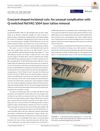
November 2020 in “Journal of Cosmetic Dermatology” This letter to the editor discusses an unusual complication, crescent-shaped incisional cuts, observed with Q-switched Nd:YAG 1064 laser tattoo removal and reports no new clinical results.
 6 citations
,
December 2015 in “International journal of nanomedicine”
6 citations
,
December 2015 in “International journal of nanomedicine” This study found that low-frequency sonophoresis significantly decreased the skin penetration of sodium fluorescein-loaded PEGylated liposomes with D-limonene and affected percutaneous absorption by partially plugging hair follicle orifices.
 January 2026 in “Journal of Hard Tissue Biology”
 This study found that red LED photobiomodulation significantly enhanced both the metabolic activity and proliferation of human placenta-derived pericytes, alongside increased expression of angiogenic markers, suggesting a potential non-invasive approach to aid tissue repair and vascular regeneration.
1 citations
,
August 1999 in “ACS symposium series” In this study, fluorescence microscopy revealed that a cationic cellulose ether derivative adsorbed onto hair fibers desorbed significantly when treated with sodium dodecylsulfate.