 December 2021 in “Aegean journal of obstetrics and gynecology”
 This case report highlights a rare instance of postmenopausal virilization in a 71-year-old woman due to coexisting ovarian hilus cell hyperplasia and a Sertoli-Leydig cell tumor.
 October 2023 in “Journal of the Endocrine Society”
 This case report details a 73-year-old woman with significant hirsutism and hair loss linked to a rare ovarian Leydig cell tumor, which was resolved by bilateral salpingo-oophorectomy, normalizing her testosterone levels and addressing her symptoms.
 October 2025 in “Zenodo (CERN European Organization for Nuclear Research)”
 This review describes how sex hormones like estrogens and androgens influence skin health, linking hormonal fluctuations to conditions such as acne and hair loss, and underscores the importance of a multidisciplinary approach to treatment that includes mental health support.
 May 2016 in “Endocrine Abstracts”
 The removal of the adrenal tumor improved the patient's symptoms and reduced androgen levels, indicating successful surgery.
 11 citations
,
February 1980 in “BMJ. British medical journal”
11 citations
,
February 1980 in “BMJ. British medical journal” This article reviews hirsutism, its causes, cultural perceptions, and symptoms, but provides no new clinical findings beyond existing descriptions and statistics on hair growth patterns in women.
 3 citations
,
November 2005 in “Women's health”
3 citations
,
November 2005 in “Women's health” This narrative review discusses various causes and treatments of hirsutism in women, emphasizing the importance of identifying androgen-secreting tumors, but does not present new study results.
 8 citations
,
February 2010 in “Journal für Kardiologie (Krause & Pachernegg GmbH)”
8 citations
,
February 2010 in “Journal für Kardiologie (Krause & Pachernegg GmbH)” This study developed a detailed classification system for functional androgenization in females that may enhance diagnosis and personalized treatment by identifying individual dysfunctions.
 12 citations
,
July 2020 in “DOAJ (DOAJ: Directory of Open Access Journals)”
12 citations
,
July 2020 in “DOAJ (DOAJ: Directory of Open Access Journals)” This review evaluates the hormonal, metabolic, and clinical aspects of a male equivalent PCOS syndrome in men and highlights areas where further research is needed, reporting no new empirical findings.
 6 citations
,
June 2017 in “Reproductive Biomedicine Online”
6 citations
,
June 2017 in “Reproductive Biomedicine Online” This study found that women with polycystic ovary syndrome in China had elevated androgen levels compared to healthy controls, and suggests body weight management and SHBG and FAI testing are recommended for these women.
 21 citations
,
January 2017 in “European Journal of Obstetrics & Gynecology and Reproductive Biology”
21 citations
,
January 2017 in “European Journal of Obstetrics & Gynecology and Reproductive Biology” This study suggests that acne is often associated with hyperandrogenemia in women, contradicting previous recommendations that acne is not linked to androgen excess disorders.
 March 1997 in “Journal of Endocrinology/Journal of endocrinology”
 Excessive hair growth in women can be treated with medications like spironolactone and finasteride, and male-pattern baldness in women can be improved with similar treatments.
 5 citations
,
January 2017 in “Acta Endocrinologica”
5 citations
,
January 2017 in “Acta Endocrinologica” This case report discusses a postmenopausal woman whose hyperandrogenism and metabolic symptoms improved significantly after the surgical removal of an ovarian Leydig cell tumor, confirmed post-operatively.
 11 citations
,
February 2003 in “Baillière's best practice & research. Clinical obstetrics & gynaecology/Baillière's best practice and research in clinical obstetrics and gynaecology”
11 citations
,
February 2003 in “Baillière's best practice & research. Clinical obstetrics & gynaecology/Baillière's best practice and research in clinical obstetrics and gynaecology” This review discusses the relationship between acne, body hair, and androgenic stimulation in adolescent girls, emphasizing treatment decisions based on disease severity rather than endocrine findings.
 2 citations
,
December 2016 in “Journal of Pakistan Association of Dermatology”
2 citations
,
December 2016 in “Journal of Pakistan Association of Dermatology” This study found that serum androgen levels were associated with the severity of hirsutism in women, with significantly higher levels observed in those with moderate to severe hair growth.
This study found that androstenedione was more effective than testosterone in diagnosing hyperandrogenism in women with PCOS when measured by LC-MS/MS.
 5 citations
,
September 2012 in “The Journal of Urology”
5 citations
,
September 2012 in “The Journal of Urology” This article discusses androgenetic alopecia as a potential early marker for benign prostatic hyperplasia but reports no new clinical findings.
 July 2011 in “British Journal of Dermatology”
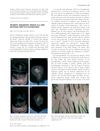
 Hormone treatment caused hair loss, finasteride helped regrowth.
3 citations
,
January 2021 in “touchREVIEWS in Endocrinology” This case report describes how a 68-year-old woman's hyperandrogenic symptoms improved and testosterone levels normalized after the surgical removal of an occult Leydig cell tumour.
63 citations
,
August 2022 in “Diagnostics” This review discusses hirsutism in women with PCOS who present with normal androgen levels and highlights diagnostic challenges, reporting no new clinical findings.
June 2002 in “Current obstetrics and gynaecology/Current obstetrics & gynaecology” This article discusses various causes and treatment options for hirsutism in women, highlighting the effectiveness of cyproterone acetate and the importance of weight reduction, without presenting new research findings.
 9 citations
,
February 2020 in “International Journal of Endocrinology”
9 citations
,
February 2020 in “International Journal of Endocrinology” This study found that men with early-onset androgenetic alopecia and certain risk factors may have worse gonadal steroidogenesis and an increased likelihood of developing gonadal dysfunction, suggesting a male equivalent of polycystic ovarian syndrome.
April 2019 in “Journal of the Endocrine Society” This study found that androgen-regulated genes in hidradenitis suppurativa skin lesions are strongly linked to innate immunity pathways, indicating a potential connection between androgen signaling and inflammation in this condition.
6 citations
,
April 1989 in “The American Journal of the Medical Sciences” In this case study, prolonged selective suppression of adrenal androgens by glucocorticoids was most likely attributed to the observed loss of pubic and axillary hair in a woman post-bilateral oophorectomy.
10 citations
,
March 2024 in “Endocrine Reviews” In this retrospective review, the author discusses key discoveries in understanding androgen excess disorders like PCOS, focusing on genetic and molecular insights gained from 1965 to 2015.
 30 citations
,
March 2015 in “Clinical Endocrinology”
30 citations
,
March 2015 in “Clinical Endocrinology” This study found that late adolescent and young women with clinical hyperandrogenism, including PCOS, experienced higher psychological distress and impaired well-being compared to their healthy peers.
3 citations
,
May 2023 in “Endocrine Abstracts” This study identified three subgroups of women with PCOS with distinct androgen profiles, finding that the subgroup with adrenal-derived androgen excess had the highest insulin resistance and rates of hirsutism and hair loss.
 7 citations
,
January 2014 in “Case reports in endocrinology”
7 citations
,
January 2014 in “Case reports in endocrinology” This case report describes a testosterone- and cortisol-secreting adrenocortical oncocytoma causing hirsutism in a 23-year-old woman, highlighting adrenal oncocytomas as an important consideration for differential diagnosis.
September 1976 in “PubMed” This article discusses the causes and treatments for hirsutism, concluding that reverse-sequence therapy with cyproterone acetate and ethinyl estradiol is effective for severe cases but has cost and side effects.
August 2021 in “Pediatrics in review” This case study reports that a 16-year-old girl with hirsutism and menstrual irregularities was diagnosed with a benign steroid cell ovarian tumor, after high testosterone levels indicated a potential androgen-secreting source.
 13 citations
,
October 2002 in “Journal of Biochemical and Biophysical Methods”
13 citations
,
October 2002 in “Journal of Biochemical and Biophysical Methods” This study found that men with androgenic alopecia had significantly higher levels of certain urinary steroid metabolites, suggesting increased 5 alpha-reductase activity and possible mild hyperadrenal activity.