 November 2025 in “Discover Pharmaceutical Sciences”
 In this study, a nanoemulsion containing lavender, peppermint, and rosemary essential oils was developed and shown to promote hair growth in mice at a rate comparable to 2% topical minoxidil, suggesting a promising natural alternative due to its antioxidant and anti-inflammatory effects.

This study reports that a novel eyelash transplantation method using chalazion forceps effectively thickens and enhances eyelashes by precisely placing transplanted hairs in a narrow recipient area, with approximately 85-92% of transplanted lashes expected to grow within 12 months.
September 2025 in “Animals” In this study, dermatophytosis was prevalent among 52% of dogs and 70% of cats with skin lesions, with younger animals facing higher infection risks; combined itraconazole, clotrimazole, supportive care, and vaccination led to the fastest recovery.
 July 2025 in “bioRxiv (Cold Spring Harbor Laboratory)”
 This study developed a potent Wnt surrogate with high specificity for the Fzd7 receptor in mice, promoting full hair follicle regeneration and robust hair growth, suggesting potential applications in tissue development and targeted regeneration.
 June 2025 in “Current Issues in Molecular Biology”
 In this study, researchers using a UVB-induced mouse model identified the gene COL7A1 as a novel marker for hair luster, finding that minoxidil, caffeine, and biotin effectively restored its expression, indicating potential therapeutic strategies.
March 2025 in “Journal of Investigative Dermatology” This study found that a traction alopecia prevention program for middle school students increased awareness and understanding of TA, but converting this awareness into changes in hairstyling habits proved challenging, highlighting the need for culturally sensitive strategies to influence behavior in at-risk communities.
 January 2025 in “Egyptian Journal of Dermatology and Venerology”
 This study found that COVID-19 vaccination initially lowered vitamin D levels in serum and hair but increased serum levels after the second dose, except for the Pfizer group. Hair vitamin D showed a nonsignificant increase, and hair loss was most common with the AstraZeneca vaccine.
 January 2025 in “Journal of Food Biochemistry”
 In this study, 2′‐Fucosyllactose (2′‐FL) administration significantly reduced hair loss and increased hair length and thickness in a testosterone-induced androgenic alopecia mouse model, suggesting potential as a therapeutic agent for AGA.
 January 2025 in “The World Journal of Men s Health”
 In this study, autologous intratesticular PRP injection was found to be a feasible and well-tolerated procedure with low complication rates and quick recovery, but the authors indicated that current evidence is insufficient to confirm its effectiveness for mTESE.
 September 2024 in “South Eastern European Journal of Public Health”
 This study found that a treatment regimen including dietary changes, oral contraceptives, fertility drugs, Glucophage or Metformin, and nutritional supplements significantly improved hormonal and immune markers and reduced clinical symptoms like ovulation and menstrual disorders in PCOS patients over three months.
 September 2024 in “JAAD International”
 This review evaluates the global prevalence of telogen effluvium during the COVID-19 pandemic, noting increased incidence, but reports no new standardized worldwide results; the authors emphasize a need for further research.
August 2024 in “Pharmaceuticals” This study found that oral administration of solubilized sturgeon oil in mice promoted hair growth and positively influenced the gut microbiome associated with hair growth promotion.
In this study, researchers identified three novel genetic loci associated with androgenetic alopecia, including one with significant association in females only, which may indicate a role for sex-specific genetic factors in patterned hair loss.
July 2024 in “Journal of Investigative Dermatology” A peptide in shampoo can promote hair growth and improve hair condition.
 March 2024 in “Nutrients”
 This study found that Gynostemma pentaphyllum leaf hydrodistillate (GPHD) promoted hair growth in mice similarly to minoxidil and upregulated growth factor expression via the AKT/β-catenin signaling pathway, with damulin B identified as an active component contributing to these effects.
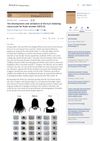 October 2023 in “The Journal of Dermatology”
 This study developed and validated the Hair-Shedding Visual Scale for Asian Women, finding it to be an effective tool for identifying FPHL and TE.
 June 2023 in “Current Issues in Molecular Biology”
 In this study, the alcoholic extract DN106212 from Centipeda minima was shown to be more effective in promoting hair growth in C57BL/6 mice compared to dimethyl sulfoxide and tofacitinib, suggesting its potential as a natural hair growth agent.
 December 2021 in “Daehanhanuihakoeji”
 This study suggests that combining finasteride with traditional herbal formulas Yongdamsagan-tang or Paljung-san may not interfere with drug metabolism while potentially enhancing anti-inflammatory effects for treating benign prostatic hyperplasia.
 August 2021 in “Research Square (Research Square)”
 In this study of clinical-grade ADMSCs, researchers found that cells expanded in PowerStem MSC1 media exhibited increased negative marker expression, chromosomal abnormalities, and signs of senescence compared to those cultured in StemMACS MSC Expansion Media, suggesting that the latter is more suitable for therapeutic applications.
May 2020 in “Dermatologic Therapy” 
The researchers developed a new follicular unit extraction system with adjustable needle lengths and precise rotation speed, which they report as being superior to existing systems for non-incisional hair transplants.
April 2018 in “The Journal of urology/The journal of urology” This study identified several patient-specific factors that can predict both the likelihood of undergoing and failing a post-TURP void trial, aiding in the selection of candidates for immediate assessment.
 March 2009 in “Journal of Biomedical Research”
 In this study, herbal extract mixtures applied to mice accelerated hair regrowth compared to a control group, suggesting potential hair-growing properties.
January 1998 in “Dermatology” This abstract lists various medical conditions, treatments, and substances, but it does not report any new research findings.
February 2023 in “Singapore Medical Journal” Men with androgenetic alopecia have unique metabolomic patterns that could help develop targeted treatments.
April 2016 in “Dermatología Revista Mexicana” This experimental study found no significant difference in hair follicle characteristics after short-term treatment with autologous platelet-rich plasma in individuals with androgenic alopecia compared to placebo.
January 2014 in “Medical Innovation of China” This study investigated androgen receptor expression in the scalp tissue of androgenic alopecia patients, focusing on hair follicles and sebaceous glands, using immunohistochemistry.
415 citations
,
January 2008 in “Cell” NFATc1 controls hair stem cell activity, affecting hair growth and could be a target for hair loss treatments.
203 citations
,
May 2022 in “Pharmaceutics” This review discusses ongoing concerns and advancements in the use of gelatin as a biomaterial in tissue engineering, highlighting improved tissue mimicry through techniques like 3D bioprinting and suggesting a future focus on disease detection and diagnosis rather than treatment.
169 citations
,
January 2018 in “Cell Reports” In this study, researchers successfully derived skin organoids from mouse pluripotent stem cells that spontaneously produce hair follicles, potentially aiding in hair growth research and in vitro drug testing.