 6 citations
,
October 2017 in “Oncotarget”
6 citations
,
October 2017 in “Oncotarget” In this study, NIH hairless mice showed increased susceptibility to Listeria monocytogenes infection compared to NIH mice, potentially due to differences in gut microbiota and monocyte levels.
February 2026 in “Frontiers in Immunology” This review highlights the role of the brain–gut–skin axis in systemic inflammatory skin conditions, revealing potential interventions like microbiome-directed treatments and integrative therapies, though emphasizes the need for more robust clinical validation.
 4 citations
,
October 2022 in “Genes”
4 citations
,
October 2022 in “Genes” This review discusses the role of cutaneous and intestinal microbiota in the development of alopecia areata, summarizing current literature without reporting new clinical results.
5 citations
,
July 2024 in “Frontiers in Microbiology” In this study, researchers using Mendelian randomization found a potential causal relationship between the gut microbiome and alopecia areata, with 16 gut microbial taxa showing links to the condition, though reverse causation results were not statistically significant.
 April 2024 in “Frontiers in microbiology”
 This study found that certain gut microbiota are linked with androgenetic alopecia, identifying both risk and protective microbial factors, which could inform targeted probiotic strategies for managing AGA.
 December 2024 in “Medicine”
 This study suggests a potential genetic link between gut microbiota and androgenetic alopecia, identifying specific microbial taxa associated with either increased or reduced risk.
15 citations
,
October 2024 in “Nutrients” In this study, consuming a healthy, plant-based diet was associated with reduced skin inflammation and improved overall skin health, while the potential benefits of probiotics, synbiotics, and postbiotics for skin inflammation and tissue regeneration require further investigation.
 December 2022 in “Türk biyokimya dergisi”
 The conclusions are: fecal short-chain fatty acids may help prevent cancer, fiber intake can reduce obesity, weight loss is hard for obese people, low BMI cancer patients are more prone to chemotherapy side effects, intermittent fasting benefits gut health, cherry laurel has health benefits in rats, certain gene variations can increase stress in hair loss patients, fecal acids can affect blood sugar levels, cold agglutinin can affect blood test results in autoimmune patients, and people with Crohn's disease have higher levels of a certain chemical in their blood.
 August 2025 in “Archiv Euromedica”
 This review explored the relationship between alopecia areata and gut microbiota imbalances, noting potential immune dysregulation due to microbiome alterations. It highlighted promising results from fecal microbiota transplantation in treating alopecia universalis, indicating a need for further research into microbiome-targeted therapies.
 July 2023 in “Research Square (Research Square)”
 This study offers evidence suggesting a probable causal role of certain gut microbiota in the development of alopecia areata.
 14 citations
,
January 2020 in “International Journal of Biological Sciences”
14 citations
,
January 2020 in “International Journal of Biological Sciences” This study found that ranitidine and finasteride may have cardiovascular and renal protective effects in mice by inhibiting TMAO synthesis and improving gut microbiota composition.
 47 citations
,
September 2023 in “Pharmacological Reports”
47 citations
,
September 2023 in “Pharmacological Reports” In this review, researchers explored the roles of vitamins A, B3, C, D, and E in skin immunity, highlighting their potential as therapeutics for skin diseases due to their antioxidant, anti-inflammatory, and antimicrobial properties.
 82 citations
,
August 2017 in “Cell Reports”
82 citations
,
August 2017 in “Cell Reports” This study found that antibiotic-induced gut dysbiosis, particularly overgrowth of Lactobacillus murinus, can lead to hair loss in mice by depleting biotin.
 4 citations
,
July 2019 in “Children (Basel)”
4 citations
,
July 2019 in “Children (Basel)” This review discusses recent findings on pathogenic mechanisms, diagnostic criteria, and treatment options for PCOS but reports no new clinical results.
 26 citations
,
December 2019 in “Neurobiology of Stress”
26 citations
,
December 2019 in “Neurobiology of Stress” This review discusses adverse effects of 5 alpha-reductase inhibitors, particularly persistent side effects such as post-finasteride syndrome, and highlights the need for further investigation.
 12 citations
,
May 2017 in “Pharmacology & therapeutics”
12 citations
,
May 2017 in “Pharmacology & therapeutics” This review discusses the mechanisms underlying immune tolerance failure in alopecia areata and highlights potential therapeutic avenues for restoring hair growth and achieving sustained remission, but reports no new clinical results.
 March 2026 in “Aging Research”
 This review provides a comprehensive synthesis of skin aging research, highlighting the interplay of genetic and environmental factors, cellular mechanisms, and advances in diagnostic and therapeutic strategies, while also addressing current debates and future directions in the anti-aging field.
4 citations
,
July 2024 in “Skin Research and Technology” Certain bacteria may influence alopecia areata risk, but skin bacteria don't mediate gut-skin effects.
This study identified specific gut bacterial pathways that may serve as potential therapeutic targets for managing androgenetic alopecia in obese individuals.
December 2022 in “Frontiers in Microbiology” This study found that individuals with androgenetic alopecia had higher scalp microbiome diversity and more complex scalp-gut microbiome networks than those without, suggesting a link between skin-gut microorganisms and hair loss development.
 January 2025 in “Nutrients”
 In this study, researchers found that specific genetic variations at loci rs1160312, rs6113491, and rs1041668 are independent risk factors for androgenetic alopecia in men, and these risks can be influenced by diet.
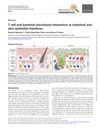 January 2023 in “Discovery immunology”
 T cells and bacteria in the gut and skin help maintain health and protect against disease.
7 citations
,
January 2025 in “Current Issues in Molecular Biology” This study found that PDRN derived from Lactobacillus rhamnosus showed superior antioxidant and wound-healing properties compared to salmon-derived PDRN, while also offering potential benefits in immune modulation and bioavailability.
 January 2024 in “Wiadomości Lekarskie”
 In this case-control study, researchers investigated the association between SIRT1 gene polymorphisms and colorectal cancer risk, finding no statistically significant differences in polymorphism frequencies between patients and controls, but noted trends that warrant further study in larger populations.
2 citations
,
November 2025 in “International Journal of Molecular Sciences” This review highlights that the skin microbiota plays a crucial role in wound healing, with beneficial microorganisms aiding tissue repair and opportunistic pathogens hindering it, potentially guiding future microbiome-targeted therapies.
 64 citations
,
August 2014 in “The journal of allergy and clinical immunology/Journal of allergy and clinical immunology/The journal of allergy and clinical immunology”
64 citations
,
August 2014 in “The journal of allergy and clinical immunology/Journal of allergy and clinical immunology/The journal of allergy and clinical immunology” This study found that biallelic mutations in the TTC7A gene affect lymphocyte and gut epithelial cell function, thereby contributing to the development of inflammatory bowel disease in patients.
 January 2024 in “Wiadomości Lekarskie”
 This study found that in prodromal Alzheimer's disease, pro-inflammatory gut bacteria were associated with reduced cerebral blood flow and reactivity, while beneficial gut bacteria correlated with better outcomes.
 January 2025 in “Universidad de Córdoba Insitutional Repository (Universidad de Córdoba)”
 In this study, researchers observed that individuals with alopecia areata exhibited significant changes in scalp microbiota diversity and composition, which were linked to disease severity and inflammation markers, though it remains unclear if these microbial shifts are a cause or a result of hair loss.
 1 citations
,
January 2023 in “Metabolites”
1 citations
,
January 2023 in “Metabolites” This review discusses the relationship between gut microbiota and polycystic ovarian syndrome (PCOS), including its potential mechanisms and the role of alterations in microbiome composition on PCOS pathophysiology.
380 citations
,
February 2023 in “Journal of Clinical Medicine” This review discusses various potential risk factors and possible therapeutic interventions for polycystic ovary syndrome, including the modulation of gut microbiota, but reports no new findings.