 September 2021 in “Kazanskij medicinskij žurnal”
 This article discusses the novel approach of introducing dissolved keratin into the body to enhance hair growth and reports no clinical results; further studies are needed to evaluate its efficacy.
23 citations
,
February 2025 in “Advanced Materials” This study found that a new autonomous, moisture-driven flexible electrogenerative dressing significantly accelerated chronic wound healing in a diabetic mouse model compared to the control group.
In a rodent study, a flexible, self-powered triboelectric nanogenerator wound patch combining electrostimulation and photothermal effects was found to efficiently accelerate wound healing and hair follicle regeneration.
January 2026 in “SSRN Electronic Journal” May 2020 in “Meeting abstracts/Meeting abstracts (Electrochemical Society. CD-ROM)” This research reported that using an electromechanical system based on flexible nanogenerators significantly accelerated skin wound healing and hair growth, and reduced food intake in rat models.
13 citations
,
July 2014 in “Cell stem cell” This study identified a novel phase of stem cell quiescence, GAlert, in mice, regulated by mTORC1, that primes stem cells for injury response.
1 citations
,
July 2025 in “Advanced Materials” This study reports on a zinc-coordinated tri-enzyme nanogel system (Zn@nGSC) that mimics natural enzymatic processes to enhance enzymatic activity and cascade efficiency, showing potential in wound healing, hyperglycemia treatment, and antibacterial effects in a murine model of post-pancreatectomy.

In this study, researchers developed a versatile sprayable hydrogel that promotes wound healing in mice by facilitating rapid gelation, reducing inflammation, and accelerating tissue regeneration, with potential applications in chronic wound treatment and beyond.
198 citations
,
May 2021 in “Advanced Materials” This review discusses triboelectric nanogenerator (TENG) devices for body-integrated electrical stimulation therapy and suggests they may revolutionize personalized healthcare, but it reports no new clinical results.
 January 2025 in “ACS Materials Letters”
 This study developed a GelMA-based hydrogel system that supports all stages of severe burn wound healing by reducing inflammation and enhancing tissue regeneration, including neovascularization and hair follicle growth, potentially improving clinical outcomes for complex wounds with multidrug-resistant bacterial infections.
August 2025 in “Acta Biomaterialia” This study presents a novel hydrogel scaffold made from tilapia collagen, which when activated by ultrasound, reprograms macrophages to promote wound healing, enhance angiogenesis, and stimulate hair follicle regeneration, offering a potential new method for treating inflammatory wounds.
March 2026 in “Chemical Engineering Journal” The hydrogel helps heal diabetic wounds by combining antibacterial, antioxidant, and immune-boosting effects.
February 2026 in “Biomaterials” BOOST is a promising, easy-to-use treatment for diabetic foot ulcers that improves healing by reducing inflammation and promoting blood vessel growth.
 June 2024 in “Advanced functional materials”
 This study introduced a novel wound dressing combining liquid metal composite with electrical stimulation, which accelerated wound healing and promoted hair follicle regeneration in nine days, effectively reducing scarring compared to untreated wounds.
35 citations
,
February 2024 in “Science Advances” This study introduces a magnet-assisted fabrication strategy for creating complex 3D soft bioscaffolds, demonstrating its effectiveness by producing structures with overhangs and supporting biohybrid actuators, promising advancements in biomedical applications.
44 citations
,
January 2021 in “Research” This study explored the use of manganese-doped calcium silicate nanowire-incorporated alginate hydrogels (MCSA hydrogels) for treating melanoma and promoting wound healing, finding that these hydrogels effectively ablate melanoma under near-infrared irradiation and enhance vascular endothelial cell activity for tissue regeneration.
June 2026 in “Materials Today Communications” This study reported that a newly designed multifunctional conductive hydrogel, PrM, combined with electrical stimulation significantly accelerated wound healing, achieving 95.9% healing in a mouse model on day 10, by enhancing regenerative processes and downregulating TNF-α signaling under electrical treatment.
March 2026 in “Bioconjugate Chemistry” This review highlights the potential of peptide-based PROTACs (pPROTACs) in expanding the target range of protein degraders beyond small-molecule limitations, particularly for undruggable proteins, by utilizing advances in design, conjugation, and bioPROTAC technology.
In this study, researchers developed a method using stencils to create controlled stiffness gradients in alginate hydrogels, revealing that stiffer regions within the gels promote deeper invasion by breast cancer cells, facilitating the study of mechanosensitive cellular behaviors.
104 citations
,
January 2022 in “Materials Today Bio” This study explored the development of zinc-incorporated gelatin-based hydrogels, which demonstrated strong antibacterial properties and supported skin cell health, ultimately improving the healing process of S. aureus-infected full-thickness wounds, showing promise as wound dressings for infected wounds.
1 citations
,
February 2026 in “ACS Omega” This review highlights the potential of self-powered nanogenerators in revolutionizing biomedical devices by using biomechanical or environmental energy, focusing on applications like regenerative hair growth, drug release patches, and electronic skin while evaluating challenges such as energy efficiency and biocompatibility.
January 2025 in “Biomaterials Research” This study developed a novel zinc-releasing hydrogel, Zn-Gel, which promoted wound healing by controlling zinc ion release and demonstrated excellent compatibility and efficacy in enhancing cell proliferation, blood vessel formation, and tissue regeneration in vitro and in vivo settings.
This study found that combining electrical stimulation with minoxidil had a synergistic effect on the proliferation of cultured human dermal papilla cells, potentially through enhanced activation of the Wnt/β-catenin pathway.
7 citations
,
June 2025 in “Nano Energy” This study reports that triboelectro-responsive DNA hydrogels, enhanced with conductive polymers and triboelectric stimulation, effectively accelerate wound healing and exhibit strong anti-bacterial and anti-inflammatory properties, achieving 99.8% closure of bacterium-infected diabetic wounds in 14 days.
13 citations
,
April 2025 in “International Journal of Nanomedicine” In this study, a hydrogel with anti-inflammatory, antibacterial, antioxidant, and wound tissue adhesion properties was developed, showing significant potential for wound healing and suggesting it could offer a new and effective treatment option in clinical settings.
2 citations
,
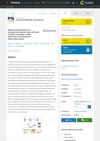
March 2025 in “Nanoenergy Advances” This review examines recent advances in bioelectronic nanogenerators for anti-cancer therapy, highlighting various transducing strategies such as photodynamic therapy and electrical stimulation, while also discussing the potential mechanisms for tissue repair and the challenges that lie ahead.
 6 citations
,
December 2022 in “Journal of Materials Chemistry B”
6 citations
,
December 2022 in “Journal of Materials Chemistry B” This study found that a bilayer wound dressing capable of releasing hydrogen sulfide promoted wound healing in rats by reducing inflammation, enhancing vascularization, and facilitating hair follicle regeneration.
 December 2024 in “Journal of Clinical Medical Research”
 This study explores regenerative medicine's potential to improve quality of life, especially in aging populations, by examining key components like triggering agents, potentiators, and additives, and how their combined use may accelerate tissue repair through a strategy called stacking.
 March 2026 in “bioRxiv (Cold Spring Harbor Laboratory)”
 In this study, researchers developed a new method called Enriched-GF, which enhances growth factor recovery from platelet concentrates through a combination of glass bead activation, freeze-thaw cycling, and calcium stimulation, outperforming conventional methods by providing higher and more consistent yields for regenerative medicine applications.
 August 2023 in “International Journal of Nanomedicine”
 This study found that a graphene-barium titanate nanosystem can accelerate wound healing by killing bacteria and promoting fibroblast proliferation, demonstrating effectiveness in both Gram-negative and Gram-positive bacteria-infected wounds in mice.