 12 citations
,
April 2015 in “InTech eBooks”
12 citations
,
April 2015 in “InTech eBooks” Platelet Rich Plasma (PRP) shows promise for tissue repair and immune response, but more research is needed to fully understand it and optimize its use.
 11 citations
,
June 2018 in “Sexual medicine reviews”
11 citations
,
June 2018 in “Sexual medicine reviews” This review evaluates existing preclinical and clinical studies on stromal vascular fraction for treating male sexual dysfunction, finding limited data and emphasizing the need for more research before conducting clinical trials.
 10 citations
,
May 2024 in “npj Regenerative Medicine”
10 citations
,
May 2024 in “npj Regenerative Medicine” This review discusses the role of umbilical cord-derived mesenchymal stromal cells in skin rejuvenation and reports no new clinical results; it emphasizes their potential in delaying skin aging.
 10 citations
,
January 2022 in “Scholars international journal of anatomy and physiology”
10 citations
,
January 2022 in “Scholars international journal of anatomy and physiology” This review discusses Aloe Vera's traditional uses and active components but reports no new clinical results, emphasizing its potential benefits from wound healing to hair growth.
 10 citations
,
January 2016 in “Elsevier eBooks”
10 citations
,
January 2016 in “Elsevier eBooks” This chapter reviews the role of nanoparticles in wound healing, exploring current therapies, developments, and future directions, but reports no new clinical results.
 9 citations
,
December 2024 in “Nano Research”
9 citations
,
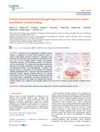
December 2024 in “Nano Research” In a study on diabetic mice, researchers developed a protein-based hydrogel that leverages zinc ions and the natural compound phellopterin to promote cutaneous nerve regeneration, angiogenesis, and tissue remodeling in diabetic wounds, highlighting its potential for advanced wound therapy.
 9 citations
,
August 2021 in “Biological Chemistry”
9 citations
,
August 2021 in “Biological Chemistry” This review examines current and potential approaches to managing chronic wound inflammation through macrophage-targeted strategies using ECM-inspired wound dressings, but it reports no new clinical results.
 9 citations
,
July 2021 in “Dermatology and Therapy”
9 citations
,
July 2021 in “Dermatology and Therapy” This review highlights promising recent advances in therapies for epidermolysis bullosa, including gene therapy and stem cell approaches, but reports no definitive cures and emphasizes the need for further research.
 8 citations
,
February 2023 in “American Journal of Physiology-Cell Physiology”
8 citations
,
February 2023 in “American Journal of Physiology-Cell Physiology” This review discusses the roles of adiponectin and bradykinin in skin homeostasis and pathologies, highlighting the need for further research into their therapeutic potential but reports no new clinical results.
 8 citations
,
October 2022 in “Cold Spring Harbor perspectives in biology”
8 citations
,
October 2022 in “Cold Spring Harbor perspectives in biology” The document concludes that better understanding the wound microbiome can improve chronic wound care by preserving helpful bacteria and targeting harmful ones.
 8 citations
,
January 2022 in “Burns and trauma”
8 citations
,
January 2022 in “Burns and trauma” This review discusses the role of extracellular vesicles from specific skin cells in wound healing, emphasizing their potential in regenerative medicine and reporting no new experimental results.
 7 citations
,
October 2019 in “Elsevier eBooks”
7 citations
,
October 2019 in “Elsevier eBooks” This chapter defines skin integrity as a blend of intact structural elements and adaptable functional capacity, highlighting its importance in maintaining skin health across various conditions but reports no new research findings.
 6 citations
,
March 2021 in “Cytotechnology”
6 citations
,
March 2021 in “Cytotechnology” This review examines recent findings on COVID-19 pneumonia treatment using mesenchymal stem cells and reports no new clinical results; the authors highlight MSCs' potential due to their immunomodulatory and tissue-regenerative properties.
 6 citations
,
November 2018 in “Photodiagnosis and Photodynamic Therapy”
6 citations
,
November 2018 in “Photodiagnosis and Photodynamic Therapy” This study found that using a wearable low-level light therapy device for photodynamic therapy significantly reduced actinic keratosis lesions and improved quality of life in patients with AK of the scalp.
 6 citations
,
August 2007 in “Journal of Surgical Research”
6 citations
,
August 2007 in “Journal of Surgical Research” In this study, constitutive expression of Del1 in mice did not affect wound healing but was associated with increased hair growth following anagen induction.
 5 citations
,
March 2024 in “Acta Scientiarum Polonorum Technologia Alimentaria”
5 citations
,
March 2024 in “Acta Scientiarum Polonorum Technologia Alimentaria” This study synthesized existing research on 11 tropical seed varieties, underscoring their potential in food, pharmaceutical, and agricultural industries due to their phytochemicals and nutrients, such as phenolics and vitamins, which could reduce waste and support sustainable practices.
 5 citations
,
January 2019 in “Elsevier eBooks”
5 citations
,
January 2019 in “Elsevier eBooks” This chapter reviews skin components, wound healing mechanisms, and the potential of biomaterials to enhance skin repair and regeneration, without offering new experimental results.
 5 citations
,
January 2013 in “Otorhinolaryngology clinics : an international journal”
5 citations
,
January 2013 in “Otorhinolaryngology clinics : an international journal” This review discusses the use of platelet-rich plasma in cosmetic surgery, highlighting its expanding applications and promising potential in aesthetic treatments, but reports no new empirical findings.
 4 citations
,
January 2026 in “Cell Discovery”
4 citations
,
January 2026 in “Cell Discovery” This study introduced the concept of spatiotemporal clocks to understand how different phases of mammalian wound healing are coordinated, with a focus on the spatial domains and oscillatory molecular signals involved, while highlighting the potential for regenerative therapeutic strategies.
 4 citations
,
October 2025 in “International Journal of Medical Sciences”
4 citations
,
October 2025 in “International Journal of Medical Sciences” This review reported that tripeptides, such as GHK and KdPT, show promise in enhancing wound healing through multiple mechanisms, including promoting cell migration, collagen deposition, and angiogenesis, while offering antimicrobial and anti-inflammatory benefits for both acute and chronic wounds.
 4 citations
,
January 2025 in “Frontiers in Pharmacology”
4 citations
,
January 2025 in “Frontiers in Pharmacology” This review discusses the role of multiomics in understanding skin repair and regeneration mechanisms and reports no new results; the authors suggest it may lead to personalized medicine advancements and improved treatments.
 4 citations
,
January 2015 in “Türk Patoloji Dergisi”
4 citations
,
January 2015 in “Türk Patoloji Dergisi” This review discusses the skin manifestations of endocrine diseases and reports no new clinical findings, emphasizing the importance of recognizing these signs for early diagnosis.
 3 citations
,
October 2024 in “Frontiers in Medicine”
3 citations
,
October 2024 in “Frontiers in Medicine” This study investigated single-cell changes in photoaged skin, revealing distinct cell clusters and increased activity in PD-L1 and PD-1 pathways in sun-exposed areas, enhancing understanding of UVA-induced skin damage and potential prevention targets for photoaging and UV-induced skin cancers.
 3 citations
,
August 2024
3 citations
,
August 2024 In this study, researchers using single nuclei RNA-sequencing found that fibroblasts in deeper layers of mouse skin expressed higher levels of pro-inflammatory genes post-wounding compared to other cells, highlighting their significant role in early inflammation and tissue repair processes.
 3 citations
,
January 2024 in “Signal transduction and targeted therapy”
3 citations
,
January 2024 in “Signal transduction and targeted therapy” This study presents a detailed overview of lymphatic vessel development and highlights the role of abnormal lymphangiogenesis in various diseases, suggesting that targeting lymphangiogenic factors may improve treatment strategies.
 3 citations
,
January 2023 in “Physiological Research”
3 citations
,
January 2023 in “Physiological Research” This review suggests that mesenchymal stem cells' therapeutic effects might be due to bioactive substances they release, rather than the cells themselves, highlighting the potential of the MSC secretome as a novel, cell-free therapeutic approach.
 3 citations
,
April 2021 in “PLoS ONE”
3 citations
,
April 2021 in “PLoS ONE” The authors concluded that controlling voltage, pulse width, and calcium concentration in pulse electric field-activated platelet-rich plasma enhances the release of growth factors and serotonin without causing clot formation, suggesting potential clinical advantages over bovine thrombin-activated PRP.
 3 citations
,
January 2016 in “South African family practice”
3 citations
,
January 2016 in “South African family practice” This review suggests that platelet-rich plasma shows potential for improving alopecia areata and skin rejuvenation, but more research is needed as evidence primarily supports short-term outcomes in orthopaedic applications.
 2 citations
,
October 2025 in “Journal of Materials Science Materials in Medicine”
2 citations
,
October 2025 in “Journal of Materials Science Materials in Medicine” In this study, researchers developed a novel zinc oxide nanoflower-infused nanocomposite that demonstrated promising results in accelerating wound healing in a murine model, with enhanced angiogenesis, reduced inflammation, and improved collagen deposition compared to a control group.
 2 citations
,
December 2024 in “Bulletin of Rehabilitation Medicine”
2 citations
,
December 2024 in “Bulletin of Rehabilitation Medicine” In this study, chitosan glycolate sponges demonstrated the highest cell survival rates and blood absorption, highlighting their potential as hemostatic materials, whereas chitosan ascorbate sponges inhibited cell growth and metabolic activity, indicating further development is needed.