34 citations
,
June 2020 in “British journal of dermatology/British journal of dermatology, Supplement” In this study, researchers observed that follicular damage and stem cell loss in frontal fibrosing alopecia may be mediated by immune attacks at the bulge region, suggesting potential for JAK/STAT-targeting treatments to prevent progression.
15 citations
,
January 2015 in “Skin Appendage Disorders” This report discusses a series of patients with frontal fibrosing alopecia experiencing increased scalp sweating, which the authors hypothesize may be related to local skin inflammation affecting sweat gland activity.
 1 citations
,
April 2017 in “Journal of Investigative Dermatology”
1 citations
,
April 2017 in “Journal of Investigative Dermatology” In this study, D-OCT imaging revealed distinct structural and vascular changes in patients with frontal fibrosing alopecia, highlighting the technique's potential for diagnosing and monitoring the condition's activity.
 April 2023 in “Journal of Investigative Dermatology”
 This study identified a new role for IL-4Ra-induced oxidative metabolism in wound macrophages, essential for balancing inflammatory response and promoting pro-fibrotic repair, suggesting a target for fibrosis prevention.
23 citations
,
January 2024 in “Journal of Investigative Dermatology” In this study, researchers used advanced RNA sequencing techniques to discover that communication between specific fibroblast and myeloid cell populations may play a role in acne keloidalis, and found that corticosteroid injections could significantly reduce disease activity and gene expression related to these cells.
 January 2026 in “DOAJ (DOAJ: Directory of Open Access Journals)”
 This study evaluated 129 patients with androgenetic alopecia and identified an inflammatory pattern of perifollicular infiltration linked to treatment resistance. Targeting both hormonal and immune pathways improved outcomes for 67% of patients, suggesting inflammation may play a role in some cases of stubborn hair loss.
7 citations
,
April 2025 in “Science Advances” This study suggests that a biomaterial-based approach using microneedles and ion solutions to deliver SiO3 2− ions may disrupt inflammatory cycles and improve outcomes in inflammatory dilated cardiomyopathy (iDCM).
21 citations
,
December 2023 in “Bioengineering & Translational Medicine” This study found that crosstalk between fibroblasts and endothelial cells significantly contributes to hypertrophic scar formation by enhancing fibroblast activity through cytokine secretion, with pathway analyses suggesting molecular targets for potential therapeutic interventions.
 25 citations
,
June 2018 in “Journal of The American Academy of Dermatology”
25 citations
,
June 2018 in “Journal of The American Academy of Dermatology” This study identified upregulation of genes linked to fibroproliferative disorders, such as platelet-derived growth factor and collagen genes, in patients with central centrifugal cicatricial alopecia, suggesting potential therapeutic targets.
 September 2022 in “XXXIX Congresso Brasileiro de Reumatologia”
 In this case report, a 42-year-old woman with cutaneous dermatomyositis showed significant improvement, including reduction of erythema, pruritus, and scaling, after starting JAK inhibitor tofacitinib, especially when conventional systemic treatments failed and intravenous immune globulin wasn't viable.
 5 citations
,
January 2021 in “Inflammatory Bowel Diseases”
5 citations
,
January 2021 in “Inflammatory Bowel Diseases” In this report, a female patient with ulcerative colitis, alopecia areata, and pyoderma gangrenosum showed improvement in all three conditions after being treated with tofacitinib.
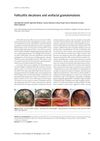 January 2018 in “Advances in Dermatology and Allergology”
 Treatment with dapsone, topical corticosteroids, and antibiotics improved the man's skin conditions.
3 citations
,
May 2024 in “Indian Journal of Dermatology” In this case report, researchers identified a potential adverse skin reaction, called SDRIFE or Baboon syndrome, caused by the drug tofacitinib in a 19-year-old woman being treated for alopecia subtotalis, leading the authors to recommend discontinuation of the drug.
2 citations
,
January 2019 in “Skin appendage disorders” This article reports a case of frontal fibrosing alopecia in its early inflammatory stage that responded positively to intralesional steroid treatment.
201 citations
,
April 2017 in “Regeneration” This review examines the roles of macrophages and fibroblastic cells in organ injury and repair, discussing their impact on outcomes ranging from regeneration to fibrosis, without presenting new clinical results.
 1 citations
,
May 2025 in “Frontiers in Medicine”
1 citations
,
May 2025 in “Frontiers in Medicine” In this case series, dual-targeted therapy was observed to provide promising clinical responses in refractory inflammatory bowel disease, with 88.23% to 100% response rates across 9 months and an endoscopic response in 88.89% of evaluated patients, though some adverse events occurred.
 April 2019 in “Journal of Investigative Dermatology”
 This study found that DPP4 is significantly involved in matrix deposition and fibrosis in human skin fibroblasts, although the exact functions of DPP4 remain unclear.
 179 citations
,
December 2004 in “Journal of The American Academy of Dermatology”
179 citations
,
December 2004 in “Journal of The American Academy of Dermatology” This study observed that frontal fibrosing alopecia in postmenopausal women involves selective follicular inflammation, and finasteride treatment may slow disease progression, suggesting a potential androgen-related component.
January 2018 in “Journal of Crohn s and Colitis” This study found that high-dose intravenous ferric carboxymaltose may reduce inflammatory activity in patients with inflammatory bowel disease and iron deficiency anaemia, as evidenced by decreased CRP levels and improved clinical disease indices.
 1 citations
,
May 2021 in “Annals of the rheumatic diseases”
1 citations
,
May 2021 in “Annals of the rheumatic diseases” This study found that tofacitinib may be effective for treating pediatric rheumatic diseases, with especially promising results in patients with autoinflammatory diseases, arthritis and alopecia, and juvenile dermatomyositis.
36 citations
,
March 2014 in “Annals of the Rheumatic Diseases” This study found that activating liver X receptors with an agonist reduced skin fibrosis in experimental models, particularly in inflammation-driven conditions, by inhibiting macrophage infiltration and interleukin-6 release.
1 citations
,
January 2025 in “Clinical Cosmetic and Investigational Dermatology” This study found that specific inflammatory factors, including decreased SCF, MIP-1β, and MCP-1, and increased SDF-1α and HGF, have causal relationships with rosacea, highlighting potential targets for further research into disease mechanisms.
April 2018 in “The journal of investigative dermatology/Journal of investigative dermatology” This study found that a high-fat diet in obese mice may exacerbate neutrophilic folliculitis by increasing CXCR2 ligand expression in keratinocytes and neutrophils.
1 citations
,
October 2013 in “The American Journal of Gastroenterology” This case report documents a 59-year-old woman who developed atypical drug-induced lupus after receiving infliximab for Crohn's disease, with symptoms persisting even after discontinuation.
38 citations
,
January 2017 in “Mediators of Inflammation” This study found that platelet-rich growth factor significantly reduced the release of proinflammatory cytokines in an in vitro rheumatoid arthritis model.
 February 2022 in “Journal of Clinical and Experimental Investigations”
 This study found that patients with Fibromyalgia Syndrome had more frequent skin symptoms and lower quality of life compared to controls, suggesting the need for a multidisciplinary treatment approach.
3 citations
,
July 2024 in “Cell Proliferation” In this study, a wound-induced skin fibrosis model in mice revealed that TGFβ signaling plays a pivotal role in maintaining fibrogenic characteristics in dermal adipocyte progenitors, which could inform new therapeutic approaches for fibrotic skin conditions such as scleroderma.
4 citations
,
March 2024 in “Journal of the American Academy of Dermatology” Clinical signs don't match inflammation levels in lichen planopilaris and frontal fibrosing alopecia.
3 citations
,
September 2025 in “Frontiers in Microbiology” This review article proposes a possible skin-gut-fibrosis axis, suggesting that gut microbial metabolites may influence the development of keloids and hypertrophic scars by affecting immune responses and fibrotic signaling pathways, although direct evidence in skin fibrosis remains limited.
 12 citations
,
July 2025 in “Journal of Clinical and Translational Hepatology”
12 citations
,
July 2025 in “Journal of Clinical and Translational Hepatology” This review discusses how targeting TGF-β with specific inhibitors, including components from Traditional Chinese Medicine, may help reduce liver fibrosis by acting through various signaling pathways.