 44 citations
,
January 2006 in “Biological & Pharmaceutical Bulletin”
44 citations
,
January 2006 in “Biological & Pharmaceutical Bulletin” This research suggests that testosterone-induced expression of TGF-beta1 and type I procollagen may lead to perifollicular fibrosis in androgenetic alopecia, with finasteride inhibiting this process as a possible mechanism for its effects.
20 citations
,
June 2024 in “Journal of Autoimmunity” This study found that in rheumatoid arthritis patients, inflammatory macrophages activate steroid metabolism to increase glucocorticoid and androgen production, which helps suppress inflammation and attenuate hyperproliferation in synovial fibroblasts, with notable disturbances seen in postmenopausal women due to diminished inactive steroid precursors.
5 citations
,
January 2016 in “Skin appendage disorders” This case report describes frontal fibrosing alopecia in a woman with primary biliary cirrhosis and polymyalgia rheumatica, suggesting a possible autoimmune link to this form of hair loss.
 July 2021 in “British Journal of Dermatology”
 This case report describes a novel instance of scarring alopecia with features of frontal fibrosing alopecia in a patient with systemic sclerosis, suggesting a potential link between the two conditions not previously reported.
 November 2020 in “DOAJ (DOAJ: Directory of Open Access Journals)”
 This perspective highlights evidence suggesting inflammation plays a significant role in male and female pattern hair loss, indicating that targeting inflammatory pathways may improve future therapeutic options.
 1 citations
,
March 2023 in “Science Translational Medicine”
1 citations
,
March 2023 in “Science Translational Medicine” The researchers reported that targeting glycoprotein 130's signaling site in animal models promoted tissue regeneration and reduced osteoarthritis progression through anti-inflammatory and protective effects.
54 citations
,
November 2007 in “Actas Dermo-Sifiliográficas” Early diagnosis of frontal fibrosing alopecia is crucial to prevent permanent hair loss.
January 2003 in “Hepatology” 42 citations
,
March 2015 in “Anais Brasileiros de Dermatologia” This study reports two cases of alopecia associated with anti-TNF therapy, highlighting a new entity combining features of alopecia areata and psoriatic alopecia.
This article discusses the inflammation process in dissecting cellulitis and folliculitis keloidalis, noting the role of follicular rupture and hair fragments while reporting no new results; the authors highlight differences in bacterial presence and pathogenesis understanding.
 2 citations
,
August 2022 in “Emergency medicine international”
2 citations
,
August 2022 in “Emergency medicine international” This study found that a key gene signature, including FGF11, highlights the immunologic nature of keloid lesions, distinguishing them from normal fibroblasts and scars.
16 citations
,
June 2018 in “JAAD case reports” This article reviews the differences in inflammatory processes between alopecia universalis and atopic dermatitis, focusing on type 1 and type 2 immune responses, but it reports no new results.
 9 citations
,
May 2021 in “Immunological Reviews”
9 citations
,
May 2021 in “Immunological Reviews” This review discusses the role of fibroblast heterogeneity in kidney pathology, particularly their contribution to tertiary lymphoid tissue formation, and reports no new results.
16 citations
,
August 2023 in “JAAD Case Reports” This review discusses the unclear etiology and potential contributing factors of frontal fibrosing alopecia and reports no new clinical findings.
 June 2023 in “Fundamental & clinical pharmacology”
 This research highlights that while JAK inhibitors are effective for various inflammatory conditions, studies raise concerns about increased risks of venous and arterial thromboembolism, and cancer, particularly with tofacitinib and baricitinib, leading to European guidelines recommending caution in high-risk patients.
 March 2018 in “Suez Canal University Medical Journal”
 This review examines targeting the JAK-STAT pathway in inflammatory skin diseases, highlighting existing JAK inhibitors and potential developments, but presents no new experimental or clinical results.
7 citations
,
March 2022 in “International Journal of Molecular Sciences” This study found that FGF21 suppresses inflammation induced by C. acnes in both human skin cells and mouse models, suggesting potential use in acne treatment.
August 2019 in “Journal of the American Academy of Dermatology” Frontal fibrosing alopecia may be caused by an autoimmune reaction and hormonal imbalance.
November 2025 in “Skin Appendage Disorders” This review discusses the role of perifollicular fibrosis in androgenetic alopecia and suggests that targeting specific signaling pathways could improve treatment outcomes, but reports no new clinical results.
This review discusses the role of perifollicular fibrosis in androgenetic alopecia and explores potential treatment strategies targeting fibrotic signaling pathways, but reports no new clinical results.
February 2018 in “The American Journal of Gastroenterology” This study observed that intravenous ferric carboxymaltose did not inhibit the drug-induced reduction of inflammatory activity in patients with inflammatory bowel disease, as indicated by lower CRP levels.
This review discusses the role of perifollicular fibrosis in androgenetic alopecia and explores potential anti-fibrotic therapies targeting specific signaling pathways, but it reports no new clinical results.
December 2024 in “The American Journal of Gastroenterology” This case report highlights the successful use of tofacitinib in a 12-year-old patient with Crohn’s disease who developed alopecia areata following infliximab treatment, showing significant hair regrowth and complete resolution of alopecia within eight months while maintaining remission of Crohn’s symptoms.
1 citations
,
August 2024 in “Anais Brasileiros de Dermatologia” This review discusses the non-follicular skin manifestations of frontal fibrosing alopecia and how they affect diagnosis and treatment, but reports no new clinical results.
 35 citations
,
October 2017 in “Signal Transduction and Targeted Therapy”
35 citations
,
October 2017 in “Signal Transduction and Targeted Therapy” This study found that fibromodulin significantly reduces scar formation and boosts scar strength in rodent and porcine models, suggesting potential for FMOD-based therapies in cutaneous wound repair.

This study found a significant discordance between clinical symptoms and dermatoscopic signs with histopathological inflammation in patients with LPP and AFF, affecting diagnostic and therapeutic approaches.
 April 2017 in “Journal of Investigative Dermatology”
 This study found that fisetin, a dietary flavonoid, significantly improved psoriasiform skin lesions in mice by promoting cell differentiation, inhibiting proliferation, and modulating inflammatory responses.
 36 citations
,
June 2021 in “Experimental & Molecular Medicine”
36 citations
,
June 2021 in “Experimental & Molecular Medicine” This study found that mechanical stress activates a WISP-1/Hedgehog signaling axis that contributes to ligamentum flavum hypertrophy and fibrosis, identifying Hedgehog signaling as a potential therapeutic target.
 September 2013 in “Hair transplant forum international”
 This abstract describes frontal fibrosing alopecia, a type of cicatricial alopecia identified in post-menopausal women, and reports no new clinical findings.
 16 citations
,
February 2010 in “Journal of the European Academy of Dermatology and Venereology”
16 citations
,
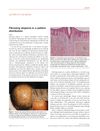
February 2010 in “Journal of the European Academy of Dermatology and Venereology” This article is a letter to the editor about fibrosing alopecia in a pattern distribution and reports no new research findings.