1 citations
,
January 2022 in “Clinical Cases in Dermatology” This case report describes a 22-year-old Asian man with erosive pustular dermatosis of the scalp, whose lesions improved after treatment with topical tacrolimus and oral isotretinoin.
January 2010 in “Journal of Animal Science” This study demonstrated that transcutaneous vaccination via cyanoacrylate skin surface stripping effectively induced both CD4 and CD8 T cell responses in humans, offering a promising alternative to intramuscular injection.
11 citations
,
January 1988 in “PubMed” This study found that epidermal cell extract from keratinocytes may promote epidermal cell proliferation and migration while inhibiting fibroblast activity, potentially reducing scarring in wound healing.
15 citations
,
April 2011 in “Biological Chemistry” This study found that Cathepsin E plays a crucial role in keratinocyte terminal differentiation, affecting epidermis formation and homeostasis in mice.
 May 2024 in “Animal genetics”
 The researchers investigated a Maine Coon cat with suspected classical Ehlers-Danlos Syndrome and discovered a heterozygous deletion in the COL5A1 gene, underscoring the value of whole-genome sequencing for precise veterinary diagnostics.
December 2014 in “Belarusian State Pedagogical University repository (Belarusian State Pedagogical University)” This study suggests that β-Catenin and extracellular matrix components interact in a regulatory loop to influence fibroblast behavior and wound repair properties in dermal tissue.
 1 citations
,
December 2022 in “Life”
1 citations
,
December 2022 in “Life” This review systematically analyzed evidence on treatment options for erosive pustular dermatosis, finding that while potent topical steroids like clobetasol propionate can be effective, recurrence is common, and more robust studies are necessary for stronger recommendations.
8 citations
,
January 2019 in “JAAD Case Reports” This article describes erosive pustular dermatosis of the scalp, emphasizing its chronic nature, potential complications, and the lack of specific diagnostic findings, but reports no new clinical results.
February 2019 in “Journal of Physiology & Pathology in Korean Medicine” In this study, the ethanol extract of Puerariae Radix was found to promote proliferation and ERK activation in human dermal fibroblasts, suggesting its potential as a new cosmetic ingredient.
February 2024 in “Epigenomes” This review discusses recent insights into the dynamics and regulation of the epidermal differentiation complex during keratinocyte differentiation and reports no new experimental results.
 18 citations
,
February 2022 in “Cell Death Discovery”
18 citations
,
February 2022 in “Cell Death Discovery” In this study, researchers found that hair follicle-derived mesenchymal stem cells, modified to overexpress extracellular matrix protein 1, significantly improved liver function and reduced liver damage in cirrhotic mice by inhibiting hepatic stellate cell activation and TGF-β/Smad signaling.
 March 2026 in “Zenodo (CERN European Organization for Nuclear Research)”
 This publication presents a library of geometric medicines designed to selectively target pathogenic bacteria and fungi with high precision while minimizing ecological harm, available for free on a non-commercial basis.
15 citations
,
December 2009 in “PubMed” This case study highlights a pediatric instance of eruptive vellus hair cysts partially responding to calcipotriene cream, aiming to remind clinicians about this often overlooked condition.
 January 1999 in “American Journal of Medical Genetics Part A”
 This case report describes a rare occurrence of ectodermal dysplasia features in a 14-year-old with MBTPS1 gene variants, expanding the known spectrum of related disorders.
 1 citations
,
April 2017 in “Journal of Investigative Dermatology”
1 citations
,
April 2017 in “Journal of Investigative Dermatology” This proof-of-concept study reported that a new, ultra-fast, one-step immunohistochemistry method improved the interpretation of Mohs surgery slides, particularly for poorly differentiated tumors.
 1 citations
,
September 2025 in “International Journal of Drug Delivery Technology”
1 citations
,
September 2025 in “International Journal of Drug Delivery Technology” This randomized controlled study reported that combining Ecklonia cava with Diane-35 significantly improved weight, waist circumference, hormonal balance, and inflammation markers in women with polycystic ovary syndrome over three months compared to Diane-35 alone.
 8 citations
,
April 2015 in “Transboundary and Emerging Diseases”
8 citations
,
April 2015 in “Transboundary and Emerging Diseases” This report describes an outbreak of catheter-related infections by ESBL-producing E. coli in calves at an animal teaching hospital, highlighting the risk of these strains becoming nosocomial and increasing mortality and antibiotic use.
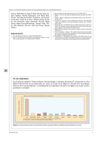
The document corrects a mistake by stating that pimecrolimus, not tacrolimus, is the drug that concentrates in the skin.
48 citations
,
March 2010 in “PloS one” This study found that the co-ablation of C/EBPalpha and C/EBPbeta in adult mouse skin disrupted sebocyte differentiation and epidermal homeostasis, highlighting their critical roles in these processes.
6 citations
,
January 2014 in “PubMed” In this case report, erosive pustular dermatosis of the scalp in a 49-year-old man showed improvement with daily application of 0.1% mometasone furoate cream.
April 2020 in “Journal of the Endocrine Society” This study suggests that hair cortisol measurement could serve as an alternative diagnostic method for Cushing’s disease, showing acceptable concordance with urinary free cortisol despite differing evaluated periods.
 June 2020 in “Journal of Investigative Dermatology”
 This study found that FDA-cleared devices for preparing platelet-rich plasma showed inconsistent product quality, with variable platelet counts and inadequate quality control performance, suggesting clinical improvement may not rely on platelet concentration.
 32 citations
,
February 2016 in “The American journal of dermatopathology/American journal of dermatopathology”
32 citations
,
February 2016 in “The American journal of dermatopathology/American journal of dermatopathology” This study observed that in primary extramammary Paget disease, carcinoma commonly spreads to significant depths along hair follicles and eccrine ducts, with a maximal depth of 3.6 mm.
10 citations
,
November 2017 in “Skin Appendage Disorders” This series of eight North American patients with erosive pustular dermatosis of the scalp suggests that factors like immunosenescence and ultraviolet damage may contribute to the condition's development.
 February 2026 in “International Journal of Clinical Pharmacy”
 This commentary described developing a framework to evaluate how pharmacists in community pharmacy care clinics impact emergency department visits, focusing on conditions they can manage, adverse medication events, and necessary referrals.
 November 2023 in “Journal of cosmetic dermatology”
 This report describes three cases of erythromelanosis follicularis faciei et colli showing significant improvement in facial telangiectasia following treatment with a 595-nm pulsed dye laser, with minimal recurrence observed during follow-up.
28 citations
,
June 2020 in “ACS Biomaterials Science & Engineering” This study found that a novel ECM patch combining human fibroblast-derived matrix and PVA hydrogel, seeded with human mesenchymal stem cells, significantly improved wound healing and tissue regeneration in a mouse model.
20 citations
,
January 1997 in “Dermatology” This case report describes a 16-year-old with ectrodactyly-ED-clefting syndrome, where scarring alopecia with follicular involvement appeared during puberty, possibly due to anatomic hair abnormalities.
 February 2020 in “International Journal of Research in Dermatology”
 This study emphasizes that erosive pustular dermatosis of the scalp is an underrecognized condition, and increased awareness and diagnosis can improve patient outcomes by preventing further scalp damage.
16 citations
,
October 2013 in “Anais Brasileiros de Dermatologia” In this case report, an elderly woman with erosive pustular dermatosis of the scalp showed complete closure of eroded areas after treatment with prednisone and topical tacrolimus, resulting in stable scarring alopecia.