 February 2024 in “The Journal of Dermatology”
 In this study, dutasteride 0.5 mg was found to provide long-term efficacy and safety in treating androgenetic alopecia in Korean men, with 89.9% showing improvement and 93.9% experiencing prevention of disease progression over at least 5 years.
 January 2024 in “Brazilian Journal of Hair Health”
 This integrative literature review suggests that phytotherapeutic products, like Saw palmetto and Green tea, could serve as viable alternatives to current medications like finasteride for treating androgenetic alopecia, potentially offering fewer side effects.

This review discusses potential advancements in topical dutasteride formulations for treating androgenic alopecia and reports no clinical results, highlighting a focus on improving skin penetration and availability.
 January 2024 in “International Journal of Biological and Environmental Investigations”
 This study developed and validated a reliable RP-HPLC method for accurately quantifying dutasteride in pharmaceutical formulations and bulk pharmaceuticals using a Shiseido C18 analytical column, demonstrating precision, accuracy, and sensitivity across a concentration range of 10 to 22 ppm.
 January 2024 in “Journal of the Egyptian Women's Dermatologic Society (Print)”
 This study found that combining minoxidil 0.1% and dutasteride 0.01% applied topically after microneedling was significantly more effective than using dutasteride alone with microneedling in improving female pattern hair loss in 40 female patients.
 December 2023 in “Annals of phytomedicine”
 This study reports that dutasteride, used alone or with tamsulosin, effectively reduces acute urine retention and surgery risk in men with benign prostatic hyperplasia, and may lower prostate cancer incidence, suggesting potential chemopreventive benefits.
 October 2023 in “Georgetown medical review”
 This review found that both finasteride and dutasteride are effective for treating hair loss in men with androgenetic alopecia, with dutasteride showing higher efficacy, but noted unclear clinical significance regarding potential negative impacts on reproduction, including possible sexual dysfunction and effects on spermatogenesis.
 September 2023 in “Forum Dermatologicum”
 Dutasteride injections can help treat hair loss in men and women.
 September 2023 in “Journal of The American Academy of Dermatology”
 In this study, researchers observed that after 5 years of treatment, 89.9% of Korean men with androgenetic alopecia experienced improvement and 93.9% had prevention of disease progression with dutasteride 0.5mg, though sexual-related symptoms were common early but subsided over time.
August 2023 in “Zenodo (CERN European Organization for Nuclear Research)” This review paper provides a comprehensive overview of Dutasteride, detailing its pharmacological properties, mechanisms, and therapeutic applications, particularly for androgenetic alopecia and benign prostatic hyperplasia, and discusses its potential use in prostate cancer prevention and transgender medicine.
August 2023 in “Journal of Investigative Dermatology” In this meta-analysis, researchers found that oral dutasteride may stabilize or improve frontal fibrosing alopecia in patients, but results varied widely, and further controlled studies are needed to confirm its effectiveness as a treatment option.
 June 2023 in “Clinica Chimica Acta”
 This study observed that both finasteride and dutasteride significantly decreased dihydrotestosterone concentrations in hair, with dutasteride showing the greatest reduction.
 May 2023 in “JAAD international”
 This study evaluated the clinical outcomes of using tattoo equipment to deliver a combination of minoxidil and dutasteride directly to the scalp over three sessions for treating male androgenetic alopecia, but results are not reported in the abstract.
 May 2023 in “Elsevier eBooks”
 This source highlights topical minoxidil as the first-line treatment for androgenetic alopecia in both genders and finasteride for men, while also identifying dutasteride, low-dose oral minoxidil, and topical finasteride as promising future options.
 February 2023 in “European Journal of Dermatology”
 In this retrospective study from North France, apremilast was used in patients with psoriasis and recent cancer, showing a good safety profile and improved quality of life, though with 65.2% experiencing non-serious adverse events. The need for further research on oncological safety was highlighted.
 December 2022 in “Acta Ophthalmologica”
 In this study, dutasteride treatment in retinitis pigmentosa mice increased photoreceptor survival and reduced glial activation, suggesting it may offer a neuroprotective effect.
March 2021 in “CRC Press eBooks” This review discusses the application of mesotherapy in dermatology and trichology, noting its potential benefits and issues, but reports no new clinical results.
August 2020 in “European Journal of Dermatology” This study identified three EDAR gene variants potentially linked to hypohidrotic ectodermal dysplasia in three Pakistani families, which could aid in genetic counseling for similar cases.
This study found that chronic administration of dutasteride in rats did not affect spermatogenesis or oxidative stress in the testes, although it altered hormone levels.
 April 2020 in “Archivos españoles de urología”
 This study found that administering dutasteride did not change spermatogenesis or oxidative stress levels in rat testes, though further research is needed to confirm these findings.
 January 2020 in “International Journal of Research in Pharmacy and Chemistry”
 This study developed a validated HPLC method for accurately estimating dutasteride and its related compounds in capsules, suitable for routine and stability sample analysis.
January 2020 in “Journal of Men s Health” In this study of BPH patients with testosterone deficiency, the combination of TU and dutasteride reduced prostate volume and improved testosterone-related symptoms but was less effective for sexual function compared to TU alone, indicating caution in using dutasteride for those with sexual dysfunction concerns.
August 2019 in “RIUnB Institutional Repository (University of Brasília)” This study developed polymer nanoparticles with and without chitosan coating to deliver dutasteride to hair follicles for treating androgenic alopecia. Both nanoparticle types showed controlled drug release and enhanced follicle targeting, especially with mechanical stimulus, supporting their potential as effective topical carriers in skin layers.
February 2017 in “대한피부과학회지” This case report describes a 52-year-old man with androgenic alopecia who experienced improvement after adding low-dose dutasteride to long-term finasteride treatment when the initial therapy's effectiveness waned.
 January 2017 in “Rasayan journal of Chemistry”
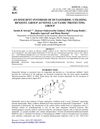
 This paper describes a new scalable synthesis method for Dutasteride, highlighting its potential for large-scale commercial production.
November 2013 in “Journal of clinical & experimental dermatology research” Dutasteride can help treat hair loss in both men and women.
April 2013 in “The FASEB Journal” In this study, dutasteride, but not finasteride, reduced high-grade PIN lesions more effectively in C57xFVB TRAMP mice, although both drugs increased the incidence of poorly differentiated prostate cancer.
March 2013 in “The Journal of Urology” This study found that non-daily use of Dutasteride may be more cost-effective and associated with lower cancer incidence than daily use for patients seeking treatment for lower urinary tract symptoms.
March 2012 in “Society for Endocrinology BES 2012” This study presents a novel assay that allows for the simultaneous measurement of various androgens and 5α-reductase inhibitors in male serum, facilitating research into the biochemical effects of these inhibitors.
 December 2010 in “Actas Urológicas Españolas”
 This abstract outlines a study evaluating dutasteride's effect on perioperative bleeding during transurethral resection of the prostate, but does not report any new clinical results.