37 citations
,
November 2024 in “Cosmetics” This review examines the promising role of nanocarriers, specifically liposomes and ethosomes, in enhancing transdermal drug delivery for skin diseases. Ethosomes, highlighted for their ability to penetrate deeper skin layers, show potential for more effective treatments but require further clinical investigation.
37 citations
,
February 2024 in “Military Medical Research” In this review, biomaterial-based mechanical strategies were highlighted for their potential to enhance skin regeneration and promote scarless repair, though a comprehensive understanding of their underlying mechanisms is still needed for broader application.
37 citations
,
December 2022 in “Acta Pharmaceutica Sinica B” This review discusses the strategies and potential of CRISPR delivery for gene therapy, highlighting the challenges and innovative use of stimuli-responsive nanocarriers, but reports no new experimental results.
 33 citations
,
July 2021 in “Clinical, Cosmetic and Investigational Dermatology”
33 citations
,
July 2021 in “Clinical, Cosmetic and Investigational Dermatology” This review discusses the use of nanocarrier technology in functional cosmetics to enhance skin penetration, increase ingredient stability, and allow codelivery of active ingredients, without reporting new clinical results.
32 citations
,
June 2024 in “Pharmaceutics” This review explores the use of topical and transdermal delivery for drugs and cosmetics, highlighting the benefits of avoiding side effects and rapid metabolism, with a focus on nanoparticulate formulations and techniques for studying skin penetration.
24 citations
,
January 2023 in “International Journal of Nanomedicine” This review outlines how combining biomembrane-based nanostructures and microstructures with hydrogels can enhance strategies for chronic wound healing, by utilizing the unique properties of both to address metabolic disturbances and severe symptoms in wound care.
19 citations
,
April 2023 in “Antibiotics” This study found that azelaic acid entrapped in transethosomes exhibited enhanced antidermatophyte activity and improved treatment outcomes in guinea pig models of dermatophytosis compared to free azelaic acid.
16 citations
,
March 2024 in “International Journal of Molecular Sciences” This review highlights how natural compounds can enhance wound healing by influencing fibroblast behavior and discusses innovative biomimetic engineering and delivery methods. This source emphasizes combining traditional and modern approaches for effective and scar-free healing, while noting challenges in clinical translation.
13 citations
,
November 2022 in “Future Journal of Pharmaceutical Sciences” This review examines liposome-based cosmeceuticals for various skin conditions and reports no new clinical results, highlighting the potential promise these formulations offer for future applications.
12 citations
,
May 2022 in “Plants” This review highlights the potential of nano-phytopharmaceuticals in improving the bioavailability and efficacy of phytochemicals for treating locomotor, dermal, reproductive, and urinary tract disorders, but notes that more clinical and preclinical research is needed to establish their safety and efficacy for human use.
11 citations
,
April 2025 in “Pharmaceutics” In this review, researchers explore various treatment options for alopecia, focusing on nano-drug delivery systems using plant-based substances, which are potentially effective and less harmful than current treatments, while also highlighting emerging trends such as 3D bioprinting and plant extracts for future therapies.
11 citations
,
July 2023 in “Applied Nanoscience” 8 citations
,
June 2024 in “Pharmaceutics” This study found that using elastic nano-liposomes to deliver palmitoylethanolamide improved its transdermal delivery and enhanced its skincare effects, with minimal cytotoxicity and no allergic reactions observed.
7 citations
,
November 2025 in “Pharmaceutics” This review discusses how polymer- and lipid-based nanostructures can enhance wound healing by addressing issues like microbial contamination and inflammation, though it reports no new clinical results.
 6 citations
,
May 2023 in “European journal of pharmaceutical sciences”
6 citations
,
May 2023 in “European journal of pharmaceutical sciences” This study found that niosomes significantly enhanced the skin deposition of retinoic acid while reducing its permeation, outperforming other tested nanoformulations.
3 citations
,
January 2025 in “International Journal of Molecular Sciences” In this study, researchers investigated EGCG's spectroscopic properties and its interaction with DPPG lipid, finding that both experimental and theoretical approaches agree on the electronic transitions and reveal an increased absorbance due to molecular interactions.
 2 citations
,
August 2023 in “Pharmaceutics”
2 citations
,
August 2023 in “Pharmaceutics” This paper reviews the development of transdermal drug delivery systems for skin diseases, from first to fourth generation, and highlights ongoing challenges and the importance of clinical trials, but provides no new clinical results.
1 citations
,
October 2025 in “Beni-Suef University Journal of Basic and Applied Sciences” This study reviews lipid-based nanocosmeceuticals and reports that they enhance therapeutic effectiveness in dermatological applications by improving skin hydration, reducing wrinkles, and effectively managing conditions like psoriasis and eczema, though further large-scale trials and regulatory alignment are needed for clinical use.
1 citations
,
October 2018 in “InTech eBooks” This chapter reviews ethosomes for targeted drug delivery to the scalp in androgenetic alopecia and reports no clinical results; the authors emphasize reducing systemic side effects.
January 2026 in “Pharmaceutics” This review highlighted recent advances in nanocarrier-based topical delivery systems for skincare, emphasizing their potential to enhance ingredient stability, penetration, and targeted release while addressing specific pathophysiological skin concerns.
August 2025 in “MedComm – Biomaterials and Applications” This review highlights recent advances in liposome-based transdermal drug delivery systems, emphasizing their potential to improve drug penetration for both skin and systemic diseases while discussing the challenges and future directions in this field.
 November 2024 in “International Journal of Molecular Sciences”
 This study developed caffeine-loaded nanoparticles coated with ultradeformable liposomes for better hair follicle delivery, showing non-cytotoxicity and potential to reduce oxidative stress in DHT-damaged cells, suggesting an alternative treatment for androgenetic alopecia.
 November 2023 in “Advanced Science”
 A specific hair protein variant increases the spread of breast cancer and is linked to worse survival rates.
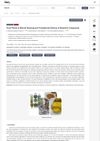
This review highlights the potential of plant-derived natural compounds as biocompatible and biodegradable materials in dermal and transdermal delivery systems, emphasizing their unexplored benefits and detailing recent advances in isolation techniques and drug delivery technologies.
40 citations
,
November 2021 in “International Journal of Molecular Sciences” This review highlights the role of keratin mutations in epidermolysis bullosa simplex and the resulting chronic inflammation, but it presents no new experimental findings.
31 citations
,
August 2023 in “ACS Applied Bio Materials” This study developed granular hydrogels with reversible interparticle cross-linking, finding they offer high mechanical stability and enhance cell recruitment, making them promising for injectable and 3D printable scaffolds in tissue engineering and therapeutic delivery.
24 citations
,
December 2023 in “Gels” In this study, researchers reviewed the progress and challenges in using hydrogels for 3D printing in biomedical applications, highlighting advancements in structural complexity, and identifying ongoing issues like resolution improvement, cell viability, and ethical concerns for clinical use.
13 citations
,
April 2023 in “Biochemical Society Transactions” This mini-review highlights emerging themes on how tissue stiffness, a fundamental material property, influences morphogenetic processes in living organisms, an area gaining increased attention alongside the role of mechanical forces in shaping cell behavior.
8 citations
,
January 2019 in “Nanomedicine” This commentary reviews the application of pharmaceutical nanotechnology in Egypt, highlighting promising developments and diverse drug-delivery approaches, but reports no new research findings.
2 citations
,
February 2022 in “Journal of Pharmacy and Pharmacology” In this study, two methotrexate-loaded liquid crystal formulations for topical application showed immunomodulatory effects and induced skin changes in mice with imiquimod-induced psoriasis.