 2 citations
,
March 2011 in “Infertility”
2 citations
,
March 2011 in “Infertility” This review highlights that while lifestyle changes may help with many ovulatory disorders, oocyte donation is considered a viable option for patients who cannot undergo ovulation induction; it reports no new results.
 March 2026 in “Mammalogy Notes”
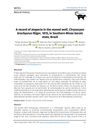
 In this report, the sighting of a maned wolf in a rural area of Brazil with severe hair loss, likely due to alopecia, was documented, and it was suspected that the condition resulted from disease transmission from domestic dogs.
 October 2023 in “Toxicology and Applied Pharmacology”
 This study found that finasteride and minoxidil act as hormone disruptors in mice, with finasteride having a more significant association with reproductive injuries, such as damage to the epididymis and reduced semen volume.
60 citations
,
April 1998 in “Baillière s Clinical Endocrinology and Metabolism” This article reviews the genetic mutations causing male pseudohermaphroditism from 17 beta-HSD-3 and 5 alpha-RD-2 deficiencies and reports no new clinical findings.
3 citations
,
August 2021 in “European journal of medical research” This case report suggests that a cutaneous microbial biofilm could be an underlying cause of red scrotum syndrome, based on the observed onset and treatment response in one patient.
 39 citations
,
January 2019 in “The World Journal of Men's Health”
39 citations
,
January 2019 in “The World Journal of Men's Health” Testosterone replacement therapy can prevent men from fathering children and should not be used by those wanting to stay fertile.

Using data from the FDA's adverse event reporting system, this study identified 59 drugs linked to reduced male semen quality, with finasteride, dutasteride, and tamsulosin among the most frequently reported.
April 2026 in “Veterinary Record Case Reports” In this case study, a 2-year-old Pomeranian dog from Mizoram, India, with alopecia X showed significant hair growth and improved skin condition after undergoing neutering and receiving omega-3 and omega-6 fatty acid supplements.
 70 citations
,
April 2014 in “Annales d'endocrinologie”
70 citations
,
April 2014 in “Annales d'endocrinologie” This review discusses the pathways of androgen biosynthesis and reports no new findings, highlighting the need to understand the interplay between the classic and backdoor pathways.
 February 2026 in “Applied Biosciences”
 In this study, a computational analysis of promoter regions in human fertility-related genes identified several new candidate regulatory motifs, but these require further experimental validation due to the limitations of being an in silico examination.
40 citations
,
February 1946 in “Canadian Journal of Research/Canadian journal of research” This study observed that the hair loss in homozygous rhino mice is associated with widening of the hair canal due to hyperkeratosis, leading to insufficient support for hair anchoring.
5 citations
,
January 2021 in “Frontiers in Cell and Developmental Biology” This study found that elevated expression of the protein Zyxin in hair follicles is associated with androgenetic alopecia and suggests it may be targeted for therapy.
September 2020 in “Zenodo (CERN European Organization for Nuclear Research)” This study found increased Zyxin expression in affected hair follicles of androgenetic alopecia patients and suggested its potential role in the condition's pathogenesis and as a therapeutic target.
 November 2025 in “Frontiers in Pharmacology”
 In this study, XZYFD, a Traditional Chinese Medicine formulation, was found to improve androgenetic alopecia in a testosterone-induced mouse model by promoting hair regrowth, restoring follicular morphology, and modulating androgen metabolism, MAPK signaling, and lipid metabolism pathways, suggesting potential benefits for patients with metabolic dysfunction.
 33 citations
,
January 2018 in “International Journal of Biological Sciences”
33 citations
,
January 2018 in “International Journal of Biological Sciences” This study demonstrates the use of the CRISPR-Cas9 system to successfully edit the EDAR gene in Cashmere goats, resulting in goats with distinct hair follicle characteristics.
January 2011 in “InTech eBooks” This article reviews the development, classification, and embryology of hypospadias and reports no new findings; the authors highlight its unknown cause and discuss associated anatomical anomalies.
4 citations
,
October 2001 in “Mycoses” This case report describes a rare instance of dermatophytosis in a young cat caused by Microsporum gypseum, confirmed by molecular analyses to be Arthroderma gypseum.
 September 2018 in “Fertility and Sterility”
 This study observed that inflammatory stimuli significantly altered gene expression in rat theca-interstitial cells, affecting pathways related to growth and androgen production, which are central features of polycystic ovary syndrome.
 11 citations
,
November 2006 in “Journal of Veterinary Diagnostic Investigation”
11 citations
,
November 2006 in “Journal of Veterinary Diagnostic Investigation” In this case study, an 8-year-old female Huacaya alpaca displaying male behavior was diagnosed with an ovarian benign interstitial (Leydig) cell tumor, indicated by elevated testosterone levels.
September 2023 in “Zenodo (CERN European Organization for Nuclear Research)” The document's conclusion cannot be determined because the content is not available.
 May 2019 in “bioRxiv (Cold Spring Harbor Laboratory)”
 This study observed that circulating testosterone affects baseline sex differences in voiding function in C57BL/6J mice, with prostate lobe mass having a lesser impact.
 67 citations
,
February 1997 in “Teratology”
67 citations
,
February 1997 in “Teratology” This study demonstrated that high oral doses of finasteride caused external genital abnormalities in male rhesus monkey fetuses, but intravenous doses did not lead to abnormalities.
 July 2022 in “Fayoum University Medical Journal”
 This paper discusses polycystic ovarian syndrome (PCOS) and reports no new results; the authors highlight the complexity and heterogeneity of this endocrine disorder.
 4 citations
,
September 2020 in “Andrologia”
4 citations
,
September 2020 in “Andrologia” This study found that Origanum vulgare extract improved testicular structure and function in mice against finasteride-induced damage by enhancing antioxidant defense and modulating gene expression related to apoptosis.
 September 2008 in “Fertility and Sterility”
 This study found that in female dogs, exposure to free fatty acids increased androgen production, suggesting a potential link to factors characteristic of polycystic ovary syndrome.
2 citations
,
July 2019 in “Pakistan Journal of Biological Sciences” This study suggests that perforin/granzyme-B might play a role in the interaction of sex hormones in patients with polycystic ovary syndrome.
1 citations
,
January 2024 in “Veterinary Dermatology” In this study, researchers cloned a two-year-old Pomeranian with Alopecia X after its accidental death and found that the cloned dog developed the same hair lesions at the same age, suggesting the condition is genetically driven rather than environmentally influenced.
January 2016 in “AACE Clinical Case Reports” In this case report, an embryonal cell carcinoma of the testicle was associated with polycythemia and markedly elevated hormone levels without secondary sexual characteristics, which were restored after treatment.
March 2021 in “AACE clinical case reports” This case study reports a rare combination of primary hyperparathyroidism with Klinefelter syndrome in a 44-year-old male, highlighting an unusual KS mosaicism with a mild phenotype.
July 2023 in “Indian Journal of Sexually Transmitted Diseases and AIDS” This case study reports that moth-eaten alopecia and a macular rash, along with positive histopathology and serology tests, indicated a diagnosis of secondary syphilis in a 24-year-old male patient.