 81 citations
,
February 2019 in “Experimental & Molecular Medicine”
81 citations
,
February 2019 in “Experimental & Molecular Medicine” This review examines PAK4 signaling pathways in prostate cancer, Parkinson's disease, and melanogenesis, focusing on the potential role of the PAK4-CREB axis, without reporting new clinical results.
29 citations
,
January 2020 in “BioMed Research International” This study found that sinapic acid promotes the browning of 3T3-L1 adipocytes and may offer therapeutic potential for obesity by influencing mitochondrial biogenesis through the p38 MAPK/CREB signaling pathway.
28 citations
,
December 2020 in “Journal of Ginseng Research” This study found that ginsenoside Rf from Panax ginseng may serve as an effective anti-pigmentation agent by inhibiting the CREB/MITF pathway, reducing melanogenesis in melanocytes and UV-irradiated human skin.
 25 citations
,
September 2020 in “Molecules”
25 citations
,
September 2020 in “Molecules” In this study, quercitrin was reported to promote hair growth and cell viability in cultured human dermal papilla cells by enhancing cellular energy metabolism and growth factor production via MAPK/CREB signaling.
 April 2018 in “Journal of Investigative Dermatology”
 This study observed that β-catenin overexpression in human squamous cell carcinoma cells led to increased CREB expression, which significantly enhanced clonogenic activity, suggesting CREB as a β-catenin-regulated factor promoting cancer characteristics.
 February 2024 in “Scientific reports”
 This study identified four ferroptosis-related genes, SLC40A1, LCN2, CREB5, and SLC7A11, as potential diagnostic markers for alopecia areata, revealing reduced expression in affected patients compared to controls, with a predictive model showing high accuracy in differentiating the condition.
17 citations
,
January 2023 in “Frontiers in Pharmacology” This study found that 10,11-dibrominecrebanine (2Br-Cre) and Stephanine demonstrate significant anti-inflammatory and analgesic properties in various experimental models, with 2Br-Cre showing enhanced efficacy over Cre and both compounds potentially mediating their analgesic effects through opioid receptors.
4 citations
,
November 2024 in “Journal of Advanced Research” In this study, the researchers reported that NMMHC IIA dissociates from PAR1 and activates the CREB3/ARF4 pathway, worsening thrombin-induced blood-brain barrier damage, suggesting it as a potential therapeutic target for blood-brain barrier-related diseases.
137 citations
,
January 2006 in “Frontiers in bioscience” This review discusses the role of corticotropin-releasing hormone in human skin, focusing on its regulation, receptors, and functions, and highlights parallels with the hypothalamo-pituitary-adrenal axis; it reports no new research findings.
56 citations
,
March 2003 in “Journal of Investigative Dermatology” This study found that 17β-estradiol inhibited RANTES production in human keratinocytes by suppressing nuclear factor κB activity, suggesting a potential mechanism for 17β-estradiol's modulation of psoriasis-related inflammation.
44 citations
,
June 2023 in “Cell Reports” This study investigated dermal fibroblasts in mouse skin using single-cell RNA sequencing and identified signaling pathways that influence adipogenesis, finding that IL-1-NF-κB promotes, while WNT-β-catenin inhibits, the adipogenic potential of these cells, with implications for wound healing and scar formation.
 28 citations
,
October 2011 in “International Journal of Molecular Medicine”
28 citations
,
October 2011 in “International Journal of Molecular Medicine” In this study, adenosine was found to stimulate hair follicle growth in vitro by promoting growth factor expression, β-catenin activation, and downstream signaling pathways.
 21 citations
,
January 2019 in “Experimental dermatology”
21 citations
,
January 2019 in “Experimental dermatology” This review explores how low-energy He-Ne laser therapy may stimulate repigmentation in vitiligo by affecting mitochondrial pathways and melanocyte function, but does not report new clinical results.
11 citations
,
January 2016 in “Evidence-based Complementary and Alternative Medicine” This study found that rice bran ash extract and orthosilicic acid both increased melanin synthesis and related protein expression in melanocytes, suggesting potential therapeutic use for melanin deficiency.
5 citations
,
March 2023 in “Journal of Cosmetic Dermatology” This study reports that Plantago asiatica L. extract may promote hair growth by enhancing growth factor production and activating specific signaling pathways in hair follicle dermal papilla cells.
4 citations
,
October 2021 in “International Journal of Cosmetic Science” This study found that C. japonicum flower extract significantly increased melanin content and cellular activity in human melanocytes and may improve follicular depigmentation and vitiligo through cAMP signaling.
 4 citations
,
September 2016 in “Molecular Medicine Reports”
4 citations
,
September 2016 in “Molecular Medicine Reports” This study identified genes potentially involved in hair and cashmere growth in the Laiwu black goat, highlighting specific gene expression differences between hair-growing and hairless skin.
1 citations
,
July 2019 in “Small ruminant research” This study suggests that the NGF/TrkA/CREB system plays a crucial role in promoting outer root sheath cell proliferation in cashmere goats, which may aid in marker-assisted breeding.
 April 2025 in “Cellular and Molecular Biology”
 This study found that human dermal stem/progenitor cells demonstrated greater proliferation and differentiation potential than hair follicle dermal papilla cells, which showed increased expression of hair regeneration markers.
 December 2023 in “Journal of ethnopharmacology”
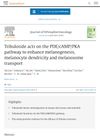
 This study found that tribuloside, a flavonoid from Tribulus terrestris L., enhances melanin production in human melanocytes, zebrafish, and human skin samples without causing toxicity, potentially through inhibiting PDE to increase cAMP levels and promote the melanin biosynthesis pathway.
 October 2023 in “IBRO neuroscience reports”
 Rat hair follicle stem cells have functional oxytocin receptors, useful for studying neuropsychiatric disorders.
 April 2019 in “The journal of investigative dermatology/Journal of investigative dermatology”
 This study demonstrates that extracellular ATP induced by UV radiation promotes melanin production in human melanocytes, suggesting ATP-induced purinergic signaling may influence skin pigmentation.
 April 2018 in “Journal of Investigative Dermatology”
 This study found that ERBB2 mutations and amplifications are likely key drivers of extramammary Paget disease, suggesting potential for targeted therapies and cancer immunotherapy due to the moderately high mutational load observed.
 6 citations
,
February 2022 in “The journal of neuroscience/The Journal of neuroscience”
6 citations
,
February 2022 in “The journal of neuroscience/The Journal of neuroscience” This study observed that deleting PTEN in mouse facial motoneurons enhanced peripheral axon regeneration but also led to physiological changes and potential hyperplasia in older mice.
4 citations
,
February 2025 in “Pharmaceuticals” In this study, voglibose, commonly used for diabetes management, was found to reduce melanin synthesis and inhibit melanogenic signaling pathways in B16F10 melanoma cells, suggesting it could be repurposed for treating hyperpigmentation disorders with confirmed topical safety in human tests.
6 citations
,
August 2022 in “International journal of molecular sciences” This study demonstrated that α-phellandrene promotes dermal papilla cell proliferation through a cAMP-mediated pathway and upregulates VEGF expression, suggesting its potential use in hair loss prevention.
 2 citations
,
April 2018 in “Journal of Investigative Dermatology”
2 citations
,
April 2018 in “Journal of Investigative Dermatology” This case study in a renal transplant patient observed that eruptive KA-type SCCs exhibited aggressive behavior and genetic expression changes following intralesional chemotherapy, indicating potential caution against routine use of such treatments in similar cases.
 January 2018 in “Springer eBooks”
 PDE inhibitors, especially PDE4 inhibitors like apremilast, are effective for certain inflammatory skin conditions but have side effects and can be costly.
 June 2020 in “The journal of investigative dermatology/Journal of investigative dermatology”
 This study found that genetic ablation of Tet genes in mice led to changes in hair structure and keratin gene expression, indicating a role for Tet-mediated 5hmC DNA oxidation in hair follicle development and cycling.
 23 citations
,
March 2019 in “The journal of investigative dermatology/Journal of investigative dermatology”
23 citations
,
March 2019 in “The journal of investigative dermatology/Journal of investigative dermatology” This study found that extracellular ATP released from UVB-irradiated keratinocytes promotes melanin production through the P2X7 receptor, indicating a role for ATP-P2X7 signaling in UV-induced melanogenesis.