1 citations
,
November 2016 in “Journal of dermatological treatment” In this report, two young patients with corticosteroid-refractory alopecia totalis experienced safety and efficacy from oral tacrolimus.
 30 citations
,
September 2005 in “Best Practice & Research Clinical Rheumatology”
30 citations
,
September 2005 in “Best Practice & Research Clinical Rheumatology” This review discusses therapies for skin lesions in lupus erythematosus and reports no new clinical results, focusing on defining and managing refractory disease.
1 citations
,
May 2017 in “InTech eBooks” This review summarizes current treatments for recalcitrant alopecia areata and recent therapeutic developments targeting specific immunological pathways, reporting no new clinical results.
 2 citations
,
October 2022 in “British journal of haematology”
2 citations
,
October 2022 in “British journal of haematology” This study reports the first successful use of zanubrutinib to treat a 15-year-old Chinese girl with severe refractory Evans' syndrome, resulting in a sustained recovery of platelet counts and haemoglobin levels.
 7 citations
,
June 2010 in “Journal of The American Academy of Dermatology”
7 citations
,
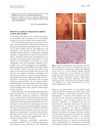
June 2010 in “Journal of The American Academy of Dermatology” This paper reports a single case of lichenoid cutaneous sarcoidosis that was unresponsive to standard treatments but showed marked improvement with the administration of oral tranilast.
 April 2023 in “IP Indian journal of clinical and experimental dermatology”
 This article reviews the pathogenesis, complications, and management of lichen planus, especially its persistent oral form, and highlights the need for further prospective studies.
 March 2016 in “Indian Journal Of Applied Research”
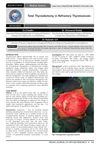
 This report presents a case of refractory thyrotoxicosis where the patient required a total thyroidectomy after resistance to conventional treatments including antithyroid drugs and radioactive iodine.
 3 citations
,
June 2023 in “Journal of cosmetic dermatology”
3 citations
,
June 2023 in “Journal of cosmetic dermatology” This study reported improvement in an 11-year-old boy with refractory alopecia areata after 4 months of treatment with oral abrocitinib, a JAK1 inhibitor, suggesting it may be a potential alternative for pediatric patients unresponsive to conventional therapies.
April 2019 in “Journal of the Endocrine Society” This case study reported that even with improved adrenal androgens and testosterone levels, treating women with AH-PCOS with glucocorticoids did not significantly improve ovulatory function or hirsutism.
 2 citations
,
January 2022 in “Skin appendage disorders”
2 citations
,
January 2022 in “Skin appendage disorders” This study presents two cases where intralesional methotrexate combined with ablative fractional CO2 laser treatment resulted in excellent outcomes for refractory alopecia areata.
8 citations
,
January 2013 in “European Journal of Dermatology” This article reviews the use of alitretinoin for corticosteroid-refractory chronic hand eczema and explores its potential therapeutic benefits in other skin conditions, but reports no clinical results.
 39 citations
,
May 2004 in “Clinics in Dermatology”
39 citations
,
May 2004 in “Clinics in Dermatology” This article reviews treatment options for cutaneous T-cell lymphoma, including skin-directed therapies and aggressive treatments for advanced cases, but reports no new clinical results.
January 2026 in “Journal of Aesthetic Nursing” This case report observed marked hair regrowth in a patient with refractory alopecia areata using a combination of platelet-rich plasma, low-level light therapy, and microneedling alongside topical and oral agents.
 September 2019 in “Journal of Investigative Dermatology”
 This study found that a history of smoking significantly predicted a more refractory course of palmoplantar pustulosis, with associated comorbidities often including hypertension, type 2 diabetes mellitus, and thyroid diseases.
10 citations
,
January 2018 in “International Journal of Trichology” In this study, researchers retrospectively analyzed five children with extensive and refractory alopecia areata treated with mesalazine, observing complete hair regrowth in all patients without side effects, suggesting potential benefits of this treatment combination, though controlled studies are needed for confirmation.
2 citations
,
February 2025 in “Journal of the European Academy of Dermatology and Venereology” This study suggests that Janus kinase inhibitors may offer a potential treatment option for refractory lichen planopilaris and frontal fibrosing alopecia, showing positive response rates between 42% and 100%, though evidence quality is low.
January 2025 in “SAGE Open Medical Case Reports” This case report described a patient with erosive pustular dermatosis of the scalp who was resistant to multiple treatments, suggesting that combination therapy may be more effective than monotherapy for managing refractory cases of this condition.
 18 citations
,
March 2011 in “Archives of ophthalmology”
18 citations
,
March 2011 in “Archives of ophthalmology” This review of periocular tinea in children found that eyelash loss and prolonged misdiagnosis are common, highlighting the need for considering fungal infections in cases refractory to standard treatments.
2 citations
,
May 2025 in “IntechOpen eBooks” This article highlights that early and high-dose corticosteroid therapy, along with immunosuppressive agents, is crucial for managing Vogt-Koyanagi-Harada disease, and emerging biological therapies may benefit refractory cases.
 1 citations
,
January 2024 in “Curēus”
1 citations
,
January 2024 in “Curēus” This case study reported significant clinical improvement in a 26-year-old male with dissecting cellulitis of the scalp after treatment with upadacitinib, suggesting that JAK inhibitors may be a promising option for refractory cases, where standard treatments have limited success.
 May 2025 in “The Journal of Rheumatology”
 In this case report, two patients with polyautoimmunity and difficult-to-treat lupus erythematosus experienced significant symptom improvement after adding anifrolumab to their regimen, suggesting its potential as an effective add-on therapy for refractory cutaneous symptoms in autoimmune conditions characterized by elevated interferon alpha activity.
January 2008 in “Zhonghua linchuang mianyi he biantai fanying zazhi” This study found that treatment with Shunyou dispersible tablet and prednisone improved clinical symptoms in patients with lupus nephritis, showing significant benefits over time along with a good safety profile.
 1 citations
,
May 2025 in “The Journal of Rheumatology”
1 citations
,
May 2025 in “The Journal of Rheumatology” In this case report, two female patients with refractory systemic lupus erythematosus showed significant improvement after treatment with the JAK inhibitor upadacitinib, indicating potential as a promising option for difficult cases, although further research is needed to confirm its broader safety and efficacy.
 6 citations
,
February 2016 in “British Journal of Dermatology”
6 citations
,
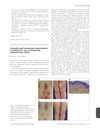
February 2016 in “British Journal of Dermatology” A woman with a drug allergy to anakinra was successfully desensitized, allowing her to continue treatment without allergic reactions.
 12 citations
,
June 2016 in “Clinical and Molecular Hepatology”
12 citations
,
June 2016 in “Clinical and Molecular Hepatology” This case report describes an autoimmune hepatitis patient who achieved remission with mycophenolate mofetil and corticosteroids after intolerance to azathioprine-based therapy.
 14 citations
,
December 2010 in “Dermatologica Sinica”
14 citations
,
December 2010 in “Dermatologica Sinica” This article reviews recent advances and therapeutic approaches in treating alopecia areata, highlighting new potential treatments like pulse corticosteroid therapy, but reports no new research findings.
6 citations
,
November 2018 in “Case reports in nephrology and dialysis” This case report detailed a 71-year-old male with Cronkhite-Canada syndrome and associated membranous nephropathy, who showed a significant improvement in skin and gastrointestinal symptoms, and remission of nephropathy, after treatment with rituximab, cyclosporine, and azathioprine.
8 citations
,
July 2001 in “JEADV. Journal of the European Academy of Dermatology and Venereology/Journal of the European Academy of Dermatology and Venereology” This review summarizes the historical and evolving treatments for vitiligo, highlighting that combining medical and surgical approaches may enhance repigmentation outcomes, though more research and new protocols are needed.
1 citations
,
October 2024 in “JAAD Case Reports” This article discusses alopecia areata and lichen planopilaris, providing a review of their clinical characteristics and reporting no new research findings; the authors underscore the potential progression and distinctive features of each condition.
 August 2026 in “Dermatology and Therapy”
 This review discusses current and emerging treatments for discoid lupus erythematosus, suggesting that new biologic and small-molecule therapies may improve disease control when combined with traditional management.