 211 citations
,
May 2018 in “Trends in cell biology”
211 citations
,
May 2018 in “Trends in cell biology” This review explores recent insights into the diverse cell populations involved in skin development, homeostasis, wound healing, and cancer progression but reports no new results.
 May 2026 in “Organoid Research”
 This review highlights recent advancements in the engineering of skin organoids using hydrogels, which improve their structural and functional fidelity by supporting the architecture and integration of vascular and neural components, promising to enhance regenerative medicine, drug discovery, and complex skin disorder studies.
 263 citations
,
February 2013 in “Wiley interdisciplinary reviews. Nanomedicine and nanobiotechnology”
263 citations
,
February 2013 in “Wiley interdisciplinary reviews. Nanomedicine and nanobiotechnology” This review discusses nanoparticle-based topical delivery systems for treating skin diseases and presents no new clinical findings; it emphasizes natural polymer-based nanoparticles and future applications like targeted drug delivery.
 134 citations
,
January 2011 in “Development”
134 citations
,
January 2011 in “Development” This study found that disrupting Adam10 in the epidermis led to severe skin and multi-organ abnormalities, implicating Adam10 as crucial for proper Notch signaling and skin maintenance.
 55 citations
,
December 2014 in “Dermatologica sinica/Zhōnghuá pífūkē yīxué zázhì”
55 citations
,
December 2014 in “Dermatologica sinica/Zhōnghuá pífūkē yīxué zázhì” This article discusses the interactions between keratinocytes and melanocytes in maintaining epidermal and hair follicle homeostasis, without reporting new experimental results.
 25 citations
,
April 1949 in “The journal of experimental zoology”
25 citations
,
April 1949 in “The journal of experimental zoology” This research studied the effect of local testosterone propionate applications on rabbit epidermal mitotic activity but reports no new results.
 22 citations
,
April 2018 in “Pharmaceutics”
22 citations
,
April 2018 in “Pharmaceutics” This special issue reviews current challenges and innovative solutions for enhancing the penetration of topical formulations for human skin, reporting no new results.
 16 citations
,
September 2018 in “Scientific reports”
16 citations
,
September 2018 in “Scientific reports” This study demonstrates that keratinocyte cell lines derived from cultured hair follicles can fully differentiate in organotypic skin models, offering a minimally invasive alternative to obtaining keratinocytes for research.
 10 citations
,
October 1993 in “Archives of dermatological research”
10 citations
,
October 1993 in “Archives of dermatological research” The researchers reported that the antipsoriatic compounds 1,25-dihydroxy-vitamin D3 and calcipotriol thinned the living cell compartment in organotypic ORS cultures by accelerating the differentiation pathway rather than affecting proliferation.
 January 2016 in “Journal of Investigative Dermatology”
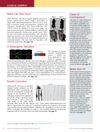
 Some cells may slow melanoma growth, a protein could affect skin pigmentation, a gene-silencing method might treat hair defects, skin bacteria changes likely result from eczema, and a defensin protein could help treat multiple sclerosis.
 January 2016 in “Experimental Dermatology”
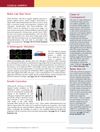
 This article in Experimental Dermatology does not include an abstract or any new research findings.
 16 citations
,
December 2004 in “Aesthetic surgery journal”
16 citations
,
December 2004 in “Aesthetic surgery journal” This review discusses a multistage hand rejuvenation protocol involving topical therapies, intense pulsed light, autologous fat injections, and surgical excision, but reports no new clinical results.
 December 2021 in “International research journal of pharmacy”
 This study evaluated the physicochemical properties of Neelibhringadi keratailam and found significant variations in market samples compared to a prepared sample, indicating potential quality control issues.
 August 2003 in “International Journal of Cosmetic Surgery and Aesthetic Dermatology”
 The authors reported that fiber hair implants provided excellent results in over 85% of patients with permanent alopecia, with mild complications and a yearly fiber failure rate below 20%.
 20 citations
,
September 2018 in “Journal of cutaneous pathology”
20 citations
,
September 2018 in “Journal of cutaneous pathology” This study found that adnexal acantholysis does not reliably distinguish pemphigus vulgaris from pemphigus foliaceus, but the level of acantholysis and degree of dyskeratosis serve as distinguishing features among acantholytic disorders.
 199 citations
,
January 2004 in “The International Journal of Developmental Biology”
199 citations
,
January 2004 in “The International Journal of Developmental Biology” This review discusses advances in understanding hair and hair follicle structure, gene expression, and molecular signals in hair formation, without reporting new clinical findings.
 127 citations
,
July 2002 in “EMBO journal”
127 citations
,
July 2002 in “EMBO journal” This study found that RXRα/RARγ heterodimers are necessary for retinoic acid-induced keratinocyte proliferation in the skin, while normal epidermal maintenance does not require RAR-mediated signaling.
 83 citations
,
May 2013 in “International Journal of Molecular Sciences”
83 citations
,
May 2013 in “International Journal of Molecular Sciences” This review explores embryonic epidermal development and discusses key molecular regulators and roles of the sub-epidermal mesenchyme, but reports no new experimental results.
 43 citations
,
January 2012 in “Biological Research”
43 citations
,
January 2012 in “Biological Research” This review discusses the embryonic origins and characteristics of various stem cell populations in the skin, but it provides no new experimental results.
 40 citations
,
January 2010 in “International Journal of Trichology”
40 citations
,
January 2010 in “International Journal of Trichology” This review discusses the diagnostic criteria and guidelines for managing loose anagen syndrome and differentiating it from non-scarring alopecias, but it reports no new clinical results.
 17 citations
,
June 2012 in “Journal of experimental zoology. Part B, Molecular and developmental evolution”
17 citations
,
June 2012 in “Journal of experimental zoology. Part B, Molecular and developmental evolution” This review explores theories on the evolution of hair from synapsid scales and glands, proposing mechanisms supported by comparative studies, but reports no new experimental findings.
 10 citations
,
January 2001 in “ACTA HISTOCHEMICA ET CYTOCHEMICA”
10 citations
,
January 2001 in “ACTA HISTOCHEMICA ET CYTOCHEMICA” In this study, autophagy was commonly observed during keratinization in neonate rat hair follicles, suggesting lysosomal proteases and cytoplasmic enzymes may coordinate in hair follicle cell differentiation.
 9 citations
,
January 2008 in “Acta histochemica et cytochemica”
9 citations
,
January 2008 in “Acta histochemica et cytochemica” This study found that COX-2 expression in normal rat skin is linked to the hair cycle, with varying levels observed in different skin structures during anagen, catagen, and telogen phases.
 January 2012 in “Durham e-Theses (Durham University)”
 This study found that knock-down of keratin 15 in various cell lines affected cell spreading, morphology, migration, differentiation, and proliferation, suggesting its role in maintaining the stem cell nature of keratinocytes.
 July 2014 in “Nasza Dermatologia Online”
 This article discusses various methods of facial enhancement, such as botulinum toxin and fillers, and emphasizes their temporary nature but reports no new clinical results.
35 citations
,
July 2010 in “The FEBS journal” In this study, researchers identified a highly reactive, isozyme-specific sequence for TGase 3, contributing to understanding its distinct functional role and activity distribution in the mouse epidermis.
25 citations
,
October 2002 in “The journal of investigative dermatology/Journal of investigative dermatology” This study characterized the mouse profilaggrin gene, finding it structurally identical to its human counterpart, and noted differences in protein-coding regions that could impact epidermal differentiation.
25 citations
,
February 2024 in “Biomaterials” In this study, iPSC-derived epidermal organoids demonstrated potential as a novel tool for regenerative medicine by producing high-performance extracellular vesicles that promote proliferation, migration, and angiogenesis in cell-free therapies for wound healing.
11 citations
,
January 2010 in “Dermatology Research and Practice” This review discusses the development of human skin with a focus on desmosomes, noting the challenges of translating animal model findings to humans due to species differences and limited human sample access.
November 2025 in “Journal of Investigative Dermatology” TEDAR is crucial for skin cell differentiation and barrier formation.