 68 citations
,
July 2011 in “Journal of Biochemistry/The journal of biochemistry”
68 citations
,
July 2011 in “Journal of Biochemistry/The journal of biochemistry” This review discusses newly identified non-Edg family lysophosphatidic acid receptors, detailing their roles in vascular development, platelet activation, and hair growth, and reports no clinical results.
 1 citations
,
April 2017 in “Journal of Investigative Dermatology”
1 citations
,
April 2017 in “Journal of Investigative Dermatology” This study suggests that alkaline phosphatase-regulated expression of CCL5 contributes to the trichogenicity of human dermal papilla spheres.
July 2024 in “Skin Appendage Disorders” This review discusses the role of trichoscopy in diagnosing lichen planopilaris and reports no clinical results; the authors emphasize early recognition to potentially prevent permanent scarring.
48 citations
,
November 2018 in “Journal of dermatological treatment” In a study reviewing 291 patients with lichen planopilaris, findings revealed that women were more commonly affected than men, cyclosporine and methotrexate were most effective in achieving remission, and 5-alpha reductase inhibitors and systemic retinoids were particularly beneficial for frontal fibrosing alopecia.
16 citations
,
August 2017 in “Lupus” This case report and literature review highlights an unusual acne-like presentation of chronic cutaneous lupus erythematosus that doesn't improve with standard acne treatments, emphasizing the importance of considering CCLE in atypical acneiform eruptions.
July 2025 in “Journal of Clinical Medicine” In this review, platelet concentrates were found to show comparable efficacy to steroids and immunosuppressive drugs in treating oral lichen planus, with some studies reporting more benefits and others noting more severe adverse reactions with platelet treatments.
 1 citations
,
May 2024 in “Cureus”
1 citations
,
May 2024 in “Cureus” This case series describes five patients with rare facial lichen planopilaris, detailing the clinical presentation and treatment of their pigmentary changes and scarring alopecia.
 December 2023 in “Journal of General Procedural Dermatology and Venereology Indonesia”
 The abstract highlights that lichen planus can manifest as cicatricial alopecia or lichen planopilaris, while discoid lupus erythematosus, a common form of lupus erythematosus, typically causes scarring alopecia. Results are not reported here.
 April 2018 in “The journal of investigative dermatology/Journal of investigative dermatology”
 This study found that in a mouse model of Focal Dermal Hypoplasia, treatment with lithium carbonate improved skin disease symptoms compared to controls, though disease severity varied and posed interpretation challenges.
2 citations
,
December 2011 in “[Thesis]. Manchester, UK: The University of Manchester; 2011.” The study suggests that immune privilege collapse in bulge cells and the involvement of pro-inflammatory cytokine interferon-γ contribute to hair follicle stem cell loss in lichen planopilaris.
May 2026 in “JAAD International” This article notes the lack of US prevalence data for primary lymphocytic cicatricial alopecias due to the recent introduction of subtype-specific ICD-10 codes and highlights the importance of early diagnosis for hair preservation.
253 citations
,
April 2009 in “Journal of Biological Chemistry” This study found that p2y5 functions as a novel LPA receptor involved in the G13-Rho signaling pathway, with implications for human hair growth, and proposes renaming it to LPA6.
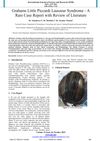 October 2023 in “International Journal of Science and Research (IJSR)”
 This paper describes Grahams Little Piccardi Lassueur Syndrome, a rare type of Lichen Planopilaris that causes different types of alopecia and distinctive skin papules, primarily affecting females aged 40 to 70, and notes the current challenges in treatment options, particularly once scarring occurs.
 3 citations
,
June 2022 in “Dermatology and therapy”
3 citations
,
June 2022 in “Dermatology and therapy” This case report found that a novel botanical treatment halted disease progression and promoted hair regrowth in four patients with lichen planopilaris, indicating potential for use as a safe alternative therapy.
 November 2016 in “Journal of The American Academy of Dermatology”
 Control symptoms and use safe treatments for skin conditions like lichen planopilaris and chronic cutaneous lupus erythematosus.
 27 citations
,
February 2009 in “Autoimmunity Reviews”
27 citations
,
February 2009 in “Autoimmunity Reviews” This study describes the development of the EUSCLE Core Set Questionnaire for cutaneous lupus erythematosus, designed to standardize data collection, facilitate epidemiological analysis, and guide diagnostic and therapeutic strategies across European centers.
 6 citations
,
January 2016 in “Skin appendage disorders”
6 citations
,
January 2016 in “Skin appendage disorders” This case report describes a 38-year-old male with scarring body hair loss as the sole manifestation of lichen planopilaris, characterized by progressive alopecia and preceding itching.
January 2023 in “Figshare” This meta-analysis found that a combination of clobetasol, hydroxychloroquine, and N-acetylcysteine may be the most effective treatment approach for lichen planopilaris compared to other therapies.
9 citations
,
September 2018 in “JAAD Case Reports” This article describes a unique case of lichen planopilaris with a previously unreported trigger in one of the youngest documented adult patients, without providing new clinical results or data.
3 citations
,
January 2016 in “Dermatology online journal” This review discusses the potential relationship between lichen planus pigmentosus and frontal fibrosing alopecia, presenting a case study but reporting no new clinical findings.
June 2023 in “International Journal of Dermatology” This study reviewed 41 cases of lichen planus pigmentosus in patients from southeastern Tunisia, highlighting its prevalence among older individuals and notable differences compared to patterns observed in an Indian cohort.
June 2025 in “British Journal of Dermatology” This reported case of lichen planopilaris in siblings suggests a potential genetic predisposition, supporting the hypothesis of inherited susceptibility in this condition.
 14 citations
,
January 2020 in “Korean Journal of Family Medicine”
14 citations
,
January 2020 in “Korean Journal of Family Medicine” This case study reported a rare occurrence of lepromatous leprosy with Lucio phenomenon in a 50-year-old Indonesian living in Malaysia, highlighting the necessity for primary care practitioners, even in non-endemic areas, to recognize this serious leprosy reaction to prevent complications and transmission.
 20 citations
,
May 2016 in “Journal of Cutaneous Pathology”
20 citations
,
May 2016 in “Journal of Cutaneous Pathology” This study suggests that the presence and arrangement of plasmacytoid dendritic cells can help distinguish chronic cutaneous lupus erythematosus from other types of scarring alopecia.
 39 citations
,
July 2008 in “Dermatologic Therapy”
39 citations
,
July 2008 in “Dermatologic Therapy” This review provides a practical approach to diagnosing pseudopelade of Brocq and updates on treatment options but reports no new clinical results.
 April 2023 in “Journal of Investigative Dermatology”
 This case study reports an unusual presentation of primary cutaneous diffuse large B-cell lymphoma–leg type occurring on the upper lip of an 81-year-old woman, highlighting the need for timely recognition of atypical manifestations.
 July 2011 in “Facial Plastic Surgery”
 The document provides a quiz for physicians to earn continuing medical education credits in facial plastic surgery.
April 2021 in “The journal of investigative dermatology/Journal of investigative dermatology” This study examined clinical characteristics of lichen planopilaris and frontal fibrosing alopecia in 24 men, revealing common scalp symptoms, frequent beard involvement, and limited association with thyroid disease.
 47 citations
,
June 2014 in “Journal of Dermatological Treatment”
47 citations
,
June 2014 in “Journal of Dermatological Treatment” This retrospective review found that while intralesional corticosteroids provided symptomatic improvement for lichen planopilaris, hydroxychloroquine with topical corticosteroids led to higher remission rates but did not result in visible hair regrowth.

This study found that patients with lichen planopilaris exhibit a higher pro-atherogenic lipid profile and elevated atherogenic indexes, suggesting a need for increased cardiovascular and lipid monitoring in these individuals.