36 citations
,
January 2004 in “European journal of cell biology” This study found that in mice, deleting the keratin 10 gene enhances sebocyte differentiation and increases secretion of sebum and certain lipids without affecting proliferation-associated keratins.
28 citations
,
June 1998 in “Clinical Genetics” This report describes a case of Ambras syndrome with a chromosomal inversion on chromosome 8, similar to a previous case, but not associated with altered androgen levels.
 6 citations
,
February 2025 in “Scientific Reports”
6 citations
,
February 2025 in “Scientific Reports” This study found that MEGA PROTAC improved the prediction of ternary structures with higher maximum DockQ scores compared to the BOTCP method in 16 out of 22 test cases.
35 citations
,
September 1994 in “Journal of Investigative Dermatology”  April 2026 in “Human Genome Variation”
 In this study, researchers identified a recurrent MBTPS2 splice-site variant as a mutational hotspot in IFAP syndrome across diverse families, with phenotype severity suggesting the influence of additional modifiers.
 March 1996 in “Hair transplant forum international”
 This article discusses the introduction and market presence of the Italian hair product Kevis but presents no new clinical findings.
 11 citations
,
March 2014 in “Journal of Investigative Dermatology”
11 citations
,
March 2014 in “Journal of Investigative Dermatology” In this study, basal cell carcinoma developed in Ptch-deficient mice only after chemical treatment, not skin wounding, suggesting a second unknown event is necessary for tumor formation.
 April 2023 in “The journal of investigative dermatology/Journal of investigative dermatology”
 This study found that an E-cadherin mutant preserved normal cadherin levels and prevented inflammation and lethality in mouse skin lacking p120, highlighting p120's role in regulating cadherin-mediated cell adhesion and inflammation.
This study found that the Arabidopsis cation chloride cotransporter (CCC1) is crucial for regulating pH and processes in the trans-Golgi-network/early endosome, impacting plant growth and stress responses.
53 citations
,
August 2017 in “Journal of Investigative Dermatology”  November 2023 in “Advanced Science”
 A specific hair protein variant increases the spread of breast cancer and is linked to worse survival rates.
31 citations
,
April 2004 in “Journal of Investigative Dermatology” This study found that a newly identified gene, mK17n, may explain the lack of nail issues in mK17 null mice by compensating for mK17's function in the nail bed.
 17 citations
,
August 2018 in “BMC Genomics”
17 citations
,
August 2018 in “BMC Genomics” The researchers found that HOXC13 regulates different keratin proteins in a mixed manner, with certain SNPs impeding this regulation, while also demonstrating negative-feedback by HOXC13 and positive regulation by LEF1 and melatonin on the HOXC13 promoter.
7 citations
,
May 2022 in “Cancers” This study found that UC.145 influences DKK1 methylation and Wnt signaling in gastric cancer, with implications for patient survival and its potential as a predictive biomarker.
 13 citations
,
March 2021 in “British Journal of Pharmacology”
13 citations
,
March 2021 in “British Journal of Pharmacology” This study found that KY19382 can effectively promote hair regeneration and follicle neogenesis in mice and human hair models by activating Wnt/β-catenin signalling, suggesting potential use for alopecia treatment.
86 citations
,
May 2002 in “Journal of Investigative Dermatology” This study characterized a new human keratin, hK6irs1, specifically found in the inner root sheath of hair follicles, which suggests its role in the structural integrity and guidance of growing hair shafts.
 27 citations
,
May 2007 in “Archives of dermatological research”
27 citations
,
May 2007 in “Archives of dermatological research” In this study, alopecia areata patients treated with diphencyprone showed a significant increase in CD8 lymphocytes around hair bulbs, which may be associated with hair regrowth.
 32 citations
,
February 1998 in “The journal of investigative dermatology/Journal of investigative dermatology”
32 citations
,
February 1998 in “The journal of investigative dermatology/Journal of investigative dermatology” This study reports the cloning and sequencing of two type II hair-specific keratin genes, ghHb1 and ghHb6, located on chromosome 12q13, which are expressed during hair growth.
27 citations
,
February 2003 in “European Journal Of Oral Sciences” This study found that the SVpgC2a keratinocyte cell line, used as a model for dysplastic epithelium, showed increased apoptosis, proliferation, and aberrant keratin expression compared to normal keratinocytes from buccal mucosa.
 24 citations
,
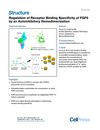
July 2017 in “Structure”
24 citations
,
July 2017 in “Structure” In this study, researchers found that ligand homodimerization controls the receptor binding specificity of the FGF9 subfamily, preventing off-target activation of FGFR "b" isoforms.
July 2025 in “Journal of Investigative Dermatology”  April 2018 in “The journal of investigative dermatology/Journal of investigative dermatology”
 This study suggests that GATA6 is a key regulator of the upper pilo-sebaceous unit homeostasis and differentiation in human skin.
35 citations
,
January 2006 in “Cancer Research” This study found that overexpressing PKCδ in transgenic mice did not reduce squamous cell carcinoma development induced by UV radiation, despite its effectiveness against TPA-promoted cancer in these mice.
November 2022 in “Journal of Investigative Dermatology” This study provides evidence that ILC1-like cells can induce alopecia areata in previously healthy human hair follicles, challenging the view that it is solely an autoantigen-dependent autoimmune disease.
 April 2023 in “The journal of investigative dermatology/Journal of investigative dermatology”
 The study demonstrated that both DKK2 and SOSTDC1 are necessary for normal timing of the first catagen phase in mice hair growth cycles.
July 2017 in “Cancer Research” This study identified a radio-resistant population of Krt15+ stem cells in the mouse small intestine that can initiate tumors, suggesting potential targets for colon cancer therapy.
 April 2023 in “The journal of investigative dermatology/Journal of investigative dermatology”
 In this study, researchers found that the loss of SETDB1 in epidermal keratinocytes led to altered chromatin states, increased ERV expression, and activation of immune responses, while inhibiting these effects with certain antiviral drugs reduced skin inflammation and hair loss in a mouse model.
 6 citations
,
January 2024 in “Annals of Dermatology”
6 citations
,
January 2024 in “Annals of Dermatology” In this study, treatment with recombinant DKK2 was shown to significantly stimulate hair progenitor cell growth and enhance hair shaft elongation in ex vivo human hair follicle cultures by activating the Wnt/ẞ-catenin signaling pathway, suggesting a potential role for DKK2 in promoting hair growth.
12 citations
,
January 1987 in “Carcinogenesis” This study found that a single application of TCDD on the skin of hairless mice altered epidermal differentiation, changing keratin expression patterns similarly to a known tumor promoter.
November 2011 in “Molecular Cancer Therapeutics” This study discusses the involvement of Hedgehog signaling in various human cancers, detailing different mechanisms of pathway activation and highlighting the potential for therapeutic targeting through pathway inhibition.