 May 2026 in “Nature Communications”
 This study observed that the loss of H3K9me3, via the ablation of Suv39h1, Suv39h2, and Setdb1 in embryonic mouse epidermis, disrupts skin development processes such as keratinocyte differentiation and hair follicle formation, highlighting H3K9me3's crucial role in epidermal morphogenesis.
 April 2026 in “Research Square”
 This study found that COVID-19 infection disrupts spermatogenesis, alters testicular cell populations, and may impact male fertility by causing long-term changes in testicular function and reduced sperm quality, as observed even in patients who have recovered from the acute phase of the infection.
25 citations
,
November 2020 in “Proceedings of the National Academy of Sciences” This study found that the HoxC gene cluster plays a critical role in the development of ectodermal organs, including hair and nails, with mammalian-specific enhancers increasing transcription levels during development.
8 citations
,
November 2023 in “Frontiers in Bioengineering and Biotechnology” This article reviews recent developments in microneedles combining metallic elements and herbal compounds for wound healing, highlighting their benefits such as enhanced therapeutic efficacy and reduced toxicity, and offering a reference for future advancements in this technology.
5 citations
,
December 2023 in “Current Biology” A feedback loop between LRH and RSL4 controls root hair growth in Arabidopsis.
166 citations
,
September 2011 in “The Journal of Cell Biology” This study found that the p63 transcription factor plays a role in epidermal morphogenesis by regulating Satb1 expression, impacting chromatin architecture and gene expression in epidermal progenitor cells.
128 citations
,
August 2020 in “Cell stem cell” In this study, researchers found that extrafollicular progenitors marked by Hic1 are the main contributors to reparative fibroblasts in wound repair, with potential to modulate healing outcomes through genetic and pharmacological interventions.
10 citations
,
March 2024 in “Frontiers in Bioengineering and Biotechnology” This review examined photothermal hydrogels, biomedically innovative materials responsive to near-infrared stimulation, which hold promise for enhancing infection control and tissue regeneration. The authors highlighted their unique properties, construction methods, and potential applications while also discussing existing challenges and future research directions.
September 2025 in “Animals” In this study, dermatophytosis was prevalent among 52% of dogs and 70% of cats with skin lesions, with younger animals facing higher infection risks; combined itraconazole, clotrimazole, supportive care, and vaccination led to the fastest recovery.
 June 2023 in “Journal of biological chemistry/The Journal of biological chemistry”
 This study on Sdr16c5/Sdr16c6-null mice found that inactivating these genes significantly increased Meibomian gland secretions and altered lipid profiles but had a subtle impact on sebogenesis, suggesting the genes control a bifurcation point in meibogenesis pathways.
109 citations
,
February 2018 in “CB/Current biology” This study concluded that the receptor-like kinase ERULUS, regulated by auxin, is crucial for modulating cell wall composition and pectin dynamics during root hair growth in Arabidopsis.
 June 2024 in “Skin Research and Technology”
 This study observed that the expression of hsa-miR-193a-5p was significantly higher in alopecia areata patients compared to healthy controls, suggesting its role in influencing disease progression through impact on specific signaling pathways and highlighting its potential as a therapeutic target.
 April 2024 in “bioRxiv (Cold Spring Harbor Laboratory)”
 In this study, researchers identified a gene regulatory network in Arabidopsis that controls root hair growth under low-temperature conditions, revealing specific transcription factors and downstream targets that contribute to this growth response despite overall plant development being halted.
110 citations
,
September 2017 in “Molecules” This review discusses the phytochemistry, pharmacology, pharmacokinetics, and standardization of Forsythiae Fructus, detailing both unripe and ripe forms, but reports no new clinical results.
17 citations
,
October 2020 in “Journal of Clinical Medicine” In this study, Koreans with rosacea showed higher odds of experiencing various systemic comorbidities, including autoimmune diseases and certain cancers, compared to controls.
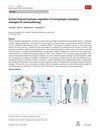
This review highlights that surface mechanical regulation can program macrophage behavior through specific mechanical cues on material surfaces, potentially advancing immunotherapies and regenerative medicine by enabling precise control over macrophage functions.
 March 2026 in “Frontiers in Cell and Developmental Biology”
 This meta-analysis found that autologous cell-based therapies, especially stromal vascular fraction, significantly improved atrophic acne scars over control treatments, enhancing both clinical and patient-reported outcomes.
66 citations
,
August 2007 in “Applied and environmental microbiology” This study engineered a bioluminescent yeast strain responsive to androgenic chemicals, demonstrating rapid and sensitive detection suitable for high-throughput screening and environmental monitoring.
July 2025 in “Genome biology” This study highlighted the effectiveness of HT-scCAT-seq as a tool for understanding gene regulation in single cells, offering insights into embryonic skin development and proposing a framework for exploring regulatory mechanisms in various biological and disease contexts.
June 2020 in “Journal of Investigative Dermatology” This symposium reviewed advances in understanding complex skin diseases through genetics and genomics, emphasizing the role of regulatory signals and environmental components in disease development, but reports no new clinical findings.
9 citations
,
May 2014 in “BMC medical genetics” In this case report, the authors suggest that a novel enhancer element's translocation near the TRPS1 gene may contribute to the TRPS phenotype, expanding understanding of the syndrome's genetic basis.
10 citations
,
November 2013 in “African Journal of Traditional Complementary and Alternative Medicines” In this study, herbal hair oils made from Cuscuta reflexa showed effectiveness in promoting hair growth, reducing dandruff, and minimizing hair fall when tested on human volunteers and rats.
8 citations
,
January 2020 in “PeerJ” This study found significant structural and compositional differences in hair affected by alopecia areata compared to healthy hair, using a range of physico-chemical investigation methods.
56 citations
,
March 2003 in “Journal of Investigative Dermatology” This study found that 17β-estradiol inhibited RANTES production in human keratinocytes by suppressing nuclear factor κB activity, suggesting a potential mechanism for 17β-estradiol's modulation of psoriasis-related inflammation.
49 citations
,
March 2004 in “Journal of Investigative Dermatology” This study found that the hHa7 gene in hair follicle trichocytes is the first identified to have its expression directly regulated by androgens, suggesting it as a marker for androgen action on hair follicles.
 10 citations
,
July 2018 in “Our Dermatology Online”
10 citations
,
July 2018 in “Our Dermatology Online” This research reviewed literature to evaluate the role of micronutrients in hair loss and hair growth, examining normal nutrient levels, their role in the hair follicle cycle, and their use in treatments, with data drawn from 92 peer-reviewed articles and reputable health organizations.
 8 citations
,
March 2019 in “Progress in Human Geography”
8 citations
,
March 2019 in “Progress in Human Geography” This paper explores how hair functions as a geographical lens to redefine the body's borders, influencing perceptions of identity and power.
 4 citations
,
July 2012 in “Genesis”
4 citations
,
July 2012 in “Genesis” This study reported that a Megsin-Cre transgene enables genetic manipulation primarily in skin, forestomach, and esophagus tissues, offering a new tool for studying development and diseases in these areas.

This study found that all examined biomarkers and clinical features were elevated in systemic lupus erythematosus patients, particularly ANA and Anti-dsDNA autoantibodies, but no single biomarker was sensitive or specific enough for diagnosis.
 43 citations
,
November 2018 in “Nature Communications”
43 citations
,
November 2018 in “Nature Communications” This genome-wide association study identified 20 genetic signals at 15 risk loci related to severe acne, revealing new insights into its genetic predisposition, particularly affecting skin structure and maintenance.