7 citations
,
January 2013 in “Ophthalmic plastic and reconstructive surgery” This case report describes a rare instance of late-onset, bilateral nevus comedonicus of the eyelids in a 79-year-old man, highlighting its clinical and histopathologic features.
This review discusses the clonal or polyclonal nature of skin carcinomas and the stem cell origins of basal and squamous cell carcinomas but presents no new research findings.
 January 2025 in “Indian Dermatology Online Journal”
 This case report describes a rare presentation of nevus comedonicus following the lines of Blaschko, treated with oral isotretinoin and other therapeutic measures, resulting in a reduction of episodic painful cystic lesions.
 2 citations
,
September 2021 in “Journal of Pathology of Nepal”
2 citations
,
September 2021 in “Journal of Pathology of Nepal” This study found that cutaneous cysts most frequently appeared as epidermal cysts, with unusual locations posing diagnostic challenges that required histopathological analysis for definitive diagnosis.
 January 2018 in “The Kaohsiung journal of medical sciences”
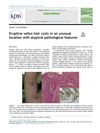
 This case report describes an atypical presentation of eruptive vellus hair cysts on the elbows, where standard diagnostic techniques were unreliable due to the loss of cystic structural integrity.
15 citations
,
December 2009 in “PubMed” This case study highlights a pediatric instance of eruptive vellus hair cysts partially responding to calcipotriene cream, aiming to remind clinicians about this often overlooked condition.
June 2026 in “Indian Dermatology Online Journal” In this case report, a 20-year-old man with a birthmark was identified as having a supernumerary nipple, a developmental anomaly, using dermoscopy to distinguish it from other pigmented skin lesions such as melanocytic nevus or basal cell carcinoma.
99 citations
,
July 1996 in “Journal of Investigative Dermatology” Using patient's own hair cells can effectively heal chronic leg ulcers.
 14 citations
,
February 2014 in “Experimental Cell Research”
14 citations
,
February 2014 in “Experimental Cell Research” This review examines the role of stem cells and their niches in continuously growing ectodermal organs like teeth, hair, and claws, providing insights from mouse models without presenting new research findings.
This study found that hoof progenitor cells from fresh equine tissue have multilineage differentiation capabilities, offering insights for future progenitor cell-based hoof and dermal-epidermal tissue engineering.
January 2009 in “Repositório Científico do Instituto Politécnico de Viseu (Instituto Politécnico de Viseu)” This case study found that a skin lesion in a Samoyed dog did not match any single known follicular cyst or neoplasm type described in the literature.
 August 2020 in “International Journal of Research in Dermatology”
 This report describes a 23-year-old male with Clouston’s syndrome, characterized by nail abnormalities, palmoplantar skin thickening, anodontia, and androgenic alopecia, highlighting the need for supportive management due to the lack of a definitive treatment.
18 citations
,
June 2014 in “Anais Brasileiros de Dermatologia” This case report describes a patient with Clouston Syndrome who developed eccrine syringofibroadenoma, marking only the fourth such association documented in existing literature.
2 citations
,
June 2013 in “Journal of Dermatological Case Reports” This article presents a case of Olmsted syndrome in a 5-year-old boy, adding to the limited number of reported cases of this rare keratinization disorder.
 2 citations
,
July 2018 in “Our Dermatology Online”
2 citations
,
July 2018 in “Our Dermatology Online” This case report documents the first known instance of nevoid hyperkeratosis of the nipple and areola with unilateral presentation in a Saudi female, diagnosed through clinical evaluation and biopsy.
 34 citations
,
November 2010 in “Development”
34 citations
,
November 2010 in “Development” In this study, epidermal Notch activation increased jagged 1 expression, leading to skin changes like thickening and blistering, with these effects inhibited when jagged 1 was absent.

This study found that upper-bulge epidermal stem cells in mouse hair follicles are specialized for nerve interactions, crucial for forming tactile sensory units, and influence touch responses via EGFL6 and αv integrin pathways.
4 citations
,
August 2013 in “Pediatric dermatology” This report describes an 11-year-old girl with peripilar keratin casts, a condition often underdiagnosed and mistaken for nits, highlighting the usefulness of keratolytic treatments in management.
 January 2024 in “International Journal of Advanced Research”
 This case report describes a 56-year-old woman with wooly hair and skin lesions, who experienced reduced plaque size and thickness after using 6% salicylic acid topically for three months.
 2 citations
,
April 2018 in “Journal of Investigative Dermatology”
2 citations
,
April 2018 in “Journal of Investigative Dermatology” This case study in a renal transplant patient observed that eruptive KA-type SCCs exhibited aggressive behavior and genetic expression changes following intralesional chemotherapy, indicating potential caution against routine use of such treatments in similar cases.
49 citations
,
July 2006 in “British Journal of Dermatology” This study observed that calcifying epithelioma of Malherbe is composed of tumor cells that differentiate into both hair cortex and outer root sheath, supporting its hair follicle origin.
22 citations
,
October 2007 in “Journal of Investigative Dermatology” Stem cells in mouse nails are found in the nail matrix and may control nail growth.
27 citations
,
February 2003 in “European Journal Of Oral Sciences” This study found that the SVpgC2a keratinocyte cell line, used as a model for dysplastic epithelium, showed increased apoptosis, proliferation, and aberrant keratin expression compared to normal keratinocytes from buccal mucosa.
 13 citations
,
June 2010 in “Journal of The American Academy of Dermatology”
13 citations
,
June 2010 in “Journal of The American Academy of Dermatology” This study reports previously unreported nail features in Cronkhite-Canada syndrome, specifically recurrent onychomadesis of all 20 nails linked to systemic illness.
 10 citations
,
January 2011 in “Annals of Dermatology”
10 citations
,
January 2011 in “Annals of Dermatology” This case study describes a unique instance of warty dyskeratoma involving two adjacent hair follicles within one lesion.
201 citations
,
May 2001 in “Proceedings of the National Academy of Sciences” This study found that transgenic expression of COX-2 in mouse basal keratinocytes causes epidermal hyperplasia and certain dysplastic features at specific body sites.
 6 citations
,
July 2011 in “British Journal of Dermatology”
6 citations
,
July 2011 in “British Journal of Dermatology” This paper reports a case of sebaceous carcinoma developing at the site of chronic candidiasis in a patient with keratitis–ichthyosis–deafness syndrome, without presenting new generalizable findings.
12 citations
,
January 1991 in “Acta Dermato Venereologica” The researchers reported that BCE-like changes overlying dermatofibroma show a differentiation pattern most similar to normal basal cells based on specific keratin markers.
5 citations
,
January 2024 in “Science Advances” In this study, researchers identified Tenascin-C as a marker for touch dome keratinocytes, which maintain themselves and can develop into Merkel cells following injury, showing they share molecular traits with various epidermal keratinocytes.
 February 2010 in “Journal of the American Academy of Dermatology”
 Lactic acid cream can help improve skin bumps known as eruptive vellus hair cysts.