 6 citations
,
January 1985 in “ACTA HISTOCHEMICA ET CYTOCHEMICA”
6 citations
,
January 1985 in “ACTA HISTOCHEMICA ET CYTOCHEMICA” This study found that epithelial components of calcifying epithelioma of Malherbe showed lectin binding and keratin staining patterns similar to normal hair follicles, with prominent Con A staining in tumor giant cells.
September 2024 in “Journal of the American Academy of Dermatology” Early intervention is important for limited systemic sclerosis patients due to higher pain and ulceration risks.
2 citations
,
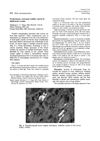
June 2001 in “Medical Electron Microscopy” This study observed that the keratinization pattern of trichilemmal cysts in two Japanese women may originate from the proliferation of the outer root sheath in the follicular isthmus of anagen hairs.
 8 citations
,
November 2015 in “The American journal of dermatopathology/American journal of dermatopathology”
8 citations
,
November 2015 in “The American journal of dermatopathology/American journal of dermatopathology” The authors present a case of punctate follicular porokeratosis, suggesting it as a distinct clinical entity distinguished by keratotic lesions originating specifically from hair follicles.
3 citations
,
March 2013 in “American Journal of Dermatopathology” This study found that ossification in trichilemmal cysts may be more common than previously thought, often associated with cyst wall rupture, and reports a novel case of ossifying TC with extramedullary hematopoiesis.
34 citations
,
February 2012 in “American Journal of Dermatopathology” This study found that calretinin immunoreactivity may help identify the innermost cell layer of the outer root sheath in anagen hair follicles and certain cutaneous adnexal proliferations with follicular, sebaceous, and eccrine differentiation.
January 2009 in “Repositório Científico do Instituto Politécnico de Viseu (Instituto Politécnico de Viseu)” This case study found that a skin lesion in a Samoyed dog did not match any single known follicular cyst or neoplasm type described in the literature.
May 2020 in “International Journal of Dermatology and Venereology” This article discusses the characteristics, clinical presentation, and diagnosis of calcified epidermal cysts but reports no new clinical results.
27 citations
,
December 1999 in “American Journal of Dermatopathology” This case report presents a patient with necrobiosis lipoidica exhibiting transepithelial elimination of cholesterol crystals through hair follicles, a finding previously associated with necrobiotic xanthogranuloma.
July 2025 in “Journal of Investigative Dermatology”  December 2025 in “Cureus”
 In this case report, a 40-year-old woman with systemic lupus erythematosus developed calcinosis cutis, a rare complication characterized by calcified deposits in her legs, requiring surgical intervention and ongoing medical treatment due to infection.
 January 2020 in “Frontiers in Medical Case Reports”
 This case study reported that reducing glucocorticoids resolved calcinosis cutis in a dog with hypoadrenocorticism, while demodicosis was treated with a fluralaner chewable tablet.
 January 2013 in “Journal of dermatology”
 This letter to the editor raises the possibility of a new medical entity characterized by symptoms such as poikiloderma, hyperpigmentation, alopecia, malformed bones, lymphedema, and decreased cortisol, but provides no clinical results.
 11 citations
,
December 2010 in “Archives of Dermatology”
11 citations
,
December 2010 in “Archives of Dermatology” This abstract provides no research results, focusing instead on navigation and subscription details for JAMA Dermatology content access.
2 citations
,
December 1973 in “Calcified tissue research” This study proposed a hypothesis for cutaneous calcinosis, suggesting that feeding DHT and subsequent epilation lead to ATP release and calcium orthophosphate formation, initiating calcification in rats.
6 citations
,
October 2009 in “Veterinary Dermatology” This study identified various cell types in the canine claw, showing complex mechanisms of cellular differentiation similar to mammalian hair and human nails.
9 citations
,
July 1961 in “Journal of Investigative Dermatology” This study found that localized skin calcification could be induced in adult rats through dihydrotachysterol treatment combined with topical trauma, offering an experimental model for calcifying scleroderma.
In this case study, a 15-year-old obese boy was diagnosed with acanthosis nigricans and hair casts in the axillae, with Wood's lamp and dermoscopic examination revealing specific features, yet fungal infection was ruled out through a negative KOH test.
18 citations
,
April 2016 in “American Journal of Dermatopathology” This case series highlights that nail clipping can aid in early detection and surgical planning of onychomatrical tumors by distinguishing between benign and potentially malignant growths based on the cavities' average dimensions.
 2 citations
,
September 2021 in “Journal of Pathology of Nepal”
2 citations
,
September 2021 in “Journal of Pathology of Nepal” This study found that cutaneous cysts most frequently appeared as epidermal cysts, with unusual locations posing diagnostic challenges that required histopathological analysis for definitive diagnosis.
15 citations
,
November 2009 in “Journal of Comparative Pathology” Epidermolysis bullosa in calves was not caused by mutations in the keratin genes bKRT5 and bKRT14.
 April 2018 in “Journal of Investigative Dermatology”
 This article proposes a new classification system for cutaneous adnexal cysts based on their origin in the folliculo-sebaceous unit and sweat glands, aiming to clarify their categorization and origins.

In this case report, a 59-year-old woman experienced burning sensations and developed atrophic, hypopigmented, ivory papules and plaques on her palms and soles over three years, which worsened after walking for extended periods.
 4 citations
,
January 2010 in “Journal of Veterinary Medical Science”
4 citations
,
January 2010 in “Journal of Veterinary Medical Science” This study used histopathological and ultrastructural analyses to differentiate between junctional epidermolysis bullosa and dermatomyositis-like disease in two juvenile dogs with skin disorders.
3 citations
,
March 1966 in “Archives of Dermatology” This study found that nevoid basal cell carcinomas originate in the epidermis and the upper part of the hair follicle, showing similarities to nonnevoid basal cell carcinomas.
10 citations
,
May 1994 in “Journal of Investigative Dermatology” 9 citations
,
December 2012 in “Indian Journal of Dermatology Venereology and Leprology” This study reports a rare case of a 40-year-old woman with multiple calcified trichilemmal cysts, associated with alopecia universalis and suggesting a potential genetic link.
 5 citations
,
September 1989 in “Journal of The American Academy of Dermatology”
5 citations
,
September 1989 in “Journal of The American Academy of Dermatology” This article reports that cocaine injections can lead to skin lesions containing talc crystals at the sites of injection.
July 2024 in “LA Referencia (Red Federada de Repositorios Institucionales de Publicaciones Científicas)” This study observed that while anomalous adipose tissue and displaced eccrine glands were common in certain types of scarring alopecia, these findings did not assist in diagnosis.
 2 citations
,
February 2009 in “Clinical and Experimental Dermatology”
2 citations
,
February 2009 in “Clinical and Experimental Dermatology” In this case study, a 51-year-old Japanese man was diagnosed with desmoplastic trichoepithelioma after histological examination of surgically excised facial plaques.