38 citations
,
May 1982 in “PubMed” This report describes almost complete resolution of calcinosis and healing of associated ulcers in an 83-year-old woman with localized scleroderma after repeated intralesional steroid injections.
 1 citations
,
May 2019 in “Veterinarski arhiv”
1 citations
,
May 2019 in “Veterinarski arhiv” This study found that Malassezia pachydermatis was present on both lesion and healthy skin in a California sea lion, with significantly more colonies on the lesion site.
14 citations
,
April 1976 in “Journal of Cutaneous Pathology” This case report observed a subepidermal calcified nodule on the face of a 15-year-old boy, thought to originate from hair follicles, with calcium being eliminated through the skin.
12 citations
,
April 2004 in “PubMed” This study reports the first known case of multiple type nevus lipomatosus cutaneous superficialis in a 10-month-old girl, with the unique feature of perifollicular fibrosis.
2 citations
,
November 2018 in “Veterinary Dermatology” This study found that in poodles, perifollicular changes in the hair follicle glassy membrane are not always linked to calcium deposition.
January 2007 in “Bristol Research (University of Bristol)” This study diagnosed epidermolysis bullosa in eight calves across four UK farms, characterized by skin lesions and excluding mutations in keratin genes as the cause.
40 citations
,
March 1991 in “Journal of Investigative Dermatology” 3 citations
,
July 2024 in “Animals” This study reported that tail tip lesions in dairy cows include granulation tissue, purulent-necrotizing inflammation, and hyperkeratosis, potentially caused by ischemia.
36 citations
,
January 1994 in “Cell and Tissue Research” 7 citations
,
May 1978 in “Acta Dermato Venereologica” This case report details a 36-year-old man with atypical necrobiosis lipoidica on his face, characterized by annular lesions and prominent giant cells without clear granuloma formation.
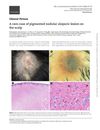
This study reported the case of a 30-year-old man with a bluish-grey scalp nodule that developed over a previously stable hairless plaque, revealing histopathological features consistent with epithelioid cell nests and spindle-shaped dermal melanocytes embedded in collagen.
49 citations
,
July 2006 in “British Journal of Dermatology” This study observed that calcifying epithelioma of Malherbe is composed of tumor cells that differentiate into both hair cortex and outer root sheath, supporting its hair follicle origin.
 9 citations
,
December 2018 in “JAAD case reports”
9 citations
,
December 2018 in “JAAD case reports” This study details the characteristics of lipedematous alopecia and lipedematous scalp, two rare scalp conditions, suggesting they may represent different stages of the same disorder, with lipedematous scalp lacking the hair loss seen in lipedematous alopecia.
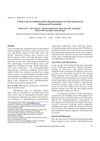 January 2024 in “The Indian Veterinary Journal”
 In this case study involving a two-month-old crossbred kid, severe skin conditions characterized by alopecia and pruritic lesions were linked to Malassezia yeast and bacteria, and successful treatment was observed with ketoconazole and supportive care.
 September 2022 in “JAAD case reports”
 This case study of a 45-year-old man from Tonga describes the identification of pachyonychia congenita through genetic testing, revealing a mutation in the keratin gene KRT16, associated with chronic painful skin and nail conditions.
6 citations
,
July 2017 in “Clinical and Experimental Dermatology” This report presents four new cases of follicular porokeratosis, which exhibit distinct histological features where the cornoid lamella are confined to the follicular ostia.
9 citations
,
October 1995 in “Clinical Dysmorphology” This study described a Scottish family with hidrotic ectodermal dysplasia featuring variable symptoms such as hypo/oligodontia, thin hair, and heat tolerance, and concluded they exhibited overlapping traits with Clouston syndrome.
January 2025 in “Зоологический журнал / Russian Journal of Zoology” This study investigated the skin of 12 Baikal seals and identified two main skin pathologies potentially linked to global warming and changes in Lake Baikal's ice regime, including koilocytosis and inflammation associated with a possible viral pathogen.
August 2023 in “Journal of the European Academy of Dermatology and Venereology” This case report describes an unusual nail tumor termed "onycholemmal horn" in a 77-year-old woman, highlighting its distinct histopathological features and the importance of excisional biopsy for accurate diagnosis.
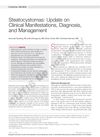
This review provides an overview of the etiology, presentation, and diagnosis of steatocystomas, including subtypes and complications, while detailing their history, epidemiology, and management strategies.
1 citations
,
October 2024 in “European Journal of Histochemistry” In this study, researchers reported telocytes in the dermis of silky fowl embryos at different developmental stages, highlighting their immunophenotypes and interactions with other cells.
17 citations
,
May 2022 in “Cells and Development”  September 2023 in “Journal of the American Academy of Dermatology”
 This study discusses calcinosis cutis and alopecia totalis, highlighting the need for thyroid disease screening in children with alopecia areata, especially those with a history of Down syndrome or signs of potential thyroid dysfunction.
 13 citations
,
June 2018 in “Dermatopathology”
13 citations
,
June 2018 in “Dermatopathology” This classification proposal introduces a novel system for categorizing cutaneous adnexal cysts based on their origin in the folliculosebaceous unit and sweat glands, aiming to simplify and enhance understanding of these skin lesions.
 31 citations
,
December 2010 in “Journal of the American Academy of Dermatology”
31 citations
,
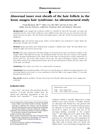
December 2010 in “Journal of the American Academy of Dermatology” This study reports that structural abnormalities in the inner root sheath of hair follicles may cause the hair shaft to be loosely attached in patients with loose anagen hair syndrome.
February 2023 in “Journal of the European Academy of Dermatology and Venereology” 45 citations
,
April 2009 in “Journal of anatomy” This study examined the complex morphology of the cornified claw sheath in domesticated cats, uncovering structures and growth patterns that help maintain sharp claw tips essential for climbing and prey capture.
 January 1982 in “Japanese Journal of Clinical Immunology”
 This case study reports the rare occurrence of widespread soft-tissue calcification in a young patient with SLE, suggesting that 99mTe-phosphate compounds could help diagnose this complication.
This study found that onychomatricoma can fully mimic the nail unit and differentiate toward the nail bed and isthmus, distinguishing it from other pilar tumors.