 February 2024 in “Plastic and Reconstructive Surgery – Global Open”
 This systematic review found that both cellular and acellular stem cell-based therapies are safe and able to improve hair regeneration and density in patients with androgenic alopecia, although some results may be temporary.
 January 2024 in “Biological & pharmaceutical bulletin”
 In this study, Panax ginseng extract and its ginsenosides were found to stimulate the proliferation of hair-related cells and promote the transition from the telogen to the anagen phase, enhancing hair-shaft growth by suppressing BMP4 expression in human dermal papilla cells.
This study reviews the regulatory mechanisms and molecular processes governing stem cell activity in hair follicles, highlighting their roles in hair regeneration and potential implications for treating hair and skin disorders.
 January 2024 in “Archives of Biological Sciences (Beograd)”
 This study found that AP collagen peptides can promote hair growth by supporting the health of hair follicle cells, as they stimulate cell proliferation, counteract apoptosis, and enhance antioxidant enzyme expression, suggesting potential as a treatment for hair loss.
December 2023 in “Animals” In this study, researchers analyzed miRNA and gene expression in the hair follicles of FMD during different hair cycle stages, identifying differential expression patterns and key pathways involved in hair follicle development and growth.
November 2023 in “Journal of Pakistan Society of Internal Medicine.” This review discusses the mechanisms, uses, and side effects of conventional synthetic DMARDs, particularly methotrexate, for rheumatoid arthritis, but reports no new clinical findings.
 October 2023 in “Nepal journal of dermatology, venereology & leprology”
 In this case report, researchers described a rare association of Pyoderma Gangrenosum with Neurofibromatosis, noting the occurrence of bone marrow suppression and acute Telogen Effluvium after treatment with Azathioprine, underlining the importance of monitoring for myelosuppression.

This study found that TLR2 and its ligand CEP are crucial for maintaining hair follicle health and stimulating hair growth, with deficiencies observed in aging and obesity potentially reducing regeneration.
 September 2023 in “Medicine”
 This study found increased infiltration of specific immune cells, such as γδ T cells and CD8+ T cells, in the bald scalp of male androgenetic alopecia patients, and identified four key immune-related genes potentially involved in hair loss development through interferon-γ signaling pathways.

This review summarizes the current applications and mechanisms of self-assembled peptide hydrogels in promoting skin, bone, and nerve regeneration, highlighting their potential due to their biocompatibility and supportive role in tissue healing.
July 2023 in “Annals of African Medicine” This case report describes a 24-year-old female with systemic lupus erythematosus and aggressive periodontitis, showing satisfactory outcomes after treatment with nonsurgical periodontal therapy and xenograft over an 8-year follow-up.
June 2023 in “Journal of personalized medicine” This study found that dihydrotestosterone treatment may be more beneficial for height in children with 5-α-reductase type 2 deficiency compared to testosterone enanthate, especially in the prepubertal period.

This study found that a complex extract of Polygonatum sibiricum and Nelumbinis semen improved menopause symptoms in an ovariectomized rat model by enhancing blood lipid metabolism and reducing osteoporosis, without increasing risks of side effects like endometriosis, unlike conventional hormone-replacement therapy.
May 2023 in “The Journal of Immunology” In this study, researchers found that BST2 expression is significantly upregulated in skin sections of mice with alopecia areata, implicating BST2's role in the disease pathogenesis through the action of epidermal γδ T cells and macrophages.
The study found that adipose-derived mesenchymal stem cells obtained via laser-assisted liposuction with selective photo-stimulation are comparable in differentiation potential and tumorigenic risk to those from conventional liposuction for cell therapy applications.

This study found significantly higher P-Smad2 levels in both lesional and nonlesional skin of organ transplant recipients, suggesting elevated TGF-β signaling might contribute to their increased cancer susceptibility.
 January 2023 in “Journal of Cosmetics, Dermatological Sciences and Applications”
 In this study, researchers assessed the efficacy of Trichosera® hair serum, containing mesenchymal stromal cells conditioned media, among 40 healthy Indian volunteers, finding significant improvements in hair growth rate, hair density, scalp condition, and reduction in hair fall without notable adverse effects.
 January 2023 in “Kafkas üniversitesi veteriner fakültesi dergisi/Kafkas üniversitesi veteriner fakültesi dergisi”
 In this study of Angora goats, researchers found that HOXC13 and other genes were overexpressed during the active hair growth phase, suggesting a role in mohair structure.
 December 2022 in “The Journal of Cosmetic Medicine”
 This study reports on a 46-year-old female with a high hairline who underwent hairline-lowering surgery using bone-tunneling suture fixation, achieving an average of 2 cm reduction, equivalent to transplanting up to 3,000 hair grafts, with satisfactory results for both patient and surgeons.
 November 2022 in “Research Square (Research Square)”
 This study found that HOXC13 gene expression was significantly higher during the anagen phase in Angora goats, potentially contributing to the mohair's shiny and silky nature.
 October 2022 in “Medical Clinical Update Journal”
 This case report describes a 7.5-year-old girl with precocious puberty displaying significant secondary sexual development and advanced bone age, treated monthly with Leuprolide.

This case report describes a 68-year-old patient with mild Sars-Cov2 infection who developed rapidly progressing bullous and necrotic skin lesions leading to osteomyelitis.
 May 2022 in “Frontiers in Cell and Developmental Biology”
 This study identified that in pig embryos, the miR-29a-5p/EDAR/lncRNA627.1 ceRNA complex plays a critical role in inhibiting hair placode precursor cells proliferation and regulating hair placode formation through the suppression of EDAR expression, which may provide insights into similar mechanisms affecting human hair conditions.
 March 2022 in “JAMA Dermatology”
 In 2021, JAMA Dermatology published significant findings on skin conditions post-COVID vaccination, melanoma surveillance, atopic dermatitis treatments, and confirmed that sun protection does not harm bone health.
February 2022 in “DOAJ (DOAJ: Directory of Open Access Journals)” In this study, all-trans retinoic acid was found to protect against oxidative stress-induced apoptosis in cultured hair cell-like cells.
 January 2022 in “Autopsy and Case Reports”
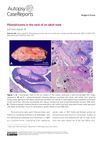
 This article describes a case of pilomatricoma in a 22-year-old male with successful surgical excision and no recurrence, highlighting its histopathological features and typical clinical presentation.
 January 2022 in “Journal of St. Marianna University”
 This study investigated how secretions from cultured human hair follicle-derived keratinocytes affect gene expression in human follicle dermal papilla cells to understand their signaling interactions.
 November 2021 in “Current Otorhinolaryngology Reports”
 New treatments for hair loss could involve using stem cells and a process called the Wnt/beta-catenin pathway to stimulate hair growth.
 October 2021 in “Research Square (Research Square)”
 This study found that in hairpoor mice, disruptions in hair follicle stem cell quiescence and signaling pathways lead to disturbed hair cycles, which may help explain alopecia development in Marie-Unna Hypotrichosis patients.
In this study, a spayed adult female dog with recurrent vaginitis and cystitis due to bone structures in the vaginal canal was successfully treated with manual removal and medication.