 February 2026 in “BMC Plastic and Reconstructive Surgery”
 This review suggests that induced pluripotent stem cells (iPSCs) hold promise for treating chronic wounds, but further work is needed to address safety, efficacy, and translation from preclinical models to real-world applications.
 February 2026 in “Frontiers in Immunology”
 In this review, researchers detail how immunosenescence and chronic neuroinflammation contribute to Parkinson's disease progression, exploring potential therapeutic strategies targeting this axis, such as senolytic agents and immune rejuvenation, while highlighting associated challenges and future research needs.
 February 2026 in “International Journal of Web of Multidisciplinary Studies”
 This review synthesizes current research on how the interaction between the skin microbiome and exosome-mediated communication influences hair disorders, and discusses how microbiome restoration and exosome-based therapies could advance treatments for conditions like alopecia by promoting hair regrowth and follicular health.

This narrative review highlights the potential of exosomes in regenerative and aesthetic dermatology, particularly in India, but emphasizes that their clinical use is still investigational due to limited and diverse study data, insufficient long-term safety information, and regulatory challenges.
 January 2026 in “RSC Advances”
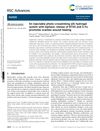
 The hydrogel helps heal wounds without scars by releasing two drugs gradually.
 January 2026 in “Journal of Biomedical Research”
 This review discusses the potential of small extracellular vesicles (sEVs) as next-generation therapeutics, noting their ability to overcome biological barriers and modulate cellular environments for various diseases.
 January 2026 in “Nanoscale Advances”
 In this study, a biocompatible zinc oxide nanocomposite loaded with the anticancer drug 9-Br-Nos demonstrated effective drug delivery and cytotoxicity against lung cancer cells in vitro, while also proving non-toxic to healthy cells, suggesting its potential for targeted lung cancer treatment.
 December 2025 in “Journal of Composites and Compounds”
 In this review, researchers explored the design of composite biomaterials for immunomodulation and their potential to influence immune cell behavior, which could be leveraged for treating diseases like cancer and improving tissue regeneration, while also addressing translational challenges such as biocompatibility and safety.
 December 2025 in “International Journal of Pharmacology”
 This review highlights that iPSC-derived artificial platelets offer a promising alternative to platelet-rich plasma for regenerative medicine, with standardized manufacturing and reproducible pharmacological properties, addressing variability issues associated with donor-derived platelets and showing therapeutic potential in preclinical models of osteoarthritis.
 November 2025 in “Frontiers in Oncology”
 This study found that Si extract, cryptomeridiol, and SiAgNPs have the ability to induce cell death and prevent cell growth in HepG2 liver cancer cells, suggesting cryptomeridiol's potential as a phytochemical component in developing new therapies for hepatocellular carcinoma using nanotechnology in vitro.

This study observed that intramuscular injection of sodium 131iodide at doses of up to 1 mCi can successfully induce hypothyroidism in rats without significantly damaging muscle or nearby tissues, despite concerns of adverse effects.
 September 2025 in “Advanced Pharmaceutical Bulletin”
 This review highlights the promise of non-viral gene delivery systems, particularly genosomes, over traditional viral vectors due to enhanced safety and efficiency in therapeutic nucleic acid delivery for genetic diseases like cystic fibrosis and malignancies.

This chapter reviews the challenges and future prospects of using nanotechnology and phytochemistry in developing safe, effective, and precision-based therapies for Polycystic Ovary Syndrome, without reporting new clinical findings.
 July 2025 in “International Journal of Pharmaceutical Research and Development”
 This review suggests that exosomes have potential as effective carriers for treating skin conditions like psoriasis, acne, eczema, and skin cancer by delivering therapeutic agents while minimizing side effects; the authors discuss their composition, uptake mechanisms, and clinical applications.
 July 2024 in “ADMET & DMPK”
 This review discusses the potential for surface-modified nanostructured lipid carriers to enhance hair regrowth by improving drug absorption and stability, focusing on their use with agents like minoxidil and finasteride for hair loss treatment.
 May 2024 in “Brazilian Journal of Hair Health”
 This study reported the successful development of finasteride-loaded poly(lactic-co-glycolic acid) nanoparticles, with varying encapsulation efficiencies, aiming to enhance drug delivery for hair growth while minimizing side effects, and noted that an in vivo study will follow to assess efficacy.
 May 2024 in “International journal of nanomedicine”
 This review highlights the potential of extracellular vesicles derived from medicinal plants as therapeutics for diseases such as cancer and inflammation, suggesting they may enhance the clinical use of herbal preparations, despite the challenges posed by extract complexity and individual variability.
 February 2024 in “International Journal For Multidisciplinary Research”
 This review examines the advances in nanostructured lipid carriers for treating hyperpigmentation but presents no new clinical results; the authors highlight their potential benefits and applications.
 January 2024 in “Research Square (Research Square)”
 This study reports that adjusting the valence states of Mo in Pluronic F127-coated MoO3-x nanozymes enhances their selective H2O2-related catalytic activity, showing promise in acute kidney injury treatment and enabling real-time monitoring of therapy effectiveness through ROS-responsive photoacoustic imaging.
 January 2024 in “Wiadomości Lekarskie”
 This source reports that clinical trials using advanced Deep Brain Stimulation systems, augmented with AI to integrate kinematic data, eye tracking, and cognitive assessments, show promise in improving diagnostic accuracy and monitoring symptoms for patients with Parkinson's disease.
 January 2024 in “Wiadomości Lekarskie”
 In this retrospective study conducted at Grodno Regional Children's Hospital, researchers found that children in western Belarus showed more severe COVID-19 symptoms in 2021 compared to 2020, with urban children primarily affected, and family contact emerging as the most common source of infection.
 January 2024 in “Wiadomości Lekarskie”
 This study reported the development of fluorescent markers using wide band gap metal oxides with rare earth ions for early tumor detection and treatment. Testing in animals showed high efficiency and selectivity, with potential applications in contrast-enhanced MRI, targeted drug delivery, and photodynamic cancer therapy.
 January 2024 in “Wiadomości Lekarskie”
 This study developed an AI-driven method for classifying cells in Follicular Lymphoma cases, achieving a 63% F1-score, precision, and recall in distinguishing centroblasts from other cell types using whole slide images at x20 resolution.
 January 2024 in “Wiadomości Lekarskie”
 This article reviews the potential applications of Point of Care procedures in radiology, discussing their ability to enhance the speed of diagnosis and treatment but does not report new results.
 January 2024 in “Regenerative Biomaterials”
 In this study, researchers developed a biodegradable microneedle made of hyaluronic acid, intended to enhance drug delivery through the skin's stratum corneum and potentially promote hair growth by overcoming the skin's barrier function in alopecia treatment.
 January 2024 in “Wiadomości Lekarskie”
 This study found that using a combined LH and FSH stimulation protocol significantly increased clinical pregnancy rates in women with low ovarian reserve compared to the standard protocol.
 January 2024 in “Wiadomości Lekarskie”
 This study highlights the growing role of artificial intelligence in vascular surgery, where AI improves diagnostic accuracy, surgical planning, and patient monitoring, ultimately enhancing clinical outcomes, shortening recovery times, and reducing healthcare costs.
 January 2024 in “Wiadomości Lekarskie”
 AI and advanced technologies are improving medical diagnostics and treatments.
 January 2024 in “Wiadomości Lekarskie”
 In this study, researchers analyzed spermogram data from men with diagnosed infertility in Ukraine, aiming to identify the most common sperm disorders, and they found that the study primarily involved men with primary infertility, compared to a control group of healthy men with confirmed fertility.
 January 2024 in “Wiadomości Lekarskie”
 This review discusses the potential of augmented reality to advance vascular and endovascular surgery by improving 3D anatomical understanding and reducing patient risk, but notes that further research is needed to overcome current technological limitations.