 3 citations
,
September 2017 in “Stem cell investigation”
3 citations
,
September 2017 in “Stem cell investigation” This review discusses the various roles of skin-resident dermal white adipose tissue in hair growth inhibition, antibacterial responses, and wound healing, reporting no new empirical findings.
 2 citations
,
January 2014 in “Hair transplant forum international”
2 citations
,
January 2014 in “Hair transplant forum international” This article discusses the mixed perceptions and potential profitability of PRP therapy in hair treatment, but does not report new clinical results.
 March 2020 in “QJM: An International Journal of Medicine”
 In this study, significant improvements in Androgenetic Alopecia were observed with both PRP and SVF therapies, with SVF showing greater effectiveness in increasing terminal and vellus hair counts.
 1 citations
,
December 2017 in “Journal of clinical and investigative dermatology”
1 citations
,
December 2017 in “Journal of clinical and investigative dermatology” This study reports on the clinical and dermoscopic diagnosis process for androgenic alopecia in patients at Zagazig University Hospitals but includes no new treatment findings.
February 2024 in “Cancers” This review highlights recent progress in developing androgen receptor degraders, such as PROTACs, for treating castration-resistant prostate cancer, and notes that several have entered phase I or II clinical trials, showcasing potential to address drug resistance challenges.
 10 citations
,
January 2012 in “International Journal of Trichology”
10 citations
,
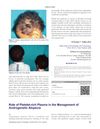
January 2012 in “International Journal of Trichology” PRP helps hair growth in common hair loss disorder.
This review synthesizes existing research on autologous platelet-rich plasma for treating androgenetic alopecia, suggesting its promise with standardized protocols and personalized approaches, but reports no new clinical results.
January 2019 in “Journal of the Egyptian Women's Dermatologic Society (Print)” This study found that patients with androgenetic alopecia exhibited higher levels of cardiovascular risk markers, with hs-CRP identified as a significant independent predictor of cardiovascular disease risk.
 23 citations
,
January 2014 in “International Journal of Biological Sciences”
23 citations
,
January 2014 in “International Journal of Biological Sciences” This study found that African American men with prostate cancer have higher rates of somatic and germline androgen receptor mutations than Caucasian American men, which may contribute to ethnic differences in disease progression and outcomes.
 2 citations
,
April 2012 in “Science-business Exchange”
2 citations
,
April 2012 in “Science-business Exchange” Blocking a protein called prostaglandin D2 might help treat hair loss.
63 citations
,
May 2015 in “PloS one” This study found that GALT5 and GALT2 are redundant enzymes essential for O-glycosylation of AGPs, with mutations leading to significant growth and development defects in plants.

This study observed that a combination of sinapic acid and glabridin from Zhimo herbal extract improved hair growth and reduced oxidative stress in a DHT-induced model of androgenetic alopecia in mice by preventing ferroptosis and stabilizing β-Catenin, offering potential application for AGA treatment.
 4 citations
,
November 2020 in “Journal of The American Academy of Dermatology”
4 citations
,
November 2020 in “Journal of The American Academy of Dermatology” This article discusses the factors driving the platelet-rich plasma market in dermatology and reports no clinical results; it highlights the need for more affordable and accessible treatments.
This study suggests that androgen receptor CAG polymorphisms may not significantly influence androgenetic alopecia susceptibility in Korean men.
January 2011 in “The Chinese Journal of Dermatovenereology” This study found that shorter GGN repeat lengths (≤23) in the androgen receptor gene are associated with androgenetic alopecia among Chinese males, whereas two specific SNPs studied were not present in this population.
 39 citations
,
March 2019 in “Dermatologic Surgery”
39 citations
,
March 2019 in “Dermatologic Surgery” This study's meta-analysis reported that PRP injections significantly increased hair density compared to baseline and placebo in androgenetic alopecia patients, supporting its use as a beneficial treatment.
 December 2024 in “Biological and Clinical Sciences Research Journal”
 In this study, injectable platelet-rich fibrin (I-PRF) was found to be more effective than platelet-rich plasma (PRP) at improving hair growth outcomes and patient satisfaction for androgenic alopecia.
49 citations
,
January 2010 in “Plant and Cell Physiology” This study found that a phosphorus starvation-insensitive mutant of Arabidopsis thaliana shows altered root growth and auxin responses under low phosphate conditions compared to wild-type plants, suggesting a role for LPR1 in regulating these traits.
September 2025 in “Cosmetics” This study found that using a pharmacogenetic panel with 26 SNPs can improve treatment outcomes for androgenetic alopecia, as overall response rates to minoxidil, finasteride, and dutasteride were high, and specific genetic markers predicted poor responses to these drugs.
January 2006 in “Chinese Journal of Dermatology” This study suggests that polymorphisms in the androgen receptor gene's GGC repeat and the combined CAG-GGC triplet repeats are associated with androgenetic alopecia among Han men in Eastern China.
43 citations
,
May 1999 in “Journal of Biological Chemistry” This study found that full-length Agouti protein modulates melanocortin receptor signaling through a dual mechanism involving competitive antagonism and receptor down-regulation, whereas the carboxyl-terminal fragment acts solely as a competitive antagonist.
 February 2024 in “Experimental Dermatology”
 In this study, researchers found that IGFBP‐rP1 levels were lower in individuals with androgenic alopecia compared to healthy controls, and subcutaneous injection of IGFBP‐rP1 showed potential in slowing hair loss progression in a mouse model by affecting the hair cycle transition.
 January 2008 in “US endocrinology”
 This paper describes the hGRα gene structure and its expression, focusing on the functional properties of the longest GRα isoform, but reports no new results.
1 citations
,
August 2019 in “Journal of pediatric & adolescent gynecology” This report describes a novel AR gene mutation in a female patient, contributing to androgen insensitivity syndrome, and emphasizes its potential impact on genetic counseling.
October 2012 in “Institutional Repositories DataBase (IRDB)” The researchers reported that treatment with adipose-derived stem cell conditioned medium significantly increased hair count in the study participants, suggesting it is an effective therapy for hair regeneration.
January 1980 in “Lluc: revista de cultura i d'idees” This study found that Agaricus bisporus-derived β-Glucan particles showed potential as an anticancer, antimicrobial, and antioxidant agent, inducing apoptosis and disrupting mitochondrial membrane potential in cervical cancer HeLa cells.
 60 citations
,
September 2016 in “Dermatologic Surgery”
60 citations
,
September 2016 in “Dermatologic Surgery” This article proposes a mechanistic model for how platelet-rich plasma therapy may stimulate hair growth in androgenetic alopecia by promoting vascularization and activating specific signaling pathways, but it reports no new experimental results.
 January 2026 in “Zenodo (CERN European Organization for Nuclear Research)”
 This review discusses the evidence for platelet-rich plasma as a promising treatment for androgenetic alopecia, highlighting its potential benefits and favorable safety profile but noting the need for standardized protocols and larger trials.
 40 citations
,
March 2018 in “Aesthetic Surgery Journal”
40 citations
,
March 2018 in “Aesthetic Surgery Journal” This study found that a single injection of platelet-rich stroma significantly increased hair density in men with androgenetic alopecia within 6 to 12 weeks, with no reported side effects.
 March 2017 in “European Urology Supplements”
 This study found that variations in (CAG)n and (GGN)n polymorphisms in the androgen receptor gene appear to influence symptom severity in men with post-finasteride syndrome.