 90 citations
,
October 1998 in “Animal Reproduction Science”
90 citations
,
October 1998 in “Animal Reproduction Science” This study found that in captive mouflon rams, reproductive and physical maturation, marked by changes in hormone levels and physical attributes, progresses gradually across their life span, with sexual maturity tied closely to physical maturity.
12 citations
,
June 2024 in “Nutrients” In this review, researchers highlighted that natural polyphenolics like flavonoids and resveratrol may help enhance testosterone production in aging males by boosting the expression of the Star gene in Leydig cells, potentially preventing age-related degenerative conditions linked to testosterone insufficiency.
4 citations
,
July 2024 in “Biomolecules” This review suggests systemic changes in polycystic ovary syndrome may increase the risk of neurodegeneration, potentially linking it to Alzheimer's disease through common pathways affecting tryptophan metabolism.
This study used whole-genome resequencing to analyze genetic diversity and selection in 17 rabbit breeds, identifying genes linked to traits like coat color and body size, which could inform breeding and conservation efforts.
 76 citations
,
April 2005 in “Cancer Epidemiology, Biomarkers & Prevention”
76 citations
,
April 2005 in “Cancer Epidemiology, Biomarkers & Prevention” This study found that the AR-E211 A allele is associated with a lower risk of both metastatic prostate cancer and androgenetic alopecia in an Australian population.
44 citations
,
June 2023 in “Cell Reports” This study investigated dermal fibroblasts in mouse skin using single-cell RNA sequencing and identified signaling pathways that influence adipogenesis, finding that IL-1-NF-κB promotes, while WNT-β-catenin inhibits, the adipogenic potential of these cells, with implications for wound healing and scar formation.
 144 citations
,
November 2020 in “Frontiers in immunology”
144 citations
,
November 2020 in “Frontiers in immunology” This study summarizes how the IL-23/IL-17 axis contributes to inflammatory skin diseases like psoriasis and highlights that biologics targeting this pathway, including monoclonal antibodies against IL-23 and IL-17, have shown efficacy in clinical trials for these conditions.
 51 citations
,
September 2020 in “Cell Metabolism”
51 citations
,
September 2020 in “Cell Metabolism” This study highlights that the mammalian target of rapamycin complex 2 (mTORC2)-Akt signaling axis is essential for hair follicle stem cells to return to their niche and regenerate effectively by regulating metabolic pathways.
 40 citations
,
December 2012 in “Epilepsia”
40 citations
,
December 2012 in “Epilepsia” This review discusses the role of δ-subunit-containing GABA A receptors and neurosteroids in temporal lobe epilepsy, highlighting their plasticity and potential pharmacological implications, without reporting new clinical results.
3 citations
,
April 2022 in “Research Square (Research Square)” In this study, the researchers identified a PBX1-SIRT1-PARP1 axis that plays a crucial role in reducing senescence and apoptosis in hair follicle-derived mesenchymal stem cells.
 18 citations
,
April 2016 in “Endocrinology and Metabolism Clinics of North America”
18 citations
,
April 2016 in “Endocrinology and Metabolism Clinics of North America” This review discusses the diagnostic challenges of PCOS in adolescents, noting that the persistence of hyperandrogenism and oligomenorrhea is required for diagnosis, while genetic studies suggest involvement of the hypothalamic-pituitary-ovarian axis.
 30 citations
,
September 2003 in “Experimental Dermatology”
30 citations
,
September 2003 in “Experimental Dermatology” In this study on a murine model, researchers observed that a 5% minoxidil solution reduced stress-induced changes in hair growth, suggesting its potential for managing stress-related hair loss in humans.
 1 citations
,
July 2021 in “Current Issues in Molecular Biology”
1 citations
,
July 2021 in “Current Issues in Molecular Biology” This study found that finasteride treatment of male rats led to changes in their male offspring's testicular gene expression, potentially affecting sperm function in response to odorant-like signals.
 16 citations
,
July 2012 in “The New England Journal of Medicine”
16 citations
,
July 2012 in “The New England Journal of Medicine” This case report describes a 27-year-old man hospitalized with fatigue, myalgias, weakness, profound weight loss, and abnormal liver function, leading to a diagnosis after chest imaging revealed pneumomediastinum.
December 2025 in “JURNAL ILMU KEDOKTERAN DAN KESEHATAN” This study reported that a 29-year-old woman with telogen effluvium experienced improved hair growth and reduced hair loss through 12 sessions of plum blossom acupuncture combined with electroacupuncture, as evidenced by new hair growth, improved hair-pull test results, and decreased telogen phase hair percentage.
 October 2024 in “Irish Journal of Medical Science (1971 -)”
 In this study, TENS of the T6 dermatome over a longer term was explored for its effects on weight, blood pressure, heart rate, and appetite-regulating hormones in obese subjects with moderate obstructive sleep apnea; however, results are not reported in the abstract.
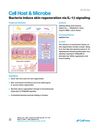 53 citations
,
April 2021 in “Cell Host & Microbe”
53 citations
,
April 2021 in “Cell Host & Microbe” This study found that skin microbiota, particularly in wild-type mice, promotes wound-induced hair follicle neogenesis and wound healing, highlighting the potential downsides of routine antibiotic use on skin regeneration.
 May 2026 in “Theranostics”
 This study found that the DKK3-CKAP4 signaling axis is involved in fibroimmune remodeling in androgenetic alopecia and that targeting this pathway may restore a regenerative hair follicle environment, offering a potential therapeutic strategy to counteract hair follicle miniaturization.
 October 2023 in “Frontiers in endocrinology”
 This review examines the role of androgens and androgen receptors in regulating glucose and lipid metabolism, focusing on their effects on mitochondrial content and function; it also discusses the sex-dimorphic influence of androgens and provides theoretical insights into their mechanisms.
 12 citations
,
December 2012 in “Current Drug Targets”
12 citations
,
December 2012 in “Current Drug Targets” The Androgen Receptor could be a target for treating diseases like cancer, but more research is needed to confirm the effectiveness of potential treatments.
5 citations
,
January 2025 in “Burns & Trauma” This study suggests that activating the PPARs/SHH-mitochondrial axis may enhance diabetic wound healing by improving endothelial cell metabolism and angiogenesis, indicating potential for PPAR agonists in treating diabetic foot ulcers.
57 citations
,
April 2009 in “The Journal of Steroid Biochemistry and Molecular Biology” This study found that despite the presence of steroidogenesis inhibitors, CRPC tumor cells adapt to continue synthesizing androgens, suggesting a need for more effective androgen axis targeting.
 24 citations
,
April 2007 in “European Journal of Pharmaceutics and Biopharmaceutics”
24 citations
,
April 2007 in “European Journal of Pharmaceutics and Biopharmaceutics” This study found that artocarpin delivered via alginate/chitosan microparticles effectively suppressed the growth of hamster flank organs compared to artocarpin in solution form, without significant systemic effects.
 2 citations
,
January 2025 in “Frontiers in Pharmacology”
2 citations
,
January 2025 in “Frontiers in Pharmacology” In a rat model of benign prostatic hyperplasia, this study found that purple corn extract may improve symptoms by inhibiting prostate enlargement, reducing androgen receptor signaling, and exerting anti-inflammatory effects.
 173 citations
,
May 2001 in “Human reproduction update”
173 citations
,
May 2001 in “Human reproduction update” This review discusses the role of oestrogens in stimulating growth hormone secretion and influencing linear bone growth in children, and reports no new clinical results; the authors suggest that oestrogens play a key role in pubertal growth spurts for both genders.
September 2026 in “Aging Cell” This study found that knocking down SFRP2 in an AGA model improved hair regeneration and reduced cellular dysfunction, suggesting that targeting the SFRP2-FSTL1 axis could be a promising therapeutic strategy for androgenetic alopecia.

This study found that Plakophilin 1 regulates innate immune responses in keratinocytes by controlling RNA helicase activity, balancing inflammation during epidermal immune challenges.
 January 2024 in “Wiadomości Lekarskie”
 This review discusses the potential of augmented reality to advance vascular and endovascular surgery by improving 3D anatomical understanding and reducing patient risk, but notes that further research is needed to overcome current technological limitations.
 January 2024 in “Wiadomości Lekarskie”
 This study reports that Abelson Interactor 1 (ABI1) regulates androgen receptor transcription in prostate cancer, identifying it as a potential target for new therapies addressing treatment resistance.
 June 2020 in “Journal of genetic medicine”
 This article reviews neuroendocrine abnormalities in polycystic ovarian syndrome and reports no new findings, highlighting areas such as the hypothalamus-pituitary axis and genetic basis.