3 citations
,
July 2020 in “International Journal of Applied Pharmaceutics” This study evaluated shampoo formulations containing banana corm extract and found that they possess favorable physical and stability characteristics, suggesting potential as a natural haircare product.
 April 2022 in “Journal of Cosmetic Dermatology”
 In this study, 98 days of using Trimax-360 Serum, a botanical-based treatment, significantly improved hair density, thickness, and growth rate in adults with mild to moderate alopecia, with no adverse effects reported.
2 citations
,
November 2012 in “Archimer (Ifremer)” This study found that progression ads are more persuasive for individuals with a weak fresh start mindset, whereas before/after ads are more effective for those with a strong fresh start mindset.
 September 2025 in “Journal of Surfactants and Detergents”
 In this study, shampoos containing sodium lauroyl methylaminopropionate showed superior coacervate formation and lubrication on wet hair, outperforming other amino acid surfactants and suggesting potential for creating low-irritation, high-performance hair products.
 2 citations
,
February 2023 in “Research Square (Research Square)”
2 citations
,
February 2023 in “Research Square (Research Square)” In this study, a newly engineered scaffold, PADM-MX-Ag-Si@Dox, demonstrated potential as a multifunctional biomaterial for postoperative melanoma treatment by controlling drug release, enhancing wound healing, and enabling real-time tumor surveillance through temperature, pH, and electrical stimuli.
This study found that niosomal aminexil was more clinically effective for hair growth than conventional aminexil solutions, and that niosomes facilitated aminexil penetration through rat skin without propylene glycol.
July 2025 in “Skin Appendage Disorders” In this study, researchers found that microinfusion of dutasteride using the MMP® technique did not show a statistical difference compared to placebo in clinical assessments for male androgenetic alopecia, though patients reported improvements in the vertex area.

In this study, researchers found that crude extracts from Avicennia marina and its component avicequinone C inhibit mechanisms contributing to androgenic alopecia in vitro, including 5α-reductase activity and DHT-AR interactions, potentially promoting hair growth and delaying the catagen phase in human dermal papilla cells.
 February 2024 in “Journal of Molecular Structure”
 In this study, researchers developed a supramolecular hydrogel combining minoxidil and salicylic acid, finding that it accelerates hair growth and enhances hair follicle regeneration in vivo, suggesting its potential as an effective treatment for alopecia.
 12 citations
,
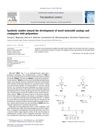
February 2010 in “Tetrahedron Letters”
12 citations
,
February 2010 in “Tetrahedron Letters” This article describes the synthesis of novel polyamine-modified minoxidil analogs and conjugates to potentially enhance minoxidil's biological activity, selectivity, and water solubility, but reports no new biological results.
12 citations
,
June 2025 in “Gut Microbes” This study developed BroadAMP-GPT, a computational-experimental framework, to discover new antimicrobial peptides, identifying candidates effective against multidrug-resistant pathogens. Notably, AMP_S13 showed strong stability, low toxicity, and efficacy in infection models, highlighting the platform's potential in combating antimicrobial resistance.
 August 2025 in “International Journal of Pharmaceutical Sciences and Nanotechnology”
 This study formulated a minoxidil nanoemulgel with improved solubilization and skin penetration, demonstrating a high entrapment efficiency and sustained drug release in vitro, which suggests potential improvements in treating androgenetic alopecia compared to conventional formulations.
1 citations
,
December 2007 in “Journal of Microbiology and Biotechnology” This study found that Minoxidil included in triamino alpha-cyclodextrin significantly promoted hair growth in mice, potentially due to its enhanced substantivity on skin.
 3 citations
,
January 1989 in “Journal of Japan Oil Chemists Society”
3 citations
,
January 1989 in “Journal of Japan Oil Chemists Society” This study examined the effects of six surfactants on hair and scalp, finding varying irritation levels and impacts on protein denaturation and scalp turnover time, with AMT suggested as a good detergent.
 March 2011 in “Focus on surfactants”
 Several companies launched new hair care ingredients in 2011 to improve conditioning, color retention, combability, and heat protection.
 January 2025 in “Biomedical Engineering Letters”
 This study reported that a new polymeric formulation for topical minoxidil delivery in an animal model improved hair growth and hair follicle formation more effectively than minoxidil in PBS, suggesting potential as a future hair loss treatment.
 7 citations
,
April 2020 in “Dermatologic Therapy”
7 citations
,
April 2020 in “Dermatologic Therapy” In this study, nine male cases of androgenetic alopecia showed marked improvement after receiving systemic dexpanthenol treatment.
 6 citations
,
February 2025 in “Scientific Reports”
6 citations
,
February 2025 in “Scientific Reports” This study found that MEGA PROTAC improved the prediction of ternary structures with higher maximum DockQ scores compared to the BOTCP method in 16 out of 22 test cases.
 5 citations
,
January 2018 in “Skin appendage disorders”
5 citations
,
January 2018 in “Skin appendage disorders” Minoxidil base is preferred for hair loss treatment, but minoxidil sulfate may be an alternative for unresponsive patients.
 6 citations
,
May 2022 in “Colloids and Surfaces B: Biointerfaces”
6 citations
,
May 2022 in “Colloids and Surfaces B: Biointerfaces” This study found that oral administration of naturally safe active polypeptides from marine shellfish promoted scarless dermal wound healing in mice, potentially via effects on inflammation, fibroblast activity, and the "skin-gut" axis.
January 2026 in “Microchemical Journal” In this study, researchers developed an electrochemical method using gold nanostructures on a glassy carbon electrode to detect minoxidil levels in hair lotions, and found it effectively quantified minoxidil in commercial products, revealing discrepancies in their labeled versus actual concentrations.
 6 citations
,
July 2009 in “Biomolecules & therapeutics”
6 citations
,
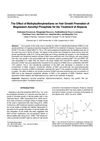
July 2009 in “Biomolecules & therapeutics” This study found that combining MSM with MAP significantly enhanced hair growth in mice, comparable to or better than minoxidil, due to increased intradermal retention of MAP.
 June 2026 in “Frontiers in Marine Science”
 This study found that Codium sp. cultivated in IMTA systems can be a sustainable source of bioactive ingredients for skin care products, with various fractions providing photoprotective, wound-healing, and antimicrobial benefits in vitro.
 16 citations
,
June 2019 in “Industrial Biotechnology”
16 citations
,
June 2019 in “Industrial Biotechnology” In this study, researchers found that the conventional solvent extraction method yielded the highest polyphenol content and antioxidant activity from Ascophyllum nodosum seaweed on Québec's North Shore.
This study found that iontophoresis significantly increased folicular delivery of minoxidil sulfate and sustained release when combined with chitosan microparticles, suggesting potential to reduce application frequency for treating androgenic alopecia.
7 citations
,
December 2021 in “Pharmaceutics” This study developed a nanoemulsion of garlic oil and apple cider vinegar loaded with minoxidil to enhance drug permeation through skin, reporting improved ex vivo skin permeation parameters compared to an aqueous dispersion of minoxidil, suggesting potential benefits for treating alopecia areata.
8 citations
,
February 2017 in “International journal of molecular sciences” This study found that the natural extract e-CAF promotes the proliferation and migration of human hair dermal papilla cells in vitro, suggesting potential benefits for skin regeneration and tissue repair.
 November 2024 in “RECIMA21 - Revista Científica Multidisciplinar - ISSN 2675-6218”
 In this study, researchers investigated the use of the Pulse Booster Drug Delivery Mesojectgun technology for non-invasive treatment of scalp conditions, finding improvements in hair volume, thickness, and reduction of hair loss in four participants with alopecia after applying specific active ingredients.
 October 2025 in “Advanced Healthcare Materials”
 In a study on wound healing, researchers described injectable POEGMA‐DA hydrogels as a promising non-toxic alternative to traditional wound closure methods, showing effective tissue adhesion and enhanced regeneration of skin structures in a mouse model without significant inflammation.
 8 citations
,
October 2015 in “Asian Journal of Chemistry”
8 citations
,
October 2015 in “Asian Journal of Chemistry” A new method was created to accurately measure minoxidil and aminexil in hair loss treatments.