 January 2018 in “Springer eBooks”
 PDE inhibitors, especially PDE4 inhibitors like apremilast, are effective for certain inflammatory skin conditions but have side effects and can be costly.
 January 2026 in “Dermatology Reports”
 This case study reports that a 15-year-old male with multiple autoimmune conditions showed significant improvement in skin and gastrointestinal symptoms, along with hair regrowth, after 16 weeks of treatment with the JAK-1 inhibitor upadacitinib, demonstrating its potential in managing complex autoimmune disorders.
7 citations
,
April 2020 in “JIMD Reports” In this follow-up of three siblings with ATP6AP1 deficiency, the researchers observed progression to total hearing loss, hair loss, and proteinuria.
2 citations
,
November 2024 in “PLoS ONE” This study assessed breeding value estimation methods for Korean Sapsaree dogs, finding varied accuracy across BLUP approaches and identifying significant genomic regions affecting traits like body height and hair length. The researchers suggest these findings can enhance breeding strategies for this culturally significant breed.
 August 2022 in “Research Square (Research Square)”
 This study found that implanting HAP stem cells in a mouse model accelerated wound closure and reduced scar formation, suggesting potential for scar-free wound healing.
October 2024 in “The American Journal of Gastroenterology” This study described a case where both alopecia universalis and Crohn's ileitis in a 23-year-old man showed remarkable improvement with the JAK1 inhibitor upadacitinib, highlighting its potential as a treatment for patients with concurrent conditions.
 April 2017 in “Journal of Investigative Dermatology”
 This study found that retinoic acid and a retinol complex formulation showed different permeation and compound localization in a skin equivalent model, with unique lipid changes observed with only the retinol formulation.
 2 citations
,
August 2018 in “Korean Journal of Plant Resources”
2 citations
,
August 2018 in “Korean Journal of Plant Resources” This study found that oregonin, isolated from Alnus japonica, demonstrated strong antioxidant activity and apoptosis modulation in hair follicle cells, suggesting its potential as a natural ingredient for preventing hair loss in cosmetic products.
 8 citations
,
September 2024 in “BMC Genomics”
8 citations
,
September 2024 in “BMC Genomics” In this study, researchers found that the novel gene circCFAP20DC enhances the proliferation of goat follicular granulosa cells by activating the RB pathway, facilitating their progression from the G1 to S phase during follicular development.
January 1981 in “Elsevier eBooks”  October 2023 in “Oncotarget”
 In this study using live mice, researchers observed that during hair follicle regression, apoptosis in basal cells may propagate by triggering neighboring cells, potentially regulated by a gradient of pro-survival signals from stem cells, and proposed a testable mechanism to further explore this process.
March 2026 in “Jurnal Pharmascience” This study found that isorhamnetin, a compound from the Rampai plant, showed a lower affinity energy in molecular docking tests compared to Minoxidil, indicating potential as an androgen receptor antagonist for alopecia therapy in silico, with favorable pharmacokinetic characteristics in ADME-Tox predictions.
 23 citations
,
May 2005 in “British Journal of Cancer”
23 citations
,
May 2005 in “British Journal of Cancer” This study reported the feasibility of detecting six cell-cycle-related nuclear markers in plucked human scalp and eyebrow hair, providing valuable insights for future intervention studies.
 24 citations
,
February 2015 in “Experimental Cell Research”
24 citations
,
February 2015 in “Experimental Cell Research” This study found that overexpression of the transcription factor NFIC may enhance the proliferation and differentiation of stem cells from the apical papilla, suggesting its potential role in dentin/root regeneration.
July 2025 in “International Journal of Molecular Sciences” This genetic study identified four new keratin-associated protein genes in sheep, revealing significant sequence variation and suggesting complex evolutionary dynamics, with unique variants in some sheep breeds linking them to Romanov sheep ancestry.
 March 1996 in “Hair transplant forum international”
 This article discusses the introduction and market presence of the Italian hair product Kevis but presents no new clinical findings.
34 citations
,
January 2004 in “Genomics” In this study, researchers identified a cluster of hair-specific keratin-associated protein genes within the 21q22.3 region, revealing a novel transcription mechanism involving TSPEAR/C21orf29 that may bypass typical transcriptional termination sites.
 5 citations
,
January 2016 in “Stem Cells International”
5 citations
,
January 2016 in “Stem Cells International” This study found that epidermal stem cells in nonglabrous skin are connected to the distal end of the arrector pili muscle, which may play a role in epidermal renewal and wound healing.
2 citations
,
January 1997 in “Mapping” This study suggests that Gambogic Amide may act as an anti-hair greying and hair growth-promoting molecule in human hair follicles in vitro by maintaining pigmentation and stimulating hair shaft elongation.
 25 citations
,
March 2017 in “Archives of Dermatological Research”
25 citations
,
March 2017 in “Archives of Dermatological Research” This study suggests that sinapic acid may promote hair growth in human hair follicle dermal papilla cells by activating specific signaling pathways and inducing the expression of growth factors.
1 citations
,
May 2004 in “Biochemical and Biophysical Research Communications” This study identified nine novel KRTAP5 family genes associated with human hair formation, demonstrating preferential expression in hair roots and suggesting their role in hair development.
5 citations
,
January 2018 in “Indian Journal of Dermatology/Indian journal of dermatology” This case report describes a 40-year-old woman who developed erythema annulare centrifugum, a type of skin rash, likely triggered by taking the drug aceclofenac.
1 citations
,
February 2025 in “Cell Cycle” This study found that implanting hair-follicle-associated pluripotent stem cell sheets in mice significantly accelerated wound closure and reduced scar formation compared to non-implanted controls.
 3 citations
,
May 2022 in “Oncogene”
3 citations
,
May 2022 in “Oncogene” This study revealed that Vav2 and Vav3 play roles in regulating hair follicle bulge stem cells in normal conditions and cancer stem cell activation and remodeling in mice.
28 citations
,
January 2015 in “Journal of Cell Science” In this study, PINCH-1 gene loss in mouse epidermis led to detachment from the basement membrane, thickened skin, and hair loss, with findings suggesting PINCH-1 plays a role in keratinocyte adhesion through both ILK and EPLIN pathways.
 92 citations
,
January 2012 in “International Journal of Biological Sciences”
92 citations
,
January 2012 in “International Journal of Biological Sciences” This article proposes an updated naming system for keratin-associated proteins and genes, aiming to improve data storage and retrieval by including species information and genetic variation.
 June 2026 in “Zenodo (CERN European Organization for Nuclear Research)”
 This study reviews the traditional and emerging medicinal uses of Clitoria ternatea Linn., highlighting its extensive chemical composition and potential health benefits, but notes the lack of human trial evidence and the need for better testing methods to ensure consistent quality and efficacy.
 July 2024 in “The journal of investigative dermatology/Journal of investigative dermatology”
 In a pilot study with 21 patients, the niostem device increased hair counts and density and enhanced testers’ self-perception of hair growth at 6 months without reported adverse effects, suggesting potential benefits for androgenetic alopecia.
 6 citations
,
October 2012 in “Journal of Heredity”
6 citations
,
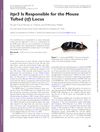
October 2012 in “Journal of Heredity” This study identified the Itpr3 gene as responsible for the tufted hair loss phenotype in the BTBR mouse strain.
4 citations
,
May 2025 in “Cells” This study found that miR-370-3p targets SMAD4 to inhibit cell proliferation, promote apoptosis, and affect the cell cycle in follicular papilla cells, demonstrating differences in their expression in sheep tissues, which may impact hair follicle development.