 1 citations
,
May 2023 in “European Journal of Human Genetics”
1 citations
,
May 2023 in “European Journal of Human Genetics” This study observed that numerical chromosomal aberrations were more common in men with severe male factor infertility and azoospermia compared to those with other sperm quality issues, while chromosomal translocations were significantly associated with oligoasthenozoospermia, highlighting important genetic counseling considerations.
 May 2025 in “Egyptian Journal of Dermatology and Venerology”
 This study found that specific SNPs in the CYP19A1 gene were associated with Female Pattern Hair Loss in Egyptian women, with altered CYP19A1 gene expression and higher frequencies of related genotypes observed in patients compared to controls.
5 citations
,
January 2015 in “Case reports in medicine” In this case report, a novel missense mutation c.1360G>C (p.Ala454Pro) in the MBTPS2 gene was identified in a boy with typical IFAP syndrome and severe atopic features, although no phenotype/genotype correlation was established.
 July 2018 in “Kidney international”
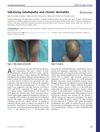
 This case study describes a 9-year-old girl with a homozygous EGFR gene mutation, presenting with tubulopathy and chronic dermatitis, whose ongoing symptoms and management offer insights into this rare genetic condition.
 1 citations
,
September 2018 in “Australasian Journal of Dermatology”
1 citations
,
September 2018 in “Australasian Journal of Dermatology” In this report, a 2-year-old male with GAPO syndrome exhibited androgenetic-like alopecia with normal testosterone levels and telogen hair loss, which are novel findings for this condition.

