 1 citations
,
April 2019 in “Journal of Investigative Dermatology”
1 citations
,
April 2019 in “Journal of Investigative Dermatology” This study found that cold atmospheric plasma can accelerate wound healing processes and reduce bacterial growth, including drug-resistant strains, suggesting its potential as a novel treatment for chronic wounds.
1 citations
,
December 2011 in “Arzneimittelforschung” This study developed a sensitive HPLC-MS/MS method for determining cyproterone acetate levels in human plasma and found no significant difference in its concentration between two oral formulations in bioequivalence testing.
50 citations
,
December 2017 in “Nanoscale” This study found that polymeric micelle formulations significantly improved the targeted delivery of adapalene to hair follicles compared to standard Differin® products, which suggests potential advantages in treating hair follicle-related conditions and reducing side effects.

This study in a nine-year-old boy from Lebanon identified a gene mutation (c.1066dup p.(Arg356Profs*16)) associated with a rare inborn error of immunity, characterized by craniosynostosis, jaundice, and several other symptoms, expanding the known genotypic and phenotypic spectrum of this condition.
 11 citations
,
June 2017 in “Journal of cell science”
11 citations
,
June 2017 in “Journal of cell science” In this study, researchers found that AGD1 is crucial for membrane recruitment during root hair development in Arabidopsis thaliana, with its pleckstrin homology domain essential for targeting specific plasma membrane regions.
This study found that genetic ablation of Tslp in an AEC mutant mouse model reduced skin inflammation and improved survival, suggesting potential therapeutic benefits for AEC syndrome patients.
23 citations
,
September 1957 in “Archives of Dermatology” This study investigated alkaline phosphatase activity in scalp biopsies from patients with alopecia areata and totalis, but provides no new conclusive clinical results.
 June 2025 in “International Medical Case Reports Journal”
 This case study reported on a 30-year-old male with autoimmune polyglandular syndrome type 2, highlighting rare co-occurrence with alopecia universalis and emphasizing the importance of recognizing non-endocrine symptoms for early diagnosis and management of autoimmune endocrinopathies.
 February 2014 in “Plastic and Reconstructive Surgery”
 This abstract contains titles of organizations and publication names but reports no study results or findings.
12 citations
,
June 2015 in “Dermatology Reports” This study found that discoid lupus erythematous was the most common type of primary cicatricial alopecia, predominantly affecting middle-aged women.
 16 citations
,
February 2010 in “Journal of the European Academy of Dermatology and Venereology”
16 citations
,
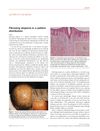
February 2010 in “Journal of the European Academy of Dermatology and Venereology” This article is a letter to the editor about fibrosing alopecia in a pattern distribution and reports no new research findings.
 April 2023 in “Cancer research”
 This study suggests that KRTAP2-3 may serve as a novel biomarker to identify cells in the polyaneuploid cancer cell state, which is linked to therapy resistance and poor prognosis in prostate cancer.
14 citations
,
August 2014 in “The FASEB Journal” This study found that the catalytically inactive serine protease CAP1/Prss8 can still induce skin disorders in mice and is subject to inhibition by nexin-1, independent of its catalytic activity.

In this clinical case study, a 30-year-old man with systemic lupus erythematosus was diagnosed with both catastrophic antiphospholipid syndrome and acquired haemophilia A, successfully treated with immunosuppressive therapy, plasma exchange, and IVIG, leading to a favourable outcome.
 March 2023 in “International Journal of Herbal Medicine”
 This review discusses polycystic ovarian syndrome (PCOS), its current treatment challenges, and explores integrative approaches for managing the syndrome and its related symptoms, but it presents no new research findings.
24 citations
,
February 2011 in “The American journal of pathology” This study found that AIRE, a usually nuclear protein, is expressed in the cytoplasm of human epidermal and follicular keratinocytes and associates with the intermediate filament protein cytokeratin 17, potentially impacting ectodermal abnormalities in APECED syndrome.
 December 2013 in “International Journal of Dermatology”
 The clinical signs of Adams-Oliver syndrome can vary greatly, even among family members.
19 citations
,
January 2015 in “Skin appendage disorders” This study identified a new variety of central centrifugal cicatricial alopecia that includes patchy hair loss on the lateral and posterior scalp in African-American women, which could be misdiagnosed as traction alopecia without dermatoscopy and pathology.
49 citations
,
July 2000 in “Journal of Histochemistry & Cytochemistry” This study found cell-specific variations in POMC mRNA and peptide expression in murine skin, suggesting that PC1 and PC2 convertases contribute to differential POMC processing.
 April 2012 in “Informa Healthcare eBooks”
 Fibrosing alopecia in a pattern distribution is a unique hair loss condition with inflammation and scarring, resembling but distinct from common balding.
May 2026 in “European Cells and Materials” In this study, researchers developed a novel delivery system using hyaluronic acid gels to encapsulate Huperzine A for Alzheimer's treatment, achieving extended release over 20 days and significantly improving pathology and behavior in mice, including enhanced memory and reduced neuroinflammation.
10 citations
,
June 2019 in “Dermatologic therapy” In this study, treatment with DPCP alone was more effective for hair regrowth and presented fewer side effects in chronic extensive alopecia areata compared to combination therapy with DPCP and anthralin.
280 citations
,
January 2004 in “The EMBO Journal” AGC2-1 protein is essential for root hair growth in Arabidopsis.
14 citations
,
June 2021 in “Journal of dermatological science” This study found that Argan press cake extracts stimulated hair growth and reduced inflammation and oxidative stress in human hair follicle dermal papilla cells, suggesting potential for anti-hair loss drug development.
 May 2023 in “Journal of Endocrinology and Reproduction”
 This study found that in primary cicatricial alopecia, reducing cholesterol production and targeting EMT modulators like PPARγ, AhR, AGTR, and TGFβ with siRNA may help mitigate hair follicle damage by modulating epithelial-mesenchymal transition, suggesting potential therapeutic strategies for slowing PCA progression.
 24 citations
,
March 2017 in “Archives of Gynecology and Obstetrics”
24 citations
,
March 2017 in “Archives of Gynecology and Obstetrics” The study found that women with hyperandrogenic PCOS have higher levels of AKT1 and AKT2 proteins in their cells, which may lead to cell dysfunction.
1 citations
,
August 2024 in “Skin Health and Disease” Among pediatric alopecia areata patients treated with DPCP, this study reported complete hair regrowth in 8.8% and any regrowth in 61.8% after one year, with better outcomes for those with milder initial symptoms and longer treatment durations.
23 citations
,
January 1996 in “Software Engineering and Knowledge Engineering” This study hypothesizes a possible association between certain endocrine abnormalities and 11q-syndrome, emphasizing the importance of early diagnosis and management to improve patient quality of life.

This review outlines platelet-rich plasma practices for androgenetic alopecia at a large academic center and highlights the importance of standardizing PRP protocols to improve treatment outcomes, but it reports no new clinical results.
101 citations
,
August 2008 in “Mayo Clinic Proceedings” This article reviews current understanding and management of peripheral arterial disease and reports no new results; the authors emphasize early diagnosis and lifestyle modification for better outcomes.