 15 citations
,
March 2014 in “Biochimica and biophysica acta. Molecular and cell biology of lipids”
15 citations
,
March 2014 in “Biochimica and biophysica acta. Molecular and cell biology of lipids” This review discusses the role of acyl-CoA binding protein (ACBP) in the epidermal barrier, noting that its disruption in mice is linked to skin and fur abnormalities; it reports no new clinical results.
 September 2021 in “CRC Press eBooks”
 This article discusses features, genetics, and diagnostic challenges of central centrifugal cicatricial alopecia in African American women but reports no new clinical results.
October 1993 in “The Journal of Clinical Pharmacology” 1 citations
,
August 2024 in “Skin Health and Disease” Among pediatric alopecia areata patients treated with DPCP, this study reported complete hair regrowth in 8.8% and any regrowth in 61.8% after one year, with better outcomes for those with milder initial symptoms and longer treatment durations.
July 2012 in “Alzheimer s & Dementia” This case report describes a 57-year-old Navy veteran with mild cognitive impairment who showed cognitive improvement and reported better mood after CPAP treatment and medication adjustments.
1 citations
,
April 2024 in “Metabolites” In this study, researchers found that male and female APCHi mice exposed to ionizing radiation showed near-normal lipid and metabolite levels, suggesting activated protein C may offer some protective effects against radiation-induced damage affecting organ systems.
January 2026 in “Dermatologic Therapy” This study suggests that autologous platelet concentrates may improve inflammatory activity, disease control, and hair regrowth in primary cicatricial alopecia, but the evidence is limited by small sample sizes and study quality.
 1 citations
,
February 2023 in “Deleted Journal”
1 citations
,
February 2023 in “Deleted Journal” This study found that Diphenylcyclopropenone (DCP) was effective for treating extensive alopecia areata in Thai patients, although a high relapse rate suggests maintenance therapy might be necessary.
 11 citations
,
August 2017 in “Journal of Chromatographic Science”
11 citations
,
August 2017 in “Journal of Chromatographic Science” This study established a rapid and accurate ultra-performance liquid chromatographic method for chemical fingerprinting and analyzing Platycladi cacumen, effectively distinguishing batches based on geographical and climatic conditions.
 10 citations
,
January 2018 in “Postępy Dermatologii i Alergologii”
10 citations
,
January 2018 in “Postępy Dermatologii i Alergologii” This study found that 21 out of 39 patients with alopecia areata experienced more than 50% hair regrowth after six months of DPCP treatment, with better outcomes observed in those treated at 3-week intervals compared to weekly intervals.
 January 2024 in “Annals of Dermatology”
 This study found that DPCP immunotherapy effectively treats alopecia areata, identifying factors that influence treatment response and patient satisfaction, which may aid in standardizing the treatment for improved outcomes.
17 citations
,
October 2011 in “International Journal of Immunopathology and Pharmacology” This study found that after 24 weeks of DPCP treatment for alopecia areata, there was a significant increase in new capillaries and hair regrowth detectable by videocapillaroscopy.
September 2019 in “Journal of Investigative Dermatology” CCCA in women of African ancestry may be caused by PADI3 gene mutations and intense hair grooming.
 July 2024 in “Periodontology 2000”
 This review summarizes the use of autologous platelet concentrates in aesthetic medicine, finding promising results for facial treatments, but highlights the need for more rigorous research due to current study limitations.
2 citations
,
October 2000 in “Journal of Investigative Dermatology” AUC and APL are distinct conditions needing careful clinical assessment.
 April 2023 in “Cancer research”
 This study suggests that KRTAP2-3 may serve as a novel biomarker to identify cells in the polyaneuploid cancer cell state, which is linked to therapy resistance and poor prognosis in prostate cancer.
 September 2024 in “Portuguese Journal of Dermatology and Venereology”
 This review discusses central centrifugal cicatricial alopecia, its similarities to lichen planopilaris, and emphasizes the need for further research due to its underdiagnosis and impact on African-descended women.
 27 citations
,
May 2007 in “Archives of dermatological research”
27 citations
,
May 2007 in “Archives of dermatological research” In this study, alopecia areata patients treated with diphencyprone showed a significant increase in CD8 lymphocytes around hair bulbs, which may be associated with hair regrowth.
5 citations
,
July 2024 in “Journal of Microbiology and Biotechnology” This study investigated autophagy activator ICP5249 and found it promotes hair growth by enhancing cell proliferation and autophagy-related markers in human dermal papilla cells and hair follicles, with AMPKα playing a regulatory role, suggesting its potential as a hair growth ingredient.
In an outpatient cardiology center, this study found that introducing the AHA/ACC ABI screening protocol significantly increased the frequency of ABI ordering by 31.6% for symptomatic patients.
 June 2024 in “Journal of Ayub Medical College Abbottabad”
 This study concluded that adding 5% topical Procapil to PRP therapy provided better outcomes for androgenetic alopecia than PRP alone, as assessed by dermatologist evaluations and patient satisfaction.
 28 citations
,
August 2018 in “Dermatologic Surgery”
28 citations
,
August 2018 in “Dermatologic Surgery” This abstract is a listing of affiliations and funding, with no new study or results reported.
 January 2026 in “Dermatology Online Journal”
 This case report highlights that CCCA can present with multifocal patchy hair loss in younger men of African descent, suggesting the need for careful evaluation when diagnosing atypical alopecia patterns.
2 citations
,
April 2023 in “American Journal of Dermatopathology” This study suggests that central centrifugal cicatricial alopecia may involve a CD4-predominant T-cell process with potential PD1/PDL1 pathway involvement, indicated by increased caspase 3 expression and loss of PDL1.
 21 citations
,
June 2017 in “Journal of The American Academy of Dermatology”
21 citations
,
June 2017 in “Journal of The American Academy of Dermatology” This study reviewed existing articles to assess the efficacy of topical diphenylcyclopropenone immunotherapy for alopecia areata, but it did not report new clinical results.
 January 2025 in “International Journal of Trichology”
 This study found that adding PRP to DPCP treatment for severe alopecia areata did not enhance effectiveness compared to DPCP alone.
 April 2023 in “Journal of Investigative Dermatology”
 In this study, the KPAI and KP-IGA scoring systems for assessing keratosis pilaris showed excellent interrater and intrarater reliability, offering standardized measures for clinical and research use.
7 citations
,
April 2020 in “JIMD Reports” In this follow-up of three siblings with ATP6AP1 deficiency, the researchers observed progression to total hearing loss, hair loss, and proteinuria.
 May 2025 in “The Journal of Rheumatology”
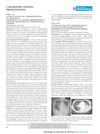
 This case report highlights a rare instance of diffuse alveolar hemorrhage in a patient with catastrophic antiphospholipid syndrome, emphasizing the importance of early recognition and multidisciplinary management.
March 2024 in “Preprints.org” In a study conducted on mice, researchers observed that exposure to ionizing radiation led to significant metabolic imbalances, including dyslipidemia and disruptions in amino acid metabolism, with activated protein C providing partial protection by normalizing certain plasma metabolites and lipids.