 July 2025 in “Annals of Human Genetics”
 This review examines the genetics of acne vulgaris, concluding that stem/progenitor cell maintenance and cellular migration are key processes in its pathogenesis, potentially shifting future treatment strategies beyond traditional antibiotics and retinoids, which have notable side effects.
January 2025 in “SSRN Electronic Journal” This study developed a bioinspired hydrogel (BD@HH6) that exhibited strong antimicrobial and antioxidant properties, accelerated wound healing in mice by promoting angiogenesis and reducing inflammation, and represents a potential new approach for managing chronic wound infections without relying on antibiotics.
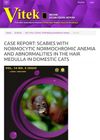 November 2024 in “VITEK Bidang Kedokteran Hewan”
 In this case study, treatment using ivermectin, antihistamines, topical antibiotics, and supplements resulted in clinical recovery from scabies-related symptoms in a domestic male cat, showing significant reduction in itching and skin lesions by the seventh day.
 September 2024 in “World Journal of Biology Pharmacy and Health Sciences”
 This source outlines that plasma, when injected, can renew cells, stimulate collagen and protein production for skin vitality, and improve wound healing in various surgical fields, leveraging its antibiotics and platelet-rich properties.
August 2024 in “NPI Journal of Science and Technology.” In this case report, a six-year-old Golden Retriever diagnosed with patchy demodex infestation and secondary bacterial infection was successfully treated with medicated shampoo and antibiotics, leading to healing of lesions and a negative skin scraping test after two weeks.
 March 2024 in “International Journal of Drug Delivery Technology”
 This study reviews the potential of electrospun nanofiber mats as innovative drug delivery systems for wound healing, emphasizing their ability to enhance drug release, improve cell adhesion, and promote tissue regeneration by incorporating antibiotics, growth hormones, or stem cells.
January 2024 in “Veterinary Science and Medicine Journal” In this case report, a 1.5-year-old Pomeranian named Beb with respiratory and skin issues was diagnosed with pneumonia and demodecosis; following a two-week treatment including antibiotics, ivermectin, and supportive care, Beb's symptoms resolved, and hair regrowth was observed.
 January 2024 in “International Journal of Advanced Biochemistry Research”
 In this case report, a one-year-old male husky with canine demodicosis exhibited significant improvement in skin condition after receiving treatment with Nexgard®, antibiotics, and supportive therapies, suggesting Nexgard® as an effective option for managing this condition.
 January 2024 in “International Journal of Advanced Biochemistry Research”
 In this study investigating canine pyoderma, the researchers found that Staphylococcus species isolated from 57 dogs were most sensitive to the antibiotic Linezolid, with a 100% sensitivity rate, followed by other antibiotics like Doxycycline hydrochloride and Cefpodoxime.
 January 2024 in “International journal of advanced biochemistry research”
 This study observed eight dogs with severe itching, hair loss, and skin lesions that had not responded to previous treatments. After treating the dogs with fluralaner, antibiotics, immune boosters, and omega supplements, partial recovery was seen in one month, with full recovery in two months.
 December 2023 in “Frontiers in microbiology”
 This study reported that mannan oligosaccharides improved the fur quality, immune response, antioxidant status, and gut microbiota of fur-growing raccoon dogs, suggesting they could potentially replace antibiotics in their diet.
 October 2023 in “International journal of biology, pharmacy and allied sciences”
 This study reviews previous research on Lawsonia inermis Linn., commonly known as henna, to evaluate its potential for enhancing wound healing, given concerns about the adverse effects and resistance associated with synthetic antibiotics and antimicrobials.
 June 2022 in “Journal of Experimental Biology and Agricultural Sciences”
 In this study, researchers identified high levels of multidrug resistance in E. coli samples from broiler chickens in Malang Regency, with all positive samples resistant to multiple antibiotics including Erythromycin, Bacitracin, and Amoxicillin.
This trial will compare the effectiveness of spironolactone to doxycycline for treating acne in adult females, potentially offering an alternative to antibiotics and isotretinoin.
March 2018 in “The journal of applied laboratory medicine” This article presents a case study of a 3-month-old boy with a worsening rash initially diagnosed as impetigo, which did not improve with antibiotics and required further dermatological investigation.
 April 2016 in “Journal of the American Academy of Dermatology”
 This study found that in a tertiary academic institution, nearly 1 in 5 dermatology consults were for drug-related skin reactions, with antibiotics frequently identified as the culprits.
 4 citations
,
February 2020 in “Journal of Cosmetic Dermatology”
4 citations
,
February 2020 in “Journal of Cosmetic Dermatology” This study reported significant moderate-to-severe complications in two patients following synthetic hair fiber implantation, including recurrent infections, scalp issues, and granulomatous reactions, which were only resolved once the fibers were removed despite initial treatment attempts with antibiotics.
4 citations
,
January 2018 in “Health” This report describes the development of a low-cost method to mass-produce ostrich antibodies, which were shown to alleviate allergic reactions and demonstrate therapeutic effects in conditions such as atopic dermatitis, acne, and pollen allergies, potentially providing an alternative to steroids or antibiotics.
 1 citations
,
February 2025 in “Notulae Scientia Biologicae”
1 citations
,
February 2025 in “Notulae Scientia Biologicae” In this study, researchers developed an in-situ gel formulation of antibacterial Levofloxacin for the eye, which showed prolonged drug release, increased residence time, and effective antibacterial action, suggesting it may be a safe and effective ocular delivery system for antibiotics.
This study reports that prostatitis, affecting many men aged 30 to 50, arises from diverse causes, including bacterial infections and pelvic pain syndromes, and requires treatment strategies specific to its type, such as antibiotics and lifestyle changes.
 44 citations
,
March 2020 in “Antibiotics”
44 citations
,
March 2020 in “Antibiotics” The researchers reported that carnosic acid and carnosol, extracts from rosemary leaves, specifically inhibit S. aureus virulence expression, suggesting potential topical treatments for atopic dermatitis flares.
238 citations
,
December 2022 in “Frontiers in Public Health” This review discusses ciprofloxacin resistance mechanisms in bacteria and explores new approaches, such as combining it with other antibacterial agents, to enhance its effectiveness against resistant infections.
 1 citations
,
November 2020 in “International Journal of Dermatology”
1 citations
,
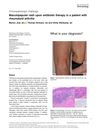
November 2020 in “International Journal of Dermatology” In this case report, the authors suggest that methotrexate-induced rheumatoid papular eruption is a rare side effect of methotrexate, resolved after discontinuation, which may be linked to rheumatic conditions.
40 citations
,
August 2018 in “Journal of the American Academy of Dermatology” This study reported that a 10-week course of clindamycin and rifampicin was commonly used for treating folliculitis decalvans but the evidence on its efficacy remains inconclusive due to the low quality of available studies.
37 citations
,
August 2019 in “Frontiers in Microbiology” This study found that the S. epidermidis A/C lineage is more pathogenic due to its metabolic and genomic versatility, which allows it to adapt quickly from a commensal to a pathogenic lifestyle.
36 citations
,
October 1993 in “British Journal of Dermatology” In this study, isolated human hair follicles maintained prolonged growth and consistent DNA and keratin synthesis patterns in a fully defined medium for at least 9 days while preserving in vivo-like morphology.
 17 citations
,
January 2009 in “Nippon Ishinkin Gakkai Zasshi”
17 citations
,
January 2009 in “Nippon Ishinkin Gakkai Zasshi” This case report details a 10-year-old boy diagnosed with kerion celsi caused by Microsporum gypseum, successfully treated with itraconazole over 4.5 months.
 15 citations
,
January 2016 in “Dermatologic Clinics”
15 citations
,
January 2016 in “Dermatologic Clinics” This article offers strategies for managing acne effectively and safely, emphasizing treatment optimization, patient tailoring, and addressing antimicrobial resistance, but reports no new clinical results.
13 citations
,
September 1997 in “Archives of Dermatology” This case report describes a 5-year-old boy with a solitary patch of hair loss, potentially linked to a fungal infection after antibiotic treatment showed minimal effectiveness.
11 citations
,
October 2017 in “Mycoses” In this case report, an 80-year-old male with severe sycosis barbae and no animal contact was successfully treated with oral terbinafine after diagnostic sequencing identified Trichophyton verrucosum as the infecting species.