12 citations
,
September 2014 in “Bone” This study characterized two siblings with hereditary vitamin D resistant rickets and a mutation in the vitamin D receptor, finding no immune-related disorders despite a defective T cell response to vitamin D.
 11 citations
,
June 2022 in “Frontiers in immunology”
11 citations
,
June 2022 in “Frontiers in immunology” This review discusses the challenges in identifying specific hair follicle antigens involved in initiating alopecia areata and highlights the need for further research to understand its etiopathogenesis, reporting no new results.
10 citations
,
December 2013 in “The journal of investigative dermatology. Symposium proceedings/The Journal of investigative dermatology symposium proceedings” This case report describes a patient with severe alopecia areata and multiple autoimmune diseases who showed excellent hair regrowth after treatment with prednisone and cyclosporine, though she later developed hyperpigmentation.
 9 citations
,
February 2022 in “Nature communications”
9 citations
,
February 2022 in “Nature communications” This study identified KRT82 as a significant Alopecia Areata risk gene, finding that rare damaging variants are linked to elevated immune cell infiltration around hair follicles in affected individuals.
 9 citations
,
January 2015 in “Current problems in dermatology”
9 citations
,
January 2015 in “Current problems in dermatology” This review highlights recent genetic research advancements in understanding hereditary hair diseases but reports no new study results, emphasizing the identification of genes related to both monogenic and polygenic hair disorders.
7 citations
,
February 2024 in “ACS Applied Materials & Interfaces” This study found that PEGylated Ag₂S-ZnS@TGA-AA heteronanostructures, activated by light exposure, showed synergistic antibacterial effects against multidrug-resistant bacteria, significantly accelerating the healing of MRSA-infected wounds in comparison to untreated wounds.
 5 citations
,
December 2014 in “Polish Journal of Public Health”
5 citations
,
December 2014 in “Polish Journal of Public Health” This review discusses the mechanisms of zinc transport, its role in human health, and the effects of zinc imbalance, without reporting new results.
 5 citations
,
April 2011 in “Bioorganic & Medicinal Chemistry Letters”
5 citations
,
April 2011 in “Bioorganic & Medicinal Chemistry Letters” In this study, a new Finasteride conjugate showed stronger inhibition of 5α-reductase and similar reduction of prostate hyperplasia in rats compared to Finasteride, with potentially improved toxicity.
 4 citations
,
September 2019 in “Biomedical Papers/Biomedical Papers of the Faculty of Medicine of Palacký University, Olomouc Czech Republic”
4 citations
,
September 2019 in “Biomedical Papers/Biomedical Papers of the Faculty of Medicine of Palacký University, Olomouc Czech Republic” This study found that CD2 could be a potential new therapeutic target for treating patchy-type alopecia areata, suggesting the need for further research into its role.
This study found that hair follicles across mouse skin form a heterogeneous regenerative field, with distinct cycling dynamics influenced by the balance of activator and inhibitor signals, which could inform other organ regeneration research.
2 citations
,
May 2024 in “Immunity” In this study, Luan et al. showed that epidermal stem cells play a key role in wound healing by coordinating the recruitment of regulatory T cells and neutrophils, which help balance immune tolerance and inflammation.
 2 citations
,
September 2018 in “Tissue Engineering Part A”
2 citations
,
September 2018 in “Tissue Engineering Part A” This study found that injecting xeno-free, three-dimensional cell masses from human adipose-derived stem cells improved blood perfusion and preserved limb function in mice without causing tumors or toxicity, suggesting potential for treating severe ischemic diseases.
1 citations
,
October 2025 This source describes wound healing as a complex biological process that requires precise regulation and coordination among various cells, cytokines, and signaling pathways to achieve tissue repair, although specific findings or results are not provided in the abstract.
 1 citations
,
September 2023 in “Clinical, cosmetic and investigational dermatology”
1 citations
,
September 2023 in “Clinical, cosmetic and investigational dermatology” This genome-wide association study identified several genetic markers, including specific SNPs and HLA genotypes, associated with alopecia areata susceptibility in the Taiwanese population, highlighting key pathways involved in immune response and offering insights into the genetic origins of this autoimmune condition.
 1 citations
,
August 2023 in “Military Medical Research”
1 citations
,
August 2023 in “Military Medical Research” This review discusses recent advancements in responsive-hydrogel dressings for diabetic wound healing, highlighting their design, responsiveness, and degradation behavior, and evaluating their potential advantages and limitations in clinical applications.
 1 citations
,
May 2021 in “International Journal Of Medical Science And Clinical Invention”
1 citations
,
May 2021 in “International Journal Of Medical Science And Clinical Invention” This review discusses the potential risk mechanisms for COVID-19 in women with polycystic ovarian syndrome due to hyperandrogenism and calls for further research, but reports no new findings.
 1 citations
,
January 2019 in “Journal of Embryology & Stem Cell Research”
1 citations
,
January 2019 in “Journal of Embryology & Stem Cell Research” This review discusses mesenchymal stem cells' role in tissue regeneration and skin anti-aging, highlighting their migration to damaged sites and secretome effects, but reports no new clinical results.
March 2026 in “Materials Today Chemistry” Smart microneedles improve hair loss treatment by delivering drugs precisely with fewer side effects.
 January 2026 in “International Journal of All Research Education & Scientific Methods”
 This review highlights recent advancements in understanding and treating alopecia, emphasizing genetic and immune factors involved in different forms, and discusses emerging therapies such as gene-editing and exosome-based treatments, though achieving complete hair regrowth remains a challenge.
January 2026 in “Regenerative Biomaterials” This study highlights that hydrogel formulations unexpectedly prolonged healing in trials, pointing to a need for design based on detailed pathophysiological insights rather than empirical methods, and suggests technologies like AI materials optimization and 3D bioprinting to aid their clinical use for cancer survivors.

This study identified 193 plasma proteins associated with prostate cancer risk, validating 20 high-risk proteins including KLK3, and pinpointed potential drug targets like HSPB1, RRM2B, and PSCA through genetic analysis, offering new insights for biomarkers and treatments.
 August 2024 in “Clinical and Medical Engineering Live”
 This abstract highlights that alopecia treatment requires moving beyond outdated methods to a sophisticated approach that considers the complex interplay between genetic susceptibility and immune response in different types of hair loss. Results are not reported.
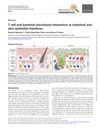 January 2023 in “Discovery immunology”
 T cells and bacteria in the gut and skin help maintain health and protect against disease.
 December 2022 in “Research Square (Research Square)”
 In this study, type I interferon response-related genes activated by RIG-1 and IL-17 signaling pathways were significantly up-regulated in both hair follicles and skin tissues affected by chronic discoidal lupus erythematosus.
 October 2022 in “Research Square (Research Square)”
 This study found that type I interferon response-related genes activated by RIG-1 and IL-17 pathways were significantly up-regulated in hair follicle and skin samples with chronic discoidal lupus erythematosus.
 June 2022 in “bioRxiv (Cold Spring Harbor Laboratory)”
 This study provides evidence that innate lymphoid cells-type 1 can induce alopecia areata in human hair follicles, challenging the view that it is solely a CD8+ T cell-driven autoimmune disease.
 March 2021 in “bioRxiv (Cold Spring Harbor Laboratory)”
 This study found that type 2 immunity, especially involving ILC2 cells, helps maintain skin homeostasis by regulating the proliferation and community stability of hair follicle epithelial cells in the presence of Demodex mites.
June 2020 in “Comparative medicine” The study reported that Demodex musculi infestation was notably higher in immunodeficient mice, while infested immunocompetent mice, particularly the BALB/c strain, showed increased IgE levels and developed alopecia over time.
 February 2018 in “Trends in Immunology”
 This study demonstrated that antigens from the skin bacterium Staphylococcus epidermidis can stimulate CD8+ T cells, which in turn enhance wound healing.
 April 2016 in “The journal of investigative dermatology/Journal of investigative dermatology”
 In this study, Mpzl3-/- mice developed severe seborrhea-like dermatitis with skin inflammation, indicating MPZL3's role in the skin condition's development, independent of adaptive immunity.