 5 citations
,
January 2021 in “Journal of Cosmetic Dermatology”
5 citations
,
January 2021 in “Journal of Cosmetic Dermatology” This study found that adding platelet-rich plasma with microneedling to conventional medical treatment significantly increased hair density and diameter in androgenetic alopecia patients compared to medical treatment alone.
 5 citations
,
December 2020 in “Wound Repair and Regeneration”
5 citations
,
December 2020 in “Wound Repair and Regeneration” This review discusses the challenges and perspectives of using platelet-rich plasma in burn and wound management, noting that current variability in its composition and application prevents clear conclusions on its effectiveness.
 4 citations
,
April 2025 in “Scientific Reports”
4 citations
,
April 2025 in “Scientific Reports” This study found that platelet-rich plasma can transiently inhibit bacterial growth in vitro against multidrug-resistant strains from diabetic foot infections, although its efficacy diminished over time and did not affect biofilm formation.
3 citations
,
December 2023 in “Biomedicines” This review discusses the mechanisms and potential benefits of platelet-rich plasma therapy for various skin conditions and reports no new clinical findings.
 3 citations
,
May 2023 in “Current Molecular Medicine”
3 citations
,
May 2023 in “Current Molecular Medicine” This review discusses the distinction between platelet-rich plasma and stem cell-based therapies in regenerative medicine, highlighting their different roles and stressing the importance of honest representation by commercial and health entities.
 3 citations
,
March 2023 in “National Journal of Health Sciences”
3 citations
,
March 2023 in “National Journal of Health Sciences” This article reviews the potential of platelet-rich plasma therapy in managing diabetic foot ulcers but reports no new clinical findings, highlighting the need for further controlled trials to evaluate its effectiveness.
 3 citations
,
August 2021 in “Veterinary World”
3 citations
,
August 2021 in “Veterinary World” This study found that platelet-rich plasma improved the healing of skin wounds in sheep compared to honey by reducing early inflammation and enhancing collagen synthesis and organization.
 3 citations
,
February 2021 in “Medical journal, Armed Forces India”
3 citations
,
February 2021 in “Medical journal, Armed Forces India” In this observational study, the combination of PRP and 5% minoxidil was more effective than minoxidil alone in promoting hair growth in men with androgenetic alopecia.
 3 citations
,
September 2018 in “Dermatologic Surgery”
3 citations
,
September 2018 in “Dermatologic Surgery” Platelet-Rich Plasma (PRP) can improve hair loss in cicatricial alopecia cases, but treatment must be ongoing and results vary among patients.
 2 citations
,
March 2021 in “Journal of Cosmetic Dermatology”
2 citations
,
March 2021 in “Journal of Cosmetic Dermatology” This pilot study found that among male androgenetic alopecia patients, 2.5 mg oral minoxidil with platelet-rich plasma led to higher patient satisfaction than 1.25 mg, though hair count improvements were not statistically significant.
 2 citations
,
November 2017 in “Journal of Cosmetic Dermatology”
2 citations
,
November 2017 in “Journal of Cosmetic Dermatology” In this study, subcutaneous platelet-rich plasma injections improved hair density and histological markers of hair growth in hairless rats without causing local toxicity.
 1 citations
,
August 2023 in “Bioengineering”
1 citations
,
August 2023 in “Bioengineering” This review explores the potential benefits of platelet-rich plasma for anti-aging and tissue regeneration, especially in orthopedic applications like osteoarthritis, but it reports no new clinical results.
 1 citations
,
December 2019 in “Archives of the Balkan Medical Union”
1 citations
,
December 2019 in “Archives of the Balkan Medical Union” In this study, injecting platelet-rich plasma into the muscular layer of the intestinal wall in rabbits significantly reduced adhesion development compared to soaking methods, suggesting an improvement in anastomosis regeneration.
 1 citations
,
June 2018 in “Advances in Cosmetic Surgery”
1 citations
,
June 2018 in “Advances in Cosmetic Surgery” PRP might help with hair growth and skin rejuvenation, but more research is needed to prove its effectiveness.
 1 citations
,
May 2018 in “Journal of Evolution of medical and Dental Sciences”
1 citations
,
May 2018 in “Journal of Evolution of medical and Dental Sciences” This study assessed the safety, efficacy, and feasibility of platelet-rich plasma injections in treating androgenetic alopecia, but it reports no clinical results.
 1 citations
,
May 2017 in “InTech eBooks”
1 citations
,
May 2017 in “InTech eBooks” This review discusses various treatments for noncicatricial alopecias, such as androgenetic alopecia and alopecia areata, including mesotherapy, microneedling, and platelet-rich plasma therapy, noting that outcomes vary across these procedures.
 June 2026 in “International Journal of Current Pharmaceutical Review and Research”
 This study found that combining platelet-rich plasma with topical minoxidil improved hair density and patient satisfaction in androgenetic alopecia patients more than minoxidil alone, with no serious adverse events reported.
March 2026 in “Journal of Cosmetic Dermatology” This review discusses platelet-rich plasma therapy for androgenic alopecia and reports no clinical results; the authors emphasize the need for standardized protocols and large-scale studies to confirm its long-term efficacy.
 January 2026 in “Forum Dermatologicum”
 This article reviews the regenerative benefits of platelet-rich plasma in various medical fields, particularly in dermatology and aesthetic medicine, without presenting new clinical data.
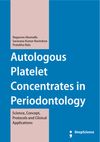
In this book, the authors provide an accessible overview of platelet concentrates and their dental applications, highlighting their role in tissue healing and regeneration, and reviewing recent studies on their efficacy in periodontal therapy, implant dentistry, and oral surgery.
November 2025 in “International Journal of Molecular Sciences” This review covers the diverse clinical applications of platelet-rich plasma in regenerative medicine but provides no new clinical results.
September 2025 in “Journal of Pakistan Association of Dermatologists” This randomized controlled trial reported that combining oral Biotin supplements with PRP offered no additional benefits for hair regrowth in patients with Androgenetic Alopecia compared to PRP alone.
 September 2025 in “Drug Design Development and Therapy”
 This study suggests that while platelet-rich products show promise in treating dermatological conditions like chronic wounds and skin aging, there is still a need for standardized methodologies and extensive trials to confirm their long-term clinical benefits.

This review concludes that platelet-rich plasma is a promising treatment for androgenetic alopecia, enhancing hair density and thickness, though outcomes vary due to differences in preparation and application methods.
 July 2024 in “International Journal of Dermatology Venereology and Leprosy Sciences”
 This pilot clinical trial observed that combining subcision using a blunt cannula with platelet-rich plasma injections and microneedling for post-acne rolling scars was associated with a significant positive correlation between physician satisfaction and age of acne onset.
 February 2024 in “Curēus”
 In this study, researchers found that using regional nerve blocks (STN and SON blocks) for anesthesia in platelet-rich plasma treatment for hair regrowth resulted in significantly less pain and better analgesia compared to the more common ring block technique.
 November 2023 in “Research Square (Research Square)”
 This double-blinded randomized clinical trial found that combining topical vitamin D analog (calcipotriol) and intra-lesion PRP led to a greater reduction in hair loss severity in alopecia areata patients compared to either treatment alone, with significant improvements observed across all groups.
 January 2023 in “Springer eBooks”
 Using one's own blood platelets and fat can improve facial and hair appearance without surgery.
This abstract suggests that cost barriers limit the application of standard aesthetic procedures in developing countries, while exploring platelet-rich plasma as a potentially safer and less invasive option in geriatric aesthetics. Detailed results were not reported.

This article introduces geriatric aesthetics and discusses the potential of platelet-rich plasma as a cost-effective solution in developing countries, but reports no new clinical results.